




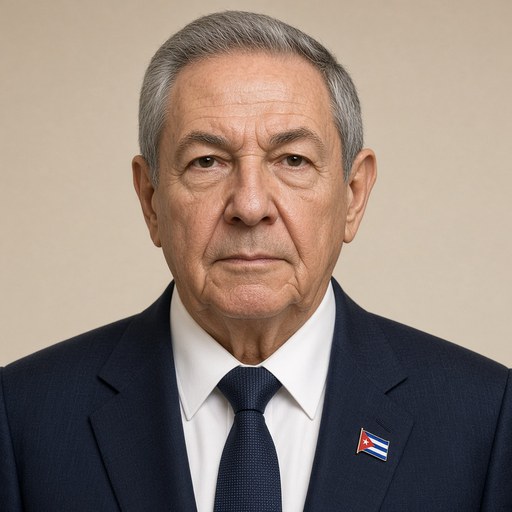
Raúl: “…everything we do is aimed at the preservation and development in Cuba of a society
 Raúl Castro · President of Cuba
- Context
- Castro addressed the closing session of Cuba's National Assembly Seventh Legislature in December 2012, reviewing economic performance and upcoming legislative elections.
- Main themes
- Economic plan performance, GDP growth, socialist democracy, investment process deficiencies, national budget and deficit, tax system reform, tourism records, oil and gas production, external debt reduction, management cadre accountability, U.S. blockade impact, social services preservation
- Duration
- ~24 min
- Words
- 2,898
- Sentences
- 76
- Readability
- 17
- Grade
- 19.8
- Syntax
- 3.62
- Vocabulary
- 2.33
Translated from Spanish
The broad sphere of national life a sentence belongs to. Every sentence has an Arena, so it is the denominator the other indices are read against.
Other76 sentences in 52 paragraphs
A few brief words to conclude this Ordinary Session of the National Assembly, the last of the Seventh Legislature, since on February 3 of next year, elections will be held for provincial delegates and deputies to the Parliament.
Let this occasion serve to express recognition for the fruitful work carried out by the members of the supreme organ of state power during this term.
Likewise, this is a propitious opportunity to highlight the successful completion of the election process for delegates to the municipal assemblies of the People's Power, characterized by the massive participation of our people in an undeniable show of support and trust in their socialist democracy. As is customary in our sessions at the end of the year, we have reviewed the performance of the national economic plan, which, although it did not reach the projected target, preserved the favorable growth trend of the Gross Domestic Product, the so-called GDP.
In relation to 2011, most activities report higher results, in line with the policy of enhancing the development of the productive sphere, as a support for free social services for all Cubans, which maintained similar levels based on greater rationality and efficiency.
In this regard, one of the main dissatisfactions with this year's plan lies in the lack of comprehensiveness that has characterized the execution of the investment process, which, despite exceeding 2011 by 15 percent, is 19 percent below target.
The causes, I must say bluntly, are not new; they are the same ones that have been identified for many years: inadequate prior preparation, delays in supplies, low productivity, and a labor force deficit, leading to the consequent failure to meet agreed schedules and the postponement of the commissioning of important productive objectives, which compromises the projected income and savings in the economic forecast, while immobilizing deficit resources for other purposes.
It is necessary to overcome the immobility, superficiality, and improvisation that persist in most of our investments, and this must characterize the behavior of management cadres at all levels of the State, Government, and Party, in what corresponds to each one.
On the other hand, a positive correlation has been maintained between the growth of the average salary and productivity, which contributes to strengthening internal financial balance. Despite not achieving the planned income from international tourism or the expected number of foreign visitors, another record is once again set, with 2 million 850 thousand arrivals, representing a growth of 4.9 percent compared to the previous year. Oil and gas production increased, while progress is being made in the gradual reduction of external debt based on strict compliance with the financial commitments made in recent years, all of which allows us to recover the international credibility of the Cuban economy.
Still far from a definitive solution, which depends primarily on raising the demands and rigor of management cadres and without failing to recognize the impact of existing structural problems in the current economic model, encouraging results are being obtained in the reduction of overdue accounts receivable and payable, although not all agencies and Provincial Administration Councils are moving forward with firm and solid steps.
As has already been explained, the plan for next year foresees a GDP growth of 3.7 percent, which is considered acceptable in a scenario of continued global economic crisis, the pursuit of Cuban banking transactions that is accentuated within the framework of the U.S. blockade, the prevailing restrictions in financial markets, and the rise in food and fuel prices, to mention just a few factors.
The planning for 2013 is qualitatively superior in terms of its level of precision and reconciliation with the different actors in the national sphere, as well as greater coordination between the objectives of the plan, the budget, and macroeconomic policies, so that we gradually move to economic-financial forms in the management of the economy, dispensing with the current predominantly administrative methods.
The National Assembly also approved the Budget Law for next year, with a deficit of 3.6 percent of the Gross Domestic Product, which falls within a tolerable range for current circumstances and ensures the main objectives of the economic and social life of the nation.
As has been widely publicized, on January 1, 2013, the new Tax System Law, approved by this Assembly last July, will come into effect, and it will also be accompanied by its Regulations. It is provided that annually in the Budget Law, Parliament will set the magnitudes, taxable bases, and subjects of the taxes, in accordance with the priorities of the country's development.
In this regard, I believe it is appropriate to clarify that taxes are determined based on the principles of generality and equity, according to the economic capacity of the institutions and individuals obliged to comply.
This means that no one is exempt from paying the established taxes and that the amount of these depends on the income and assets one possesses.
I have recalled these concepts in order to contribute modestly to the understanding by the different sectors of the population that taxes and other contributions to the budget constitute a fundamental instrument of the country's economic policy as they are the main formula for the redistribution of national income.
Today I reiterate the need to introduce the fundamentals of our tax system into the different teaching programs and to disseminate them through mass media, to create awareness and forge a culture of honesty and civility that prevents the flourishing of selfishness within our society.
In recent days, party, state, and government leaders, as well as Deputies, have received abundant information about the process of implementing the Guidelines of the Economic and Social Policy of the Party and the Revolution, approved by the 6th Congress.
In light of the above, it is not necessary for me to elaborate on these strategic issues, and I will limit myself to expressing some general considerations.
We value that the updating of the Cuban economic model, following the initial measures to eliminate prohibitions and other obstacles to the development of productive forces, is progressing steadily and is beginning to delve into issues of greater scope, complexity, and depth, based on the premise that everything we do is aimed at preserving and developing a sustainable and prosperous socialist society in Cuba, the only guarantee of the independence and national sovereignty won by generations of compatriots in more than 144 years of struggle.
Alongside the development of the theoretical conceptualization of the Cuban economic model, the study of the foundations of the long-term Development Program in the different spheres of national activity continues, and new methodologies for the formation of wholesale and retail prices are being implemented, the reorganization and promotion of the wholesale market itself, and the experimental creation of non-agricultural cooperatives; while the analysis of ways to overcome the phenomenon of monetary duality continues with a comprehensive approach.
Starting in the first quarter of next year, experiments will begin in selected state business organizations due to their importance in the performance of the national economy, which constitutes a deepening of the existing business improvement system and will allow for the testing of modern techniques in the management of productive and service entities with greater autonomy in order to improve their results and efficiency, and subsequently extend those experiences to the rest of the companies in the country.
On the other hand, in order to facilitate the maximum deployment of the potential of economic entities without neglecting their main missions, principles have been approved to relax the currently restricted social objects, while the development of productive chains is being examined, which, as explained by the Head of the Permanent Commission for Implementation and Development, are a method to increase the competitiveness of companies and generate more appropriate proportions in the productive structure of the economy.
Today our Parliament, in another demonstration of the deeply democratic spirit of the revolutionary process, authorized the holding of a popular consultation on the Draft New Labor Code, which updates, in accordance with the designed socioeconomic scenario, labor policies and the rights and duties of workers and employers, both in the state and non-state sectors. Based on the results of this consultation, we will be in a position next year to present the corresponding draft law for approval by the National Assembly.
The number of citizens engaging in self-employment has continued to increase — there are now almost 400,000 — a trend that will be reinforced with the implementation of the leasing of premises dedicated to gastronomy, the additional relaxation of payment relations to the private sector by state companies and budgeted units, and the granting of licenses for the exercise of new activities.
At the same time, on Sunday, December 9, Decree-Law 300 came into effect, aimed at consolidating the process of granting usufruct of idle lands, which expanded the area granted to usufructuaries linked to state farms, basic cooperative production units (UBPC), and agricultural production cooperatives, known as CPA, to 67.10 hectares, or 5 caballerías.
Also, among other provisions, in order to facilitate the living conditions of usufructuaries and encourage their permanence and settlement with their families in agricultural work, the construction of housing as improvements was authorized.
Seventeen measures were also approved to eliminate the constraints that have hindered the management of basic cooperative production units, which will allow all productive forms in Cuban fields, regardless of the type of property, to develop under the same conditions.
All these decisions and many more that will be progressively adopted aim to ensure the sustained increase of the country's agricultural production and reduce food imports, whose bill, despite the nascent growth achieved, has continued to rise year after year, as a consequence of upward trends in international market prices. During 2012, actions have intensified in the interest of improving the work of the Central State Administration Bodies, other national entities, and the Provincial Administration Councils with a view to dynamizing their functioning and making it more rational and efficient.
We have already pointed out that to ensure success in the implementation of the Guidelines, it is essential to break the colossal psychological barrier that results from a mentality rooted in habits and concepts of the past.
In this battle that must be fought, primarily by the cadres, progress is also being made. This has been aided by the training and retraining system being developed at the Higher School of State and Government Cadres, as well as in the selected branch schools and the Party in the provinces with the participation of universities. Almost 3,700 main and executive managers at the national and local levels have completed diplomas in Public Administration and Business Management and Direction. In the last meeting of the Council of Ministers, preliminary figures from the Population and Housing Census, conducted between September 15 and 24, were reported, the processing of which until the final results are obtained will take us until June of next year. This exercise, of enormous significance and utility for long-term development planning, was carried out in an atmosphere of organized and disciplined participation by our people, with the execution involving, among others, more than 60,000 young students and almost 12,000 teachers, whom it is fair to congratulate in this Assembly.
We must also express a well-deserved recognition to all compatriots, especially to the people of Santiago, Guantanamo, and Holguin, who managed to overcome the fury of Hurricane Sandy and its aftermath, which resulted in the loss of eleven human lives, partial or total destruction of tens of thousands of homes, severe damage to electrical and communication infrastructure, and significant harm to agriculture.
The second city of the country, the heroic Santiago de Cuba, received the direct impact of hurricane-force winds and the destructive power of the sea in the early hours of October 25. Certainly, the scene was desolate, but overcoming the initial confusion, with the material support and solidarity of all Cubans, recovery began in the three most affected eastern provinces, a task that will require years of hard work and effort.
In order to assist the affected population in the restoration of their homes, the Revolutionary Government decided to subsidize construction materials by 50 percent, without excluding partial or total subsidies for those with lower incomes or unable to work, as well as providing additional credit facilities.
Hurricane Sandy also caused torrential rains and flooding in the central territory, affecting crops and road infrastructure.
Even in this bitter situation, we did not lack international solidarity, expressed in multiple ways and magnitudes, for which, on behalf of the Cuban people and Government, we convey our deep gratitude.
As in 2008, when we were hit by three consecutive hurricanes, we were forced this year to postpone the Strategic Exercise Bastion, with the aim of concentrating efforts on the recovery tasks from the damage caused by this last atmospheric phenomenon. We plan to carry it out in November 2013 and the next one in 2016, resuming from 2020 the practice of conducting it every four years.
I will now address some issues of international relevance.
Just as we will never renounce the defense of independence and self-determination, just weeks before the second term of President Barack Obama begins, we reiterate once again to the U.S. authorities Cuba's willingness for respectful dialogue, based on sovereign equality, on all bilateral issues, while our offers of cooperation on matters of common interest remain on the table, without preconditions or prior gestures.
It remains an unrenounceable demand of our people that the prolonged and unjust imprisonment of Gerardo, Ramón, Antonio, and Fernando be brought to an end, as well as the arbitrary separation of René from the Homeland and his family, after serving a long sentence. A growing majority in American society and the Cuban diaspora opposes the blockade. The international community, through the almost unanimous vote of the United Nations General Assembly, has been calling for its end for 21 consecutive years. The re-elected President has constitutional powers to take significant steps in this direction. Regardless of what happens, we will persist in our own course.
Last October, new migration regulations were issued that lifted restrictions and eliminated or simplified procedures, without renouncing the right to defend ourselves and protect our human resources. These modifications have been positively received by the people and largely by the Cuban diaspora, who wish to strengthen their ties with the Homeland and family in contrast to policies of hostility, insidious media campaigns, and encouragement of illegal and unsafe emigration. More recently, the Council of State decided to reduce the cost of phone calls between both countries, which will also benefit communication between the Cuban population and the diaspora. It is worth clarifying that this does not mean, in the slightest, renouncing the claim for the return of the stolen funds.
Next year, Cuba will assume the Presidency of the Community of Latin American and Caribbean States (CELAC), a fact that represents, in addition to a great honor, a significant responsibility to which we will dedicate our utmost efforts and energies.
Despite all the difficulties and dangers, "Our America" perseveres in its objectives of independence, sovereignty, development, and integration; knowing that without social justice and a more equitable distribution of wealth, this would not be possible.
At the same time, we will continue to provide prudent and discreet support to the peace process in Colombia.
Amid growing threats to world peace, stemming from NATO's interventionist and aggressive doctrine, the decision of the United Nations General Assembly to accept the State of Palestine as an Observer was encouraging and brave. The brutal reprisals of the Israeli government, in open violation of UN resolutions, must be strongly condemned by the international community.
The Bolivarian Revolution has fought an extraordinary battle this year against the machinations and campaigns of the oligarchy. The historic victory of comrade Hugo Chávez Frías in the recent presidential elections demonstrates that a people, when they have powerful reasons to defend, cannot be diverted from the sovereign path they have freely chosen.
With emotional respect and admiration, our people listened, last Saturday, to the President of the Bolivarian Republic of Venezuela, comrade Hugo Chávez Frías, announce the need to undergo a new surgical operation. The fortitude and courage with which he spoke were extraordinary. His recognized honesty and adherence to the truth, which always characterize him, were striking, as well as the strength, depth, vision, and altruism of his argumentation.
In this crucial hour for Venezuela and for "Our America," we will be, as always, alongside President Chávez and the Bolivarian Revolution that he leads by mandate of a united and revolutionary people who collectively embody their ideals.
To Chávez, our brother in struggle, we reiterate all our affection and solidarity and wish him that, as in previous times, he emerges strengthened from this new test to celebrate together the victory in the regional elections on December 16 and in the battles that the future holds for us.
Finally, comrades, we are just a few days away from the beginning of the 55th year of the Revolution, in which we will commemorate the 60th anniversary of the assault on the Moncada and Carlos Manuel de Céspedes barracks. With the same determination and firmness of the Generation of the Centenary, let us face the challenges of the future, for as Fidel said, if that day we were a handful of men, today we are an entire people conquering the future.
Congratulations to all,
Thank you very much.
The original Spanish. The tags above are read on the English translation's sentences.
Unas breves palabras para concluir este Período Ordinario de Sesiones de la Asamblea Nacional, el último de la Séptima Legislatura, toda vez que el 3 de febrero del próximo año se celebrarán las elecciones de los delegados provinciales y los diputados del Parlamento.
Sirva la ocasión para manifestar el reconocimiento a la fecunda labor desplegada por los integrantes del órgano supremo del poder del Estado en este mandato.
Igualmente, la oportunidad es propicia para resaltar la exitosa realización del proceso de elección de los delegados a las asambleas municipales del Poder Popular, caracterizado por la masiva participación de nuestro pueblo en innegable muestra de apoyo y confianza en su democracia socialista. Como ya es habitual en nuestras sesiones al concluir el año, hemos pasado revista al comportamiento del plan de la economía nacional que aunque no alcanzó la meta proyectada, preservó la tendencia favorable de crecimiento del Producto Interno Bruto, —el denominado P.I.B—.
Con relación al 2011, la mayoría de las actividades registran resultados superiores, en correspondencia con la política de potenciar el desarrollo de la esfera productiva, como sostén de los servicios sociales gratuitos, para todos los cubanos, que conservaron niveles similares a partir de una mayor racionalidad y eficiencia.
En este sentido, una de las principales insatisfacciones sobre el plan del presente año radica en la falta de integralidad que ha caracterizado la ejecución del proceso inversionista, el cual no obstante sobrepasar en un 15 por ciento al 2011, se incumple en un 19 por ciento.
Las causas, debo decirlo crudamente, no son nuevas, son las mismas que se han identificado hace muchos años: deficiente preparación previa, atrasos en los suministros, baja productividad y déficit de fuerza de trabajo, con el consiguiente incumplimiento de los cronogramas pactados y la posposición de la puesta en explotación de importantes objetivos productivos, lo cual compromete los ingresos y ahorros previstos en la proyección de la economía, mientras se inmovilizan recursos deficitarios para otros destinos.
Es preciso rebasar el inmovilismo, la superficialidad y la improvisación que persisten en la mayoría de nuestras inversiones y ello deberá caracterizar la conducta de los cuadros de dirección en todos los niveles del Estado, el Gobierno y el Partido, en lo que a cada cual le corresponde.
Por otra parte, se ha logrado mantener una positiva correlación entre el crecimiento del salario medio y la productividad, lo cual contribuye al fortalecimiento del equilibrio financiero interno. Pese a no alcanzarse los ingresos planificados por el turismo internacional ni la cifra prevista de visitantes extranjeros, nuevamente se impone otro récord, al arribar 2 millones 850 mil, para un crecimiento del 4,9 por ciento en comparación con el año anterior. Se elevó la producción de petróleo y gas, al tiempo que se avanza en el paulatino desendeudamiento externo sobre la base del estricto cumplimiento de los compromisos financieros que se han asumido en los últimos años, todo lo cual nos permite ir recuperando la credibilidad internacional de la economía cubana.
Lejos todavía de la solución definitiva, que depende en primer lugar de la elevación de la exigencia y rigor de los cuadros de dirección y sin dejar de reconocer el impacto de problemas estructurales existentes en el actual modelo económico, se obtienen alentadores resultados en la disminución de las cuentas por cobrar y por pagar vencidas, si bien no todos los organismos y Consejos de la Administración Provinciales marchan con paso firme y sólido.
Como ya se ha explicado, el plan del próximo año prevé un crecimiento del P.I.B del 3.7 por ciento, lo cual se considera aceptable en un escenario de continuada crisis económica global, la persecución de las transacciones bancarias cubanas que se acentúa en el marco del bloqueo norteamericano, las restricciones imperantes en los mercados financieros y la elevación de los precios de los alimentos y el combustible, por solo mencionar algunos factores.
La planificación para el año 2013 es cualitativamente superior en cuanto a su nivel de precisión y conciliación con los diferentes actores del ámbito nacional, así como una mayor coordinación entre los objetivos del plan, el presupuesto y las políticas macroeconómicas, de modo que pasemos gradualmente a formas económico-financieras en la conducción de la economía, prescindiendo de los actuales métodos eminentemente administrativos.
La Asamblea Nacional también aprobó la Ley del Presupuesto para el próximo año, con un déficit del 3,6 por ciento del Producto Interno Bruto, que se enmarca en un rango tolerable para las actuales circunstancias y asegura los principales objetivos de la vida económica y social de la nación.
Como se ha divulgado ampliamente, el primero de enero de 2013 entrará en vigor la nueva Ley del Sistema Tributario, aprobada por esta Asamblea en julio pasado y lo hará, además, acompañada de su Reglamento. En ella se prevé que anualmente en la Ley del Presupuesto el Parlamento fije las magnitudes, bases imponibles y los sujetos de los tributos, en consonancia con las prioridades del desarrollo del país.
En tal sentido creo conveniente precisar que los tributos se determinan sobre la base de los principios de generalidad y equidad, de acuerdo con la capacidad económica de las instituciones y personas naturales obligadas a su cumplimiento.
Esto significa que nadie está exento de abonar los tributos establecidos y que la cuantía de éstos depende de los ingresos y el patrimonio que se posea.
He recordado estos conceptos con el fin de contribuir modestamente a la comprensión por parte de los diferentes sectores de la población de que los impuestos y otras contribuciones al presupuesto constituyen un instrumento fundamental de la política económica del país por ser la principal fórmula de redistribución de la renta nacional.
Hoy reitero la necesidad de introducir en los diferentes programas de enseñanza y divulgar a través de los medios de difusión masiva, los fundamentos de nuestro sistema tributario para crear conciencia y forjar una cultura de honestidad y civismo que impida el florecimiento del egoísmo en el seno de nuestra sociedad.
En los últimos días, los dirigentes partidistas, estatales y gubernamentales, así como los Diputados, han recibido abundante información acerca del proceso de implementación de los Lineamientos de la Política Económica y Social del Partido y la Revolución, aprobados por el 6to Congreso.
Teniendo en cuenta lo anterior, no resulta necesario extenderme acerca de estos estratégicos asuntos y me limitaré a expresar algunas consideraciones generales.
Valoramos que la actualización del modelo económico cubano, tras las medidas iniciales de supresión de prohibiciones y otras trabas para el desarrollo de las fuerzas productivas, marcha con paso seguro y se empieza a adentrar en cuestiones de mayor alcance, complejidad y profundidad, partiendo de la premisa de que todo lo que hagamos va dirigido a la preservación y desarrollo en Cuba de una sociedad socialista sustentable y próspera, única garantía de la independencia y soberanía nacional conquistadas por generaciones de compatriotas en más de 144 años de lucha.
A la par de la elaboración de la conceptualización teórica del modelo económico cubano, prosigue el estudio de las bases del Programa de Desarrollo a largo plazo en las diferentes esferas del quehacer nacional y se implantan nuevas metodologías para la formación de los precios mayoristas y minoristas, el reordenamiento y fomento del propio mercado mayorista, la creación experimental de cooperativas no agropecuarias; mientras continúa el análisis de las vías para superar el fenómeno de la dualidad monetaria con un enfoque integral.
A partir del primer trimestre del próximo año se iniciará la realización de experimentos en organizaciones empresariales estatales seleccionadas por su importancia en el desempeño de la economía nacional, lo cual constituye una profundización del sistema de perfeccionamiento empresarial existente y permitirá ensayar técnicas modernas en la gestión de entidades productivas y de servicios con superior autonomía en aras de elevar sus resultados y eficiencia, para posteriormente extender esas experiencias al resto de las empresas del país.
Por otra parte, con el propósito de facilitar el máximo despliegue de las potencialidades de las entidades económicas sin descuidar sus principales misiones, fueron aprobados los principios para flexibilizar los actualmente restringidos objetos sociales, al tiempo que se examina el desarrollo de las cadenas productivas, que como explicó el Jefe de la Comisión Permanente de Implementación y Desarrollo, son un método para elevar la competitividad de las empresas y generar proporciones más adecuadas en la estructura productiva de la economía.
En el día de hoy nuestro Parlamento, en otra demostración del espíritu profundamente democrático del proceso revolucionario, autorizó la realización de la consulta popular sobre el Anteproyecto del nuevo Código del Trabajo, que actualiza, de conformidad con el escenario socioeconómico diseñado, las políticas laborales y los derechos y deberes de los trabajadores y empleadores, tanto en el sector estatal como el no estatal. A partir de los resultados de la citada consulta, estaremos en condiciones el próximo año de presentar a la aprobación de la Asamblea Nacional el proyecto de ley correspondiente.
Ha proseguido incrementándose la cantidad de ciudadanos que se acogen al trabajo por cuenta propia —son ya casi 400 mil—, tendencia que será reforzada con la aplicación del arrendamiento de locales dedicados a la gastronomía, la flexibilización adicional de las relaciones de pagos al sector privado por las empresas estatales y unidades presupuestadas y el otorgamiento de licencias para el ejercicio de nuevas actividades.
Al propio tiempo, el pasado domingo 9 de diciembre entró en vigor el Decreto-Ley 300, dirigido a la consolidación del proceso de entrega en usufructo de tierras ociosas, el cual amplió hasta 67.10 hectáreas, o sea, 5 caballerías, el área concedida a usufructuarios vinculados a granjas estatales, unidades básicas de producción cooperativa (UBPC) y cooperativas de producción agropecuaria, conocidas por CPA.
También, entre otras disposiciones, en aras de facilitar las condiciones de vida de los usufructuarios e incentivar su permanencia y el asentamiento con la familia en las labores agrícolas, se autorizó la construcción de viviendas en calidad de bienhechurías.
Asimismo fueron aprobadas 17 medidas para suprimir las ataduras que han lastrado la gestión de las unidades básicas de producción cooperativa, lo cual propiciará que todas las formas productivas en los campos cubanos, con independencia del tipo de propiedad, se desenvuelvan bajo las mismas condiciones.
Todas estas decisiones y otras muchas más que se irán adoptando progresivamente tienen como objetivo asegurar el incremento sostenido de la producción agropecuaria del país y disminuir la importación de alimentos, cuya factura, a pesar del incipiente crecimiento obtenido, no ha cesado de elevarse de año en año, como consecuencia de las tendencias alcistas en los precios del mercado internacional. Durante el 2012 se han intensificado las acciones en interés del perfeccionamiento de la labor de los Organismos de la Administración Central del Estado, otras entidades nacionales y los Consejos de la Administración Provincial con vistas a dinamizar su funcionamiento y hacerlo más racional y eficiente.
Ya hemos señalado que para garantizar el éxito en la implementación de los Lineamientos es imprescindible romper la colosal barrera sicológica que resulta de una mentalidad arraigada en hábitos y conceptos del pasado.
En esta batalla que deben librar, en primer lugar los cuadros, también se progresa. A ello ha contribuido el sistema de preparación y recalificación que se desarrolla en la Escuela Superior de Cuadros del Estado y el Gobierno, así como en las escuelas ramales seleccionadas y del Partido en las provincias con el concurso de las universidades. Casi 3 700 directivos principales y ejecutivos del nivel nacional y local han cursado diplomados en Administración Pública y Dirección y Gestión Empresarial. En la última reunión del Consejo de Ministros se informaron las cifras preliminares del Censo de Población y Viviendas, realizado entre el 15 y el 24 de septiembre, cuyo procesamiento hasta la obtención de los resultados definitivos nos tomará hasta junio del venidero año. Este ejercicio, de enorme trascendencia y utilidad para la planificación del desarrollo a largo plazo, se realizó en un ambiente de participación organizada y disciplinada de nuestro pueblo, correspondiendo su ejecución, entre otros, a más de 60 mil jóvenes estudiantes y casi 12 mil profesores, a quienes es justo felicitar en esta Asamblea.
También debemos expresar un merecido reconocimiento a todos los compatriotas, en especial a los santiagueros, guantanameros y holguineros que supieron sobreponerse a la furia del huracán Sandy y sus secuelas de pérdidas de once vidas humanas, destrucción parcial o total de decenas de miles de viviendas, graves afectaciones a la infraestructura eléctrica y de comunicaciones y cuantiosos daños a la agricultura.
La segunda ciudad del país, la heroica Santiago de Cuba, recibió el impacto directo de los vientos huracanados y el poder destructivo del mar en horas de la madrugada del 25 de octubre. Ciertamente el panorama era desolador, pero vencido el desconcierto inicial, con el apoyo material y la solidaridad de todos los cubanos se inició la recuperación en las tres provincias orientales más afectadas, tarea que requerirá años de mucho trabajo y esfuerzo.
Con el fin de asistir a la población damnificada en el restablecimiento de sus viviendas, el Gobierno Revolucionario decidió bonificar en un 50 por ciento los precios de los materiales de la construcción, sin excluir el subsidio, parcial o total, para aquellos con menores ingresos o imposibilitados de trabajar, así como se otorgaron facilidades crediticias adicionales.
El huracán Sandy provocó además lluvias torrenciales e inundaciones en el territorio central, afectando los cultivos y la infraestructura vial.
Tampoco en esta amarga situación nos faltó la solidaridad internacional, expresada de múltiples maneras y magnitudes, gesto por el cual, en nombre del pueblo y Gobierno cubanos, trasmitimos nuestra profunda gratitud.
Como en el 2008, cuando nos azotaron tres huracanes consecutivos, nos vimos obligados este año a posponer la realización del Ejercicio Estratégico Bastión, con el objetivo de concentrar los esfuerzos en las tareas de recuperación de los daños ocasionados por este último fenómeno atmosférico. Planificamos llevarlo a cabo en noviembre del 2013 y el siguiente efectuarlo en el 2016, retomando a partir del 2020 la práctica de realizarlo cada cuatro años.
Pasaré ahora a abordar algunos temas de la actualidad internacional.
De la misma forma que jamás renunciaremos a la defensa de la independencia y autodeterminación, a pocas semanas de que se inicie el segundo periodo del presidente Barack Obama, reiteramos, una vez más, a las autoridades norteamericanas la disposición de Cuba al diálogo respetuoso, basado en la igualdad soberana, sobre todos los problemas bilaterales, a la vez que continúan sobre la mesa nuestras ofertas de cooperación en cuestiones de interés común, sin precondiciones o gestos previos.
Sigue siendo una demanda irrenunciable de nuestro pueblo que se ponga punto final a la prolongada e injusta encarcelación de Gerardo, Ramón, Antonio y Fernando, así como a la arbitraria separación de René de la Patria y su familia, después de cumplir una larga condena. Una creciente mayoría en la sociedad norteamericana y la emigración cubana se opone al bloqueo. La comunidad internacional a través del voto, casi unánime, de la Asamblea General de las Naciones Unidas, lleva ya 21 años consecutivos reclamando su fin. El Presidente reelecto posee facultades constitucionales para dar pasos significativos en esta dirección. Con independencia de lo que ocurra, persistiremos en nuestro rumbo propio.
En octubre pasado fueron emitidas nuevas regulaciones migratorias que suprimieron restricciones y eliminaron o simplificaron trámites, sin desistir del derecho de defendernos y proteger nuestros recursos humanos. Estas modificaciones han tenido una positiva acogida en el pueblo y mayoritariamente por la emigración cubana, que desea fortalecer sus lazos con la Patria y la familia en contraposición con las políticas de hostilidad, insidiosas campañas mediáticas y el aliento a la emigración ilegal e insegura. Más recientemente, el Consejo de Estado decidió reducir el monto a pagar por las llamadas telefónicas entre ambos países, lo que beneficiará también la comunicación entre la población cubana y la emigración. Vale aclarar que ello no significa, en lo más mínimo, renunciar al reclamo de la devolución de los fondos robados.
El próximo año Cuba asumirá la Presidencia de la Comunidad de Estados Latinoamericanos y Caribeños (CELAC), hecho que representa, además de un alto honor, una gran responsabilidad a la que consagraremos los mayores esfuerzos y energías.
Pese a todas las dificultades y peligros, “Nuestra América” persevera en sus objetivos de independencia, soberanía, desarrollo e integración; sabiendo que sin justicia social y una distribución más equitativa de la riqueza ello no sería posible.
Al propio tiempo, continuaremos brindando de manera prudente y discreta, todo el apoyo al proceso de paz en Colombia.
En medio de crecientes amenazas a la paz mundial, derivadas de la doctrina intervencionista y agresiva de la OTAN, resultó alentadora y valiente la decisión de la Asamblea General de las Naciones Unidas de aceptar como Observador al Estado de Palestina. Las brutales represalias del gobierno de Israel, en abierta violación de las resoluciones de la ONU, deben ser condenadas enérgicamente por la comunidad internacional.
La Revolución Bolivariana ha librado una extraordinaria batalla este año frente a las maquinaciones y campañas de la oligarquía. La histórica victoria del compañero Hugo Chávez Frías en las recientes elecciones presidenciales demuestra que un pueblo, cuando tiene poderosas razones que defender, no puede ser desviado del camino soberano que libremente ha elegido.
Con emocionado respeto y admiración, nuestro pueblo escuchó, el pasado sábado, al presidente de la República Bolivariana de Venezuela, compañero Hugo Chávez Frías, anunciar la necesidad de someterse a una nueva operación quirúrgica. Fue extraordinaria la entereza y valor con que habló. Su reconocida honestidad y apego a la verdad, que siempre lo caracterizan, resultó impactante, así como la fuerza, profundidad, visión y altruismo de su argumentación.
En esta hora crucial para Venezuela y para “Nuestra América”, estaremos como siempre, junto al Presidente Chávez y a la Revolución Bolivariana que él encabeza por mandato de un pueblo unido y revolucionario que encarna colectivamente sus ideales.
A Chávez, nuestro hermano de lucha, reiteramos todo nuestro afecto y solidaridad y le deseamos que, como en las anteriores, salga fortalecido de esta nueva prueba para celebrar juntos la victoria en las elecciones regionales del próximo 16 de diciembre y en las batallas que nos depare el futuro.
Finalmente, compañeras y compañeros, nos separan pocos días del inicio del año 55 de la Revolución, en el que conmemoraremos el 60 aniversario del asalto a los cuarteles Moncada y Carlos Manuel de Céspedes. Con la misma decisión y firmeza de la Generación del Centenario, enfrentemos los retos del futuro, pues como dijera Fidel, si aquel día éramos un puñado de hombres, hoy somos un pueblo entero conquistando el porvenir.
Felicidades a todos,
Muchas gracias.
Especiales
Política
1 de Mayo: Ultra ricos y trabajadores pobres en la Argentina de Llao Llao 5 mayo 2026 | 3
Confesiones del Secretario de Estado 5 mayo 2026 | 9
Medicina Natural y Tradicional: Usos comunes para tres cítricos 5 mayo 2026 | 3
¿Cómo la crisis y la guerra impactan en la clase obrera del mundo? (+ Video) 5 mayo 2026 | 2
Pequeña entrevista marxiana a Néstor Kohan 5 mayo 2026 | 5
ir aEspeciales »
La deshistorización del tiempo 6 mayo 2026 | +
Canciller cubano: “El secretario de Estado afirmó que no existe un bloqueo petrolero a Cuba. Ha optado sencillamente por mentir” 5 mayo 2026 | 10
La nueva orden ejecutiva del presidente de EEUU: Una agresión inédita contra Cuba 5 mayo 2026 | 10 |
1 de Mayo: Ultra ricos y trabajadores pobres en la Argentina de Llao Llao 5 mayo 2026 | 3
Confesiones del Secretario de Estado 5 mayo 2026 | 9
ir aPolítica »