




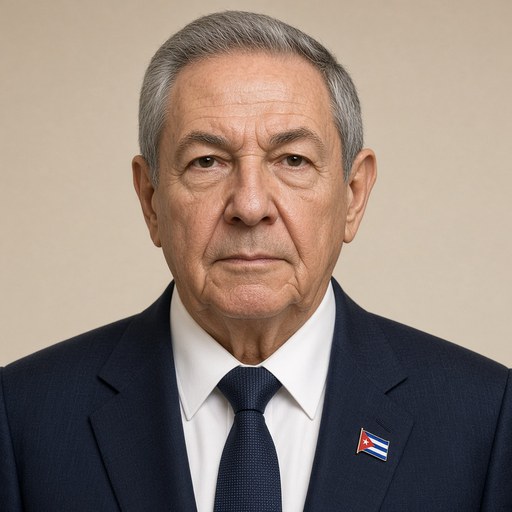
Our people have a peaceful vocation, but they will always know how to defend themselves.
 Raúl Castro · President of Cuba
- Context
- Castro addressed a crowd in Guantánamo's Mariana Grajales Plaza on July 27, 2012, at the 59th anniversary commemoration of the Moncada and Carlos Manuel de Céspedes barracks assaults.
- Main themes
- Cuban revolutionary history, defense and sovereignty, Moncada barracks anniversary, economic challenges and reform, national unity, revolutionary perseverance, independence struggles, Cuban Communist Party leadership, wage and productivity issues, Latin American solidarity
- Duration
- ~11 min
- Words
- 1,348
- Sentences
- 35
- Readability
- 40
- Grade
- 17.1
- Syntax
- 3.84
- Vocabulary
- 2.22
Translated from Spanish
The broad sphere of national life a sentence belongs to. Every sentence has an Arena, so it is the denominator the other indices are read against.
Other35 sentences in 17 paragraphs
Our people have a peaceful vocation, but they will always know how to defend themselves, expressed Army General Raúl Castro, addressing the people of Guantánamo gathered in the Mariana Grajales Plaza, at the central event for the 59th anniversary of the assaults on the Moncada and Carlos Manuel de Céspedes barracks.
After the intervention of Machado Ventura at the closing of the event and acclaimed by the Guantanamo population, comrade Raúl approached the podium and stated: "I am not here to give a speech, I am here to greet everyone who is here and everyone who is in the province of Guantánamo and throughout the country," and he added: "This has been an exemplary event, as all events should be, with a magnificent introduction by our young Guantanamo artists and all those who are on this platform, and it only lasted 55 minutes."
He then recalled the intense days that have characterized this week and expressed: "Machado already explained that in the past week we have had very intense activity, it was not just three speeches at each of the events mentioned by Machado; there are no speeches given there, except in Parliament; the others were discussions, in some cases very candid, in the Council of Ministers, in the Central Committee, discussing and delving into the same topics that were later legalized in the supreme organ of State Power, which is our Parliament, our National Assembly."
Visibly moved, the President of the Councils of State and Ministers expressed that "we feel a deep love for our entire country, for all of Latin America, and naturally for those places where we saw the people fight, where we saw dozens of comrades fall, where the earth vibrates. Here the earth trembles, because men do not tremble," and he added: "That is bravado. Neither men, nor women, nor all of Cuba tremble! Neither the men nor the women of all of Cuba tremble, and we have demonstrated that in this more than half a century that we have been in this struggle."
He recalled that in that land he fought alongside all his comrades from the Second Eastern Front Frank País. He told the Cuban men and women that as he approached Guantánamo, he was proudly seeing the hundreds and hundreds of kilometers that Fidel walked from the landing of the Granma yacht, in Las Coloradas, to Guisa. We also quickly expanded with a front that reached 12,000 square kilometers due to the preparatory work of the Guantanamo people."
Then, in a joking tone, he said that "next year we will celebrate 60 years since the attack on the Moncada barracks" and added: "That day we will have Machado speak in Parliament and I will speak in Santiago de Cuba," and he recalled that before Moncada, we must go to the March of the Torches with the students, with the heroic Cuban students, from the University Hill to the Fragua Martiana, on January 28, as the Generation of the Centenary did 60 years ago.
Raúl pointed out the need to continue moving forward in fulfilling the tasks and stated: "I will not repeat what has already been raised at the Congress, at the National Conference of the Party, in all activities. We must continue! We must move forward, at the pace that we Cubans decide, without haste, but without truce, little by little, little by little."
As an example of that assertion, he reminded the Guantanamo people that we will continue to persevere in fulfilling all the goals that at one time may have been very ambitious due to the desire to do things for the benefit of the population and the Revolution, but that are now being planned according to the possibilities of the resources we have.
The First Secretary of the Central Committee of the Party emphasized that the leadership is aware of all the problems the country faces, that the population faces: that wages are low, that there are many difficulties; but as long as we do not advance in production and productivity, starting with those tasks that are within our reach, that can be achieved, such as food production to save us billions of dollars in imports, wage increases cannot be produced.
He said that at one point teachers were granted something, not in the amount we would have liked, but something was done. The same doctors earn very little. We are all in this situation, but we have lived and maintained this Revolution for more than half a century, which is the great feat of the Cuban people.
Recalling our independence struggles, Raúl described the firmness of the people, from the initiators of the first war for the sovereignty of the country in 1868; to those who fought in the Little War; to Martí, who did not give up despite failures like those of Fernandina, when he lost the weapons that Cuban tobacco workers in the United States had gathered with so much effort, and landed with Gómez at Cajobabo for the 1895 campaign, while Antonio and José Maceo, and Flor Crombet did so at Duaba. He referred to the American intervention that prevented the mambises from entering Santiago de Cuba victoriously, beginning, from January 1, 1899, a total domination by the United States.
They left us a hymn, a coat of arms, and a flag, "that was enough to reconquer the rest," he stated. He commented that if a comparison is made between the last population census conducted by the Spanish metropolis and the first by the American interventionists, there is a considerable decrease in the Cuban population.
Expanding on that time of such subordination of the bourgeoisie to the empire, Raúl emphasized that it was "sixty years of absolute domination!, to the extent that the arrival of the United States ambassador was more important than the election of a president. And it was real, the American ambassador was more important than the president of the Republic, and some newspapers in their headlines simply did not mention the name, nor the country from which he came; they simply said: 'The Ambassador has arrived,' in other words, the one who commands, until on a date equal, 60 years later, to the capital of the republic — after having fought throughout the country in guerrilla or clandestine struggle — the bearded men of Fidel arrived and the nonsense ended."
Raúl commented that now they aspire, with the support of their small groups, for what happened in Libya to happen here, or what they want to do with Syria, but he warned that this is a peaceful little island, that we like to dance, to make friends with everyone, including the United States, but it is a rebellious little town and if they want confrontation, it is better that it be only in baseball, or in any other type of sport, where sometimes they win and sometimes it is our turn, but in everything else, no, they must respect us.
You cannot lead the world, much less based on repeated lies, in the style of Hitler's propaganda minister. The day they want, the table is set, as has already been said. If they want to discuss, reiterated the President of the Councils of State and Ministers, we will discuss, about human rights, democracy, about all those tales they have invented in recent years. We will discuss everything, but on equal terms, because we are not subjugated, nor puppets of anyone. And he also called for debating the problems of their allies, of Western Europe, fundamentally.
Meanwhile, here we are with more things or fewer things, but always with the cavalry ready just in case. And he noted, however, that "once again I proclaim here our peaceful vocation. We have no interest in harming anyone, but our people know how to defend themselves, here there is no need to tell anyone what they have to do."
And he concluded: "in the name of comrade Fidel and all the leaders of the country, some of whom are here — as Machado said — a hug to all the Guantanamo people."
The original Spanish. The tags above are read on the English translation's sentences.
Nuestro pueblo tiene una vocación pacífica, pero siempre sabrá defenderse, expresó el General de Ejército Raúl Castro, al dirigirse a los guantanameros reunidos en la Plaza Mariana Grajales, en el acto central por el aniversario 59 de los asaltos a los cuarteles Moncada y Carlos Manuel de Céspedes.
Después de la intervención de Machado Ventura en la clausura de dicho acto y aclamado por la población guantanamera, el compañero Raúl acudió al podio y señaló: "Yo no vengo a pronunciar un discurso, vengo a darles un saludo a todos los que están aquí y a todos los que están en la provincia de Guantánamo y en todo el país", y agregó a continuación: "Este ha sido un acto ejemplar, como debieran ser todos los actos, con una magnífica introducción de nuestros jóvenes artistas guantanameros y de todos los que están en esta tribuna, y solo duró 55 minutos".
Luego recordó las intensas jornadas que han caracterizado a estos días y manifestó: "Ya Machado explicó que en esta semana pasada hemos tenido una actividad muy intensa, no solo fueron tres discursos en cada uno de los eventos señalados por Machado, ahí no se pronuncian discursos, salvo en el Parlamento; los demás fueron discusiones, en algunos casos a calzón quitado, en el Consejo de Ministros, en el Comité Central, discutiendo y profundizando los mismos temas que después se fueron a legalizar en el órgano supremo del Poder del Estado, que es nuestro Parlamento, nuestra Asamblea Nacional".
Visiblemente emocionado, el Presidente de los Consejos de Estado y de Ministros expresó que "sentimos un amor profundo por todo nuestro país, por toda América Latina, y naturalmente por aquellos lugares donde vimos combatir al pueblo, donde vimos caer a decenas de compañeros, donde vibra la tierra. Aquí tiembla la tierra, porque no tiemblan los hombres, y apostilló: "Eso es una guapería. ¡Ni los hombres, ni las mujeres, ni toda Cuba tiemblan! Ni los hombres ni las mujeres de toda Cuba tiemblan, y lo hemos demostrado en este más de medio siglo que llevamos en esta lucha".
Recordó que en esa tierra combatió junto a todos sus compañeros del Segundo Frente Oriental Frank País. Les comentó a los cubanos y cubanas que al acercarse a Guantánamo, estaba viendo con orgullo los cientos y cientos de kilómetros que caminó Fidel desde el desembarco del yate Granma, en Las Coloradas, hasta Guisa. También nosotros nos extendimos rápidamente con un frente que llegó a alcanzar 12 mil kilómetros cuadrados por el trabajo preparatorio de los guantanameros".
Después con el tono de su jocosidad dijo que "el año que viene cumpliremos 60 años del ataque al cuartel Moncada" y agregó: "Ese día pondremos a Machado a hablar en el Parlamento y yo hablaré en Santiago de Cuba", y recordó que antes del Moncada habrá que ir a la Marcha de las Antorchas con los estudiantes, con los heroicos estudiantes cubanos, desde la Colina Universitaria hasta la Fragua Martiana, el 28 de enero, como hizo la Generación del Centenario hace 60 años.
Raúl señaló la necesidad de seguir adelante en el cumplimiento de las tareas y señaló; "No voy a repetir lo que ya se ha planteado en el Congreso, en la Conferencia Nacional del Partido, en todas las actividades. ¡Hay que seguir! Hay que seguir adelante, al ritmo que decidamos los cubanos, sin prisa, pero sin tregua, poco a poco, poco a poco".
Como ejemplo de esa afirmación, recordó a los guantanameros que se continuará perseverando por ir cumpliendo todas las metas que en un momento fueron tal vez muy ambiciosas por el deseo de hacer cosas en beneficio de la población y de la Revolución, pero que se van planificando ahora, según las posibilidades de los recursos que tengamos.
El Primer Secretario del Comité Central del Partido subrayó que la dirección está al tanto de todos los problemas que confronta el país, que confronta la población: que los salarios están bajos, que hay muchas dificultades; pero mientras no se avance en la producción y en la productividad, empezando por aquellas tareas que están en la mano, que se pueden lograr, como es la producción de alimentos para ahorrarnos miles de millones de dólares de importación, no se podrán producir aumentos salariales.
Dijo que en un momento se les concedió a los maestros, no en la cantidad que hubiéramos deseado, pero se hizo algo. Los mismos médicos ganan muy poco. Así estamos todos, pero vivimos y mantenemos esta Revolución por más de medio siglo, que es la gran proeza del pueblo cubano.
Haciendo un recuento de nuestras luchas independentistas, Raúl describió la firmeza del pueblo, desde los iniciadores de la primera guerra por la soberanía del país en 1868; a los que combatieron en la Guerra Chiquita; a Martí, que no cejó a pesar de fracasos como los de la Fernandina, cuando perdió las armas que con tanto esfuerzo tabaqueros cubanos en Estados Unidos habían reunido, y desembarcó con Gómez por Cajobabo para la gesta de 1895, mientras por Duaba lo hacían Antonio y José Maceo, y Flor Crombet. Se refirió a la intervención norteamericana que no dejó que los mambises entraran victoriosos en Santiago de Cuba, iniciándose, desde el 1ro. de enero de 1899 un dominio total de los Estados Unidos.
Nos dejaron un himno, un escudo y una bandera, "eso fue suficiente para reconquistar lo demás", sentenció. Comentó que si se hace una comparación entre el último censo de población efectuado por la metrópoli española y el primero de los intervencionistas norteamericanos, aparece una considerable disminución de la población cubana.
Abundando en esa época de tanta subordinación de la burguesía al imperio, Raúl subrayó que fueron "¡sesenta años de dominio absoluto!, hasta el extremo de que la llegada del señor embajador de Estados Unidos era más importante que la elección de un presidente. Y era real, era más importante el embajador americano que el presidente de la República, y algunos periódicos en sus cintillos sencillamente ni el nombre decían, ni el país de donde procedía; sencillamente decían: "Llegó el Embajador", o sea, llegó el manda más, hasta que en una fecha igual, 60 años después, a la capital de la república —después de haberse combatido en todo el país en la lucha guerrillera o clandestina— llegaron los barbudos de Fidel y se acabó el relajo".
Comentó Raúl que ahora aspiran, con el apoyo de sus grupúsculos, a que suceda aquí lo de Libia, o lo que quieren hacer con Siria, pero advirtió que esta es una islita pacífica, que nos gusta bailar, hacer amistad con todos, incluyendo a Estados Unidos, pero es un pueblito rebencudo y si quieren confrontación es mejor que sea solo en el béisbol, o en cualquier otro tipo de deporte, donde a veces ganan ellos y a veces nos toca a nosotros, pero en lo demás no, que nos respeten.
No se puede dirigir el mundo, y mucho menos basado en la mentira repetida, al estilo del ministro de propaganda de Hitler. El día que quieran la mesa está servida, como ya se les ha dicho. Si quieren discutir, reiteró el Presidente de los Consejos de estado y de Ministros, discutiremos, sobre derechos humanos, democracia, sobre todos esos cuentos que han inventado en los últimos años. Vamos a discutir de todo, pero en igualdad de condiciones, porque no somos sometidos, ni títeres de nadie. Y convocó, además, a debatir los problemas de sus aliados, de la Europa occidental, fundamentalmente.
Mientras tanto, aquí estamos con más cosas o menos cosas, pero siempre con la caballería lista por si acaso. Y acotó, sin embargo, que "una vez más proclamo aquí nuestra vocación pacífica. No tenemos ningún interés en hacerle daño a nadie pero nuestro pueblo sabe defenderse, aquí no hay que decirle a nadie lo que tiene que hacer".
Y concluyó: "en nombre del compañero Fidel y de todos los dirigentes del país, algunos de los cuales están aquí —ya Machado lo dijo—, un abrazo a todos los guantanameros y guantanameras".
Subir