




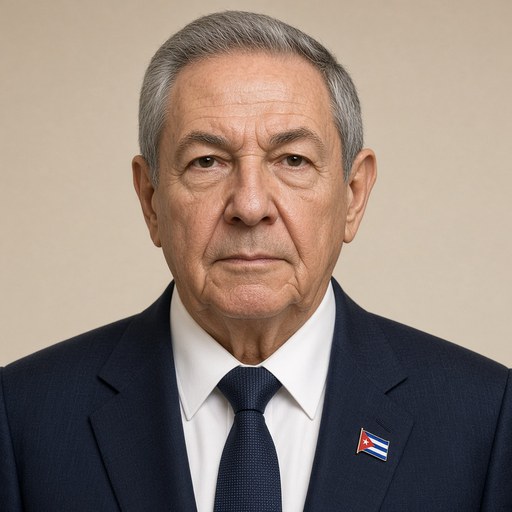
Speech delivered at the Rio+20 Summit, in Rio de Janeiro, Brazil, on June 21, 2012.
 Raúl Castro · President of Cuba
- Context
- Castro addressed world leaders at the Rio+20 United Nations Conference on Sustainable Development in Rio de Janeiro on June 21, 2012.
- Main themes
- Climate change, environmental degradation, sustainable development, global inequality, neoliberalism and poverty, military spending and arms race, historical responsibility of developed nations, small island developing states vulnerability, international economic order, nuclear disarmament, resource wars, science and technology for planetary salvation
- Duration
- ~6 min
- Words
- 742
- Sentences
- 30
- Readability
- 38
- Grade
- 14.0
- Syntax
- 2.88
- Vocabulary
- 2.29
Translated from Spanish
The broad sphere of national life a sentence belongs to. Every sentence has an Arena, so it is the denominator the other indices are read against.
Other30 sentences in 14 paragraphs
Twenty years ago, on June 12, 1992, in this very chamber, the leader of the Cuban Revolution, Fidel Castro Ruz, expressed, and I quote: "An important biological species is at risk of disappearing due to the rapid and progressive liquidation of its natural living conditions: man." End of quote.
What may have been considered alarmist then is today an irrefutable reality. The inability to transform unsustainable production and consumption models threatens the balances and regeneration of the natural mechanisms that sustain life forms on the planet.
The effects cannot be hidden. Species are becoming extinct at a rate one hundred times faster than those indicated in the fossil records; more than five million hectares of forests are lost each year, and nearly 60 percent of ecosystems are degraded.
Despite the milestone represented by the United Nations Framework Convention on Climate Change, carbon dioxide emissions increased by 38 percent between 1990 and 2009. We are now heading towards a rise in global temperature that will jeopardize, first and foremost, the integrity and physical existence of numerous small island developing States and will produce severe consequences in countries in Africa, Asia, and Latin America.
A profound and detailed study conducted over the past five years by our scientific institutions fundamentally coincides with the reports of the Intergovernmental Panel on Climate Change and confirms that in this century, if current trends continue, there will be a gradual and considerable rise in the average sea level in the Cuban archipelago. This forecast includes the intensification of extreme weather events, such as tropical cyclones, and the increase in the salinization of groundwater. All of this will have serious consequences, especially on our coasts, which is why we have begun to adopt the corresponding measures.
This phenomenon would also have strong geographical, demographic, and economic implications for the Caribbean islands, which must also face the inequities of an international economic system that excludes the smallest and most vulnerable.
The paralysis of negotiations and the lack of an agreement to halt global climate change are a clear reflection of the lack of political will and the inability of developed countries to act in accordance with the obligations arising from their historical responsibility and current position. This has been evident in this meeting, despite the extraordinary effort made by Brazil, for which we are grateful.
Poverty is increasing, hunger and malnutrition are growing, and inequality is rising, exacerbated in recent decades as a consequence of neoliberalism.
Over these twenty years, new types of wars have been launched, focused on the conquest of energy sources, such as the one that occurred in 2003 under the pretext of weapons of mass destruction that never existed, and the one that recently took place in North Africa. The aggressions that are now looming against countries in the Middle East will be joined by others, in order to control access to water and other depleting resources. It must be denounced that attempting a new repartition of the world will unleash a spiral of conflicts with incalculable consequences for a planet already gravely insecure and, moreover, sick.
Total military spending has grown in these two decades to the astronomical figure of 1.74 trillion dollars, almost double that of 1992, dragging other States that feel threatened into an arms race. Who will these weapons be used against two decades after the end of the Cold War?
Let us leave behind justifications and selfishness and seek solutions. This time, all of us, absolutely all of us, will pay the consequences of climate change. The governments of industrialized countries that act in this way should not make the grave mistake of believing that they can survive a little longer at our expense. The waves of millions of hungry and desperate people from the South towards the North would be unstoppable, as would the rebellion of peoples against such indifference and injustice. No hegemony will then be possible. End the plunder, end the war, let us move towards disarmament and destroy nuclear arsenals.
We are in urgent need of a profound change. The only alternative is to build fairer societies, establish a more equitable international order based on respect for the rights of all; ensure sustainable development for nations, especially in the South, and put the advances of science and technology at the service of the salvation of the planet and human dignity.
Cuba aspires for human reason and intelligence to prevail over irrationality and barbarism.
Thank you very much.
The original Spanish. The tags above are read on the English translation's sentences.
Hace 20 años, el 12 de junio de 1992, en este mismo recinto, el líder de la Revolución Cubana Fidel Castro Ruz expresó, y cito: Una importante especie biológica está en riesgo de desaparecer por la rápida y progresiva liquidación de sus condiciones naturales de vida: el hombre. Fin de la cita.
Lo que pudo haber sido considerado alarmista, constituye hoy una realidad irrefutable. La incapacidad de transformar modelos de producción y consumo insostenibles atenta contra los equilibrios y la regeneración de los mecanismos naturales que sustentan las formas de vida en el planeta.
Los efectos no se pueden ocultar. Las especies se extinguen a una velocidad cien veces más rápida que las indicadas en los registros fósiles; más de cinco millones de hectáreas de bosques se pierden cada año y cerca del 60 por ciento de los ecosistemas están degradados.
A pesar del hito que significó la Convención de Naciones Unidas sobre Cambio Climático, las emisiones de dióxido de carbono se incrementaron en un 38 por ciento entre 1990 y el 2009. Ahora vamos hacia un aumento de la temperatura global que pondrá en riesgo, en primer lugar, la integridad y existencia física de numerosos Estados insulares en desarrollo y producirá graves consecuencias en países de África, Asia y América Latina.
Un profundo y detallado estudio realizado durante los últimos cinco años por nuestras instituciones científicas, coincide en lo fundamental con los informes del Panel Intergubernamental Sobre Cambio Climático y confirma que en el presente siglo, de mantenerse las actuales tendencias, se producirá una paulatina y considerable elevación del nivel medio del mar en el archipiélago cubano. Dicha previsión incluye la intensificación de los eventos meteorológicos extremos, como los ciclones tropicales, y el aumento de la salinización de las aguas subterráneas. Todo ello tendrá serias consecuencias, especialmente en nuestras costas, por lo que hemos iniciado la adopción de las medidas correspondientes.
Este fenómeno tendría, igualmente, fuertes implicaciones geográficas, demográficas y económicas para las islas del Caribe que, además, deben enfrentar las inequidades de un sistema económico internacional que excluye a los más pequeños y vulnerables.
La parálisis de las negociaciones y la falta de un acuerdo que permita detener el cambio climático global son un nítido reflejo de la falta de voluntad política y la incapacidad de los países desarrollados para actuar conforme a las obligaciones que se derivan de su responsabilidad histórica y su posición actual. Esto se ha puesto de manifiesto en esta reunión, a pesar del extraordinario esfuerzo que ha hecho Brasil y que le agradecemos.
Se incrementa la pobreza, crece el hambre y la desnutrición y aumenta la desigualdad, agravada en las últimas décadas como consecuencia del neoliberalismo.
Durante estos veinte años, se han lanzado guerras de nuevo tipo, concentradas en la conquista de fuentes energéticas, como la ocurrida en el 2003 con el pretexto de las armas de exterminio en masa que nunca existieron, y la que recientemente se produjo en el Norte de África. A las agresiones que ahora se vislumbra continuar contra países del Medio Oriente, se añadirán otras, con el fin de controlar el acceso al agua y a otros recursos en vías de agotamiento. Debe denunciarse que intentar un nuevo reparto del mundo, desatará una espiral de conflictos de incalculables consecuencias para un planeta ya gravemente inseguro , y además enfermo.
El gasto militar total ha crecido en estas dos décadas a la astronómica cifra de 1,74 millones de millones de dólares, casi el doble que en 1992, lo que arrastra a la carrera armamentista a otros Estados que se sienten amenazados. ¿A dos decenios del fin de la Guerra Fría, contra quiénes se usarán estas armas?
Dejemos las justificaciones y egoísmos y busquemos soluciones. Esta vez, todos, absolutamente todos, pagaremos las consecuencias del cambio climático. Los gobiernos de los países industrializados que actúan de esta forma no deberían cometer el grave error de creer que podrán sobrevivir un poco más a costa de nosotros. Serían incontenibles las oleadas de millones de personas hambrientas y desesperadas del Sur hacia el Norte y la rebelión de los pueblos ante tanta indolencia e injusticia. Ningún hegemonismo será entonces posible. Cese el despojo, cese la guerra, avancemos hacia el desarme y destruyamos los arsenales nucleares.
Estamos urgidos de un cambio trascendental. La única alternativa es construir sociedades más justas, establecer un orden internacional más equitativo, basado en el respeto al derecho de todos; asegurar el desarrollo sostenible a las naciones, especialmente del Sur, y poner los avances de la ciencia y la tecnología al servicio de la salvación del planeta y de la dignidad humana.
Cuba aspira a que se impongan la sensatez y la inteligencia humana sobre la irracionalidad y la barbarie.
Muchas gracias (Aplausos).