




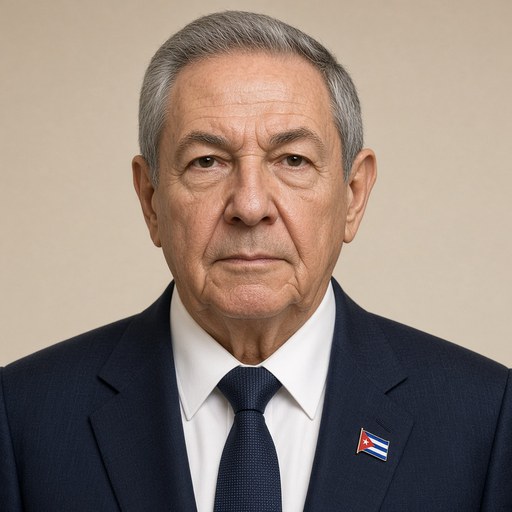
It is necessary to overcome old habits and impose demand and rigor as the norm of our conduct.
 Raúl Castro · President of Cuba
- Context
- Castro addressed Cuba's National Assembly on July 23, 2012, reporting on economic performance, reform progress, and policy updates for the first half of the year.
- Main themes
- Economic performance and growth, implementation of economic guidelines, fiscal and monetary policy reform, self-employment and cooperative development, trade balance and external finances, sugar industry recovery, tourism sector, agricultural production, discipline and demand in economic management, debt restructuring, national assembly session
- Duration
- ~26 min
- Words
- 3,079
- Sentences
- 86
- Readability
- 22
- Grade
- 18.7
- Syntax
- 3.32
- Vocabulary
- 2.34
Translated from Spanish
The broad sphere of national life a sentence belongs to. Every sentence has an Arena, so it is the denominator the other indices are read against.
Other86 sentences in 62 paragraphs
Comrades:
The last few days have been intense; on Friday the 20th, we held an important meeting of the Council of Ministers with the participation of numerous guests, and on Sunday we celebrated the Fourth Plenary of the Central Committee of the Party.
For its part, since last Thursday, parliamentary activity has been underway in preparation for the IX Ordinary Period of Sessions of this National Assembly, where the deputies received extensive information on the main issues of our current situation and debated in the twelve permanent commissions exhaustive topics that summarize the work carried out throughout the year in visits to workplaces, popular councils, participation in local assemblies of the People's Power, and daily exchanges with voters about the most pressing problems of national affairs.
In light of the above, I do not consider it necessary to elaborate further in these remarks and will refer only to a few matters of greater relevance.
Despite the tensions associated with the global economic and financial crisis, the effects of the American blockade, along with our own shortcomings, we can conclude that the national economy has shown favorable performance in the first half of the year.
Gross Domestic Product (the so-called GDP) grew by 2.1%, two-tenths higher than the same period last year, which was contributed to by the significant increase in trade and construction.
In general terms, productive activities were the ones that generated economic growth, although in agriculture the results are still modest, despite the increase in the production of rice, milk, and beans, which did not meet the targets of the plan. The shortfall in the production of pork and citrus limited the rise of this sector.
The sugar harvest, although burdened by delays, lack of organization, and poor preparation of the industry, maintained the trend towards recovery, with sugar production growing by 17.1%.
Although the planned figure for tourism income was not reached, in the first half of the year there was an increase of 5.8% in foreign visitors and an improvement in the main indicators in this activity.
Exports, both of goods and services, grew at a greater rate than imports, which favors the country's trade balance and the strict fulfillment of financial obligations related to the process of restructuring debts with the main creditors, contributing to the gradual but sustained recovery of the credibility of the Cuban economy. However, a tense situation in external finances has persisted, exacerbated by restrictions on obtaining new financing.
The internal financial balance is preserved, and although insufficient, the supply of construction materials to the population increased in the first half of the year.
The State budget, as reported, has shown acceptable behavior, so it is estimated that the year will conclude within the approved deficit framework.
In compliance with the agreements of the Sixth Congress, the process of implementing the Guidelines of the Economic and Social Policy of the Party and the Revolution has been underway. Alongside the elimination of old prohibitions and the additional flexibility of self-employment, we have entered a qualitatively superior phase for the updating of the economic model with the preparation and approval of the Strategic Projection for implementation for the period 2012-2015, with its corresponding schedule for comprehensive and gradual application.
At the same time, initial steps have been taken for the conceptualization of the country's economic model, and policies have been approved by the Party and Government leadership to guide the macroeconomic restructuring in the areas of credit, wholesale and retail prices, as well as fiscal policy, in which case progress has been made up to the promulgation in this session of Parliament of the new Tax Law. The fundamental principles of the new monetary policy have also been studied, all of which lays the groundwork for executing the most substantial transformations of the nation's economic system.
Regarding the restoration of discipline in internal finances and the recovery of the role of the contract as a guiding element in the interrelations of the different actors in the national economic scenario, as outlined in Guideline No. 10, I can inform you that we are beginning to appreciate the first positive signs, while recognizing that the road ahead is long and laborious.
This battle, essential for putting order in the economy, can only be won with the tools of demand, rigor, and systematicity from each and every one of the leaders and administrative and business officials, under the permanent control of the Party.
On the other hand, the policy for the experimental creation of cooperatives in non-agricultural activities was approved, in accordance with Guideline No. 25, with the preparation of a general law on cooperatives planned after a prudent period of these experiments.
Similarly, the leasing formula was authorized in gastronomic service establishments with a workforce of up to five workers, similar to what was done at the time with other personal services, such as barbershops, hair salons, and shoe repair, to name a few.
This decision, along with the aforementioned experiments of non-agricultural cooperatives, will allow the State to disengage from the administration of a set of secondary productions and services to focus on improving the management of the fundamental means of production that will remain under the condition of socialist state enterprise, which, as expressed in Guideline No. 2, is the main form in the national economy.
To that end, a group of business organizations has been selected to carry out experiments aimed at providing them with sufficient autonomy and broad powers in their economic and financial management, establishing a new system of relations between enterprises and the State. This experience, of great complexity and magnitude, will facilitate the removal of existing obstacles to the development of productive forces in the state sector and the design and subsequent approval of a new Law on the socialist state enterprise.
A draft Labor Code has also been developed with the aim of adjusting the rights and duties of workers to the new conditions, taking into account the sustained incorporation of labor into non-state management forms. We plan to present this draft law to the National Assembly in July of next year, after it is discussed thoroughly and democratically with workers and unions.
The creation of formulas that promote food production has also been the subject of analysis within the framework of the implementation of the guidelines. To that end, various measures have been adopted to eliminate the constraints that restrict the functioning and management of the basic units of cooperative production—known as UBPC—so that all forms of property existing in the Cuban countryside operate on equal terms.
At the same time, the policy for the marketing of agricultural products in the provinces of Havana, Artemisa, and Mayabeque is in the implementation phase, with the aim of facilitating direct access to the market for the different productive forms, benefiting more from sales, based on the redesign of the archaic existing distribution networks.
Four years after the entry into force of Decree-Law 259 on the granting of idle lands in usufruct and taking into account the accumulated experiences, a new Decree-Law will be issued in this matter in the coming days that, among other issues, will expand the granting of land to usufructuaries linked to state farms, UBPC, or Agricultural Production Cooperatives (CPA) to 67.10 hectares (5 caballerías); authorize the construction of permanent housing as improvements; and ensure the continuity of the usufruct right to family members or individuals who work the land.
Amid these changes, the principle that the Revolution will not leave any citizen unable to work unprotected has been upheld, as evidenced by the 110 million pesos in subsidies allocated to individuals for constructive actions in their homes.
Additionally, in compliance with guidelines 249 and 250, a set of measures has been developed for the comprehensive solution of the problems affecting Cuban families in food preparation, based on the premise of not modifying the national energy matrix, which prioritizes electricity over other domestic fuels, which, without a doubt, is more rational for the country. Among some of these measures is stabilizing the repair and maintenance of electric cooking equipment and applying pricing and credit policies that favor their replacement or the acquisition of more durable, higher quality, and better-performing means, including domestic production.
In parallel, the experiment in the provinces of Artemisa and Mayabeque has continued to delineate the functions between the assemblies and the councils of provincial and municipal administration, while the structure of the Central State Administration Bodies is being refined so that they focus on the state functions that correspond to them and do not interfere in the management of the business system.
In the context of updating the economic model, special attention has been paid to the training of cadres, with more than 2,500 graduates in Public Administration and Business Management and Direction.
The implementation of the guidelines also includes the preparation of the foundations of the country's long-term economic and social development program.
It is, comrades, that along with the updating of the economic model, we stop thinking (only) about survival and begin to project rationally, deeply, and optimistically the main lines of sustainable development of the economy and the resources and infrastructures that will be required for it.
You have surely noticed in the various reports presented to this Assembly and in my own intervention the recurrent mentions of the number of the guidelines when addressing aspects related to them. I must tell you that this is not casual; it is entirely intentional to firmly establish in our minds the strong will to enforce them and not allow decisions that are crucial for the future of the nation to once again become dead letters.
We must not forget that these agreements are the result of one of the most extensive and profound democratic exercises that the Revolution has carried out in consultation with the people.
I am convinced that you will also understand that a task of such magnitude cannot be fulfilled in a climate of indiscipline, disorder, and impunity. It is necessary to overcome old habits and impose demand and rigor as the norm of our daily conduct. There is no need to invent anything new; what is required is simply that day by day we demand from ourselves and from our subordinates the strict fulfillment of duty in each one's tasks.
This constitutes one of the main lines of my work in the positions of First Secretary of the Central Committee of the Party and President of the Councils of State and Ministers, as an essential means to generate and consolidate the change of mentality required for the fulfillment of the agreements of the 6th Congress and the First National Conference of the Party.
We will not achieve success either if we allow ourselves to be carried away by improvisation and haste. There have been appeals, not always well-intentioned, at the national level and especially abroad, for us to accelerate the pace of transformations.
In a matter of such scope, on which the socialist and independent future of the Homeland depends, there will never be space for the siren songs that call us to the immediate dismantling of socialism and thereby impose on the population the so-called shock therapies, or in other words, endanger the stability of the nation and the indestructible unity of the people around the Party and the Revolution.
We will continue to advance with determination, serenity, and audacity, without haste but without pause, avoiding making strategically significant errors.
In the last two interventions before this Parliament, I addressed the updating of the migration policy, a matter that has not been relegated in the slightest; on the contrary, we have continued to deepen its gradual flexibilization, taking into account the associated effects and the international scenario.
Today I reaffirm the will of the Party and State leadership to undertake the reformulation of the current regulations in this area and proceed with their gradual application.
In the international arena, we have also had fruitful activity. I still vividly remember the impressions from the recent official visits to China and Vietnam, where we confirmed the excellent level of our bilateral ties and the willingness to continue strengthening them in all fields. The occasion was also propitious to continue the exchange of experiences regarding the construction of socialism, based on the unique characteristics of each country.
Subsequently, we made a working visit to the Russian Federation, which allowed us to review the traditional relations of friendship between our two nations and to set new goals for their further strengthening.
A few days earlier, we had attended the Climate Change Conference in Rio de Janeiro, twenty years after the first one, where the vibrant intervention of the leader of our Revolution, Comrade Fidel, warned of the danger of the extinction of the human species, denouncing the causes and providing solutions.
On this occasion, we met with the President of Brazil, Dilma Rousseff, to whom we reiterated our satisfaction and gratitude for the magnificent state of bilateral relations, their development prospects, and we addressed the global economic crisis.
At the Climate Change Conference, it was evident that hardly anything has been done to contain it, due to the lack of political will from industrialized countries. The prevailing patterns of production and consumption in those societies are even more unsustainable as the destruction of the essential conditions for life on the planet accelerates.
At the same time, there is no indication that the deep global economic crisis, a result of selfishness and injustice, is on the path to resolution. The formulas applied by the governments of the main economic centers all revolve around saving the privileged classes while offloading their terrible social consequences onto workers, the unemployed, minorities, and immigrants.
As a result of the principled policy of the Revolution and its history of solidarity and friendship with the peoples of the world, our ties with countries from all continents are expanding and enriching.
Never before has the policy of hostility, economic war, and subversion by the United States against Cuba been more repudiated. The repeated and overwhelmingly majority calls from the UN to end the blockade are joined by the unanimous position of Latin America and the Caribbean, expressed with extraordinary strength and unity at the so-called Summit of the Americas, held in the city of Cartagena, Colombia.
The most recent events in North Africa and the Middle East demonstrate that the government of the United States, with the support of its European allies, is openly promoting the violent overthrow of sovereign governments, arming, financing, and training opposition groups, while also resorting to mercenaries.
Just a few days ago, the firm opposition of Russia and China blocked a draft resolution from the United Nations Security Council that would have opened the way for military aggression against Syria. We have supported, and we reaffirm today, the right of the Syrian people to fully exercise self-determination and sovereignty, without foreign interference or intervention.
Violence, massacres, and terrorist acts that take innocent lives must cease, as must the trafficking of arms and money to insurgent groups and the media manipulation for political purposes.
In our region, the United States conspires with national oligarchies against progressive governments committed to the legitimate demands for social justice and sovereignty over natural resources. The recent parliamentary coup in Paraguay shows that this trend continues, although other modalities have been added to the classic military coups of the past.
Plans for destabilization against the Bolivarian Revolution are being forged in light of the upcoming elections. I take this opportunity to express, on behalf of the Cuban people, our unwavering solidarity and support for the homeland of Bolívar and for our brother President Hugo Chávez Frías.
There is also conspiracy against Cuba. The United States does not cease in its efforts to form its fifth column on our soil and in employing new technologies for subversive purposes.
The persecution of financial transactions and the seizure of Cuban assets is growing, as they recently did with the Havana Club brand, and propaganda campaigns against the Revolution are increasing, the latest example being the disproportionate media treatment and distortion of the already controlled cholera outbreak in Granma province, aimed at discrediting the Cuban health system and its achievements, recognized worldwide.
In accordance with the principles of the cadre policy agreed upon at the 6th Congress and the First National Conference of the Party, starting today, a woman, representative of the generation born after the revolutionary triumph, has been elected as Vice President of our Parliament. I refer to Comrade Ana María Mari Machado, a member of the Central Committee and Deputy to this Assembly, who previously served as Vice President of the People's Supreme Court.
Ana María replaces Comrade Jaime Crombet in this responsibility, who requested resignation for health reasons and has a brilliant record of service to the Revolution, starting from his university student years, first in the University Student Federation (FEU), the Association of Young Rebels, and later in the Union of Young Communists, where he maintained an upward trajectory until he held the position of First Secretary of its National Committee and Head of the Youth Column of the Centenary.
He held important party responsibilities, such as First Secretary of the Provincial Committee in Havana and Pinar del Río, Party representative and Ambassador of Cuba in Angola, and member of the Central Committee and its Secretariat. In his capacity as Head of the Political Section of the Northern Front of Angola, he participated in military actions against the interventionist forces of dictator Mobutu of the then Republic of Zaire.
In the governmental sphere, he served as Vice President of the Council of Ministers.
In consideration of his relevant merits, personal qualities, and deep knowledge of the system of People's Power organs, Comrade Jaime will work with me on the commission that will draft the proposed amendments to be introduced into the Constitution of the Republic, in compliance with the agreements of the 6th Congress of the Party.
A few hours separate us from the commemoration in Guantánamo of the 59th anniversary of the assault on the "Moncada" and "Carlos Manuel de Céspedes" barracks. Just as back then, there are many challenges ahead of us, but so are the energies and willingness, in this case of an entire people, to overcome them, under the leadership of its only Party, with the same courage and optimism of our Five Heroes, to whom we send a warm and fraternal embrace.
That is all for now.
Thank you very much.
The original Spanish. The tags above are read on the English translation's sentences.
Compañeras y compañeros:
Las últimas jornadas han sido intensas, el viernes 20 efectuamos una importante reunión del Consejo de Ministros con la participación de numerosos invitados y el domingo celebramos el Cuarto Pleno del Comité Central del Partido.
Por su parte, desde el pasado jueves se ha desarrollado la actividad parlamentaria previa al IX Período Ordinario de Sesiones de esta Asamblea Nacional, donde los diputados recibieron amplia información sobre los principales asuntos de nuestra actualidad y debatieron en las doce comisiones permanentes temarios exhaustivos que resumen la labor desarrollada en el transcurso del año en visitas a centros laborales, consejos populares, la participación en las asambleas locales del Poder Popular y el intercambio cotidiano con los electores acerca de los problemas más acuciantes del quehacer nacional.
Teniendo en cuenta lo anterior, no considero necesario extenderme en estas palabras y me referiré solamente a algunas cuestiones de mayor relevancia.
A pesar de las tensiones asociadas a la crisis económica y financiera global, los efectos del bloqueo norteamericano, a lo que se suman nuestras propias insuficiencias, podemos concluir que la economía nacional ha mostrado en el primer semestre un desempeño favorable.
El Producto Interno Bruto (el llamado P.I.B) creció un 2,1%, superior en dos décimas al de igual período del año pasado, a lo cual contribuyó el significativo incremento del comercio y las construcciones.
En sentido general, las actividades productivas fueron las que generaron el crecimiento de la economía, aunque en la agricultura el resultado todavía es discreto, no obstante haberse elevado la producción de arroz, leche y frijoles, sin llegar a las metas del plan. El incumplimiento en la producción de carne de cerdo y cítricos limitaron el ascenso de este sector.
La zafra azucarera, si bien estuvo lastrada por atrasos, falta de organización y deficiente preparación de la industria, mantuvo la tendencia a su recuperación, creciendo en 17,1% la producción de azúcar.
Sin alcanzarse la cifra planificada de ingresos turísticos, en la primera mitad del año se logra un aumento del 5,8% de los visitantes extranjeros y una mejora de los indicadores principales en esta actividad.
Crecen, en mayor proporción que las importaciones, las exportaciones, tanto de bienes como de servicios, lo cual favorece la balanza comercial del país y el cumplimiento estricto de las obligaciones financieras vinculadas al proceso de reordenamiento de las deudas con los principales acreedores, contribuyendo al rescate gradual, pero sostenido, de la credibilidad de la economía cubana. No obstante, se ha mantenido una tensa situación en las finanzas externas, agravada por las restricciones en la obtención de nuevos financiamientos.
Se preserva el equilibrio financiero interno y, aunque insuficiente, se eleva la oferta a la población de materiales de la construcción en el primer semestre.
El presupuesto del Estado, como se informó, ha mostrado un comportamiento aceptable, por lo cual se estima concluir el año en los marcos del déficit aprobado.
En cumplimiento de los acuerdos del Sexto Congreso se ha venido desplegando el proceso de implementación de los Lineamientos de la Política Económica y Social del Partido y la Revolución. A la par de suprimir viejas prohibiciones y la flexibilización adicional del trabajo por cuenta propia, se ha entrado en una fase cualitativamente superior para la actualización del modelo económico con la elaboración y aprobación de la Proyección Estratégica de implementación para el período 2012-2015, con su correspondiente cronograma de aplicación integral y paulatina.
Al propio tiempo se dieron los pasos iniciales para la conceptualización del modelo económico del país y se aprobaron por la Dirección del Partido y del Gobierno las políticas para encaminar el reordenamiento macroeconómico en las esferas crediticia, de precios mayoristas y minoristas, así como la política fiscal, en cuyo caso se ha avanzado hasta la promulgación en esta sesión del Parlamento de la nueva Ley Tributaria. También se han estudiado los principios fundamentales de la nueva política monetaria, todo lo cual sienta las bases para ejecutar las transformaciones más sustanciales del sistema económico de la nación.
En cuanto al restablecimiento de la disciplina en las finanzas internas y la recuperación del papel del contrato como elemento rector en las interrelaciones de los diferentes actores del escenario económico nacional, tal y como se recoge en el Lineamiento No. 10, puedo informarles que comenzamos a apreciar los primeros síntomas positivos, sin dejar de reconocer que es muy largo y laborioso el camino a recorrer.
Esta batalla, imprescindible para poner orden en la economía, solo se podrá ganar con las armas de la exigencia, el rigor y la sistematicidad de todos y cada uno de los dirigentes y funcionarios administrativos y empresariales y bajo el control permanente del Partido.
Por otra parte, fue aprobada la política para la creación experimental de cooperativas en actividades no agropecuarias, en correspondencia con el Lineamiento No. 25, previéndose la elaboración de una ley general de cooperativas luego de transcurrido un plazo prudencial de estos experimentos.
Igualmente se autorizó aplicar la fórmula de arrendamiento en los establecimientos de servicios gastronómicos, que cuentan con una plantilla de hasta cinco trabajadores, de modo similar a lo efectuado en su momento con otros servicios personales, como barberías, peluquerías, reparación de calzado, por solo citar algunos.
Esta decisión, junto a los experimentos ya mencionados de las cooperativas no agropecuarias, permitirán al Estado desentenderse de la administración de un conjunto de producciones y servicios de carácter secundario para concentrarse en el perfeccionamiento de la gestión de los medios fundamentales de producción que se mantendrán bajo la condición de empresa estatal socialista que, como expresa el Lineamiento No. 2, es la forma principal en la economía nacional.
Con ese propósito, se ha seleccionado un grupo de organizaciones empresariales para la realización de experimentos dirigidos a dotarlas de autonomía suficiente y amplias facultades en su gestión económica y financiera, estableciéndose un nuevo sistema de relaciones entre las empresas y el Estado. Esta experiencia, de gran complejidad y magnitud, facilitará la supresión de frenos existentes para el desarrollo de las fuerzas productivas en el sector estatal y el diseño y posterior aprobación de una nueva Ley de la empresa estatal socialista.
Asimismo se ha conformado un anteproyecto de Código del Trabajo con el objetivo de ajustar a las nuevas condiciones los derechos y deberes de los trabajadores, teniendo en cuenta la sostenida incorporación de fuerza laboral a las formas no estatales de gestión. Planificamos presentar este proyecto de Ley a la Asamblea Nacional en julio del próximo año, luego de que se discuta profunda y democráticamente con los trabajadores y los sindicatos.
La creación de fórmulas que propicien la producción de alimentos ha sido también objeto de análisis en el marco de la implementación de los lineamientos. Con ese fin se adoptaron diversas medidas para eliminar las ataduras que restringen el funcionamiento y la gestión de las unidades básicas de producción cooperativa —conocidas por UBPC—, de modo que todas las formas de propiedad existentes en el campo cubano actúen en igualdad de condiciones.
Al mismo tiempo, se encuentra en fase de implantación la política para la comercialización de productos agropecuarios en las provincias de La Habana, Artemisa y Mayabeque, con el objetivo de facilitar el acceso directo al mercado de las diferentes formas productivas, beneficiándose en mayor grado de las ventas, a partir del rediseño de las arcaicas redes de distribución existentes.
A cuatro años de la entrada en vigor del Decreto-Ley 259 sobre la entrega de tierras ociosas en usufructo y teniendo en cuenta las experiencias acumuladas, en los próximos días se emitirá un nuevo Decreto-Ley en esta materia que, entre otros asuntos, ampliará hasta 67,10 hectáreas (5 caballerías) la entrega de tierras a usufructuarios que estén vinculados a granjas estatales, UBPC o Cooperativas de Producción Agropecuaria (CPA); autorizará la construcción de viviendas permanentes en calidad de bienhechurías y asegurará la continuidad del derecho de usufructo a familiares o personas que trabajan la tierra.
En medio de estos cambios se ha venido cumpliendo el principio de que la Revolución no dejará desamparado a ningún ciudadano imposibilitado de trabajar, prueba de ello son los 110 millones de pesos en subsidios asignados a personas naturales para realizar acciones constructivas en sus viviendas.
Asimismo, en cumplimiento de los lineamientos 249 y 250 fue elaborado un conjunto de medidas para la solución integral de los problemas que afectan a las familias cubanas en la cocción de alimentos, partiendo de la premisa de no modificar la matriz energética nacional, basada en privilegiar la electricidad ante otros combustibles de uso doméstico, lo cual, sin duda alguna, resulta más racional para el país. Entre algunas de esas medidas se encuentra estabilizar la reparación y mantenimiento de los equipos eléctricos de cocción y la aplicación de políticas de precios y crediticias que favorezcan su reposición o la adquisición de medios más duraderos, de mayor calidad y de mejores prestaciones, incluyendo su producción nacional.
En paralelo se ha continuado el experimento en las provincias de Artemisa y Mayabeque para delimitar las funciones entre las asambleas y los consejos de la administración provinciales y municipales, al tiempo que prosigue el perfeccionamiento de la estructura de los Organismos de la Administración Central del Estado, de modo que se dediquen a las funciones estatales que les corresponden y no interfieran en la gestión del sistema empresarial.
En el contexto de la actualización del modelo económico, se ha prestado especial atención a la preparación de los cuadros, habiéndose graduado más de 2 mil 500 en los diplomados en Administración Pública y en Dirección y Gestión Empresarial.
La implementación de los lineamientos incluye, además, la elaboración de las bases del programa de desarrollo económico y social del país a largo plazo.
Se trata, compañeras y compañeros, de que junto con la actualización del modelo económico dejemos de pensar (solo) en la supervivencia y pasemos a proyectar con racionalidad, profundidad y optimismo las principales líneas del desarrollo sostenible de la economía y los recursos e infraestructuras que se requerirán para ello.
Ustedes seguramente se han percatado en los diferentes informes presentados a esta Asamblea y en mi propia intervención, de las recurrentes menciones al número de los lineamientos cuando se abordan aspectos relacionados con estos. Debo decirles que eso no es casual, tiene toda la intención de ir fijando en nuestras mentes la firme voluntad de hacerlos cumplir y no permitir que decisiones trascendentales para el futuro de la nación se conviertan una vez más en letra muerta.
No se nos puede olvidar que esos acuerdos son fruto de uno de los ejercicios democráticos más amplios y profundos que ha llevado a cabo la Revolución en consulta con el pueblo.
Estoy convencido de que también comprenderán que una tarea de tamaña envergadura no puede cumplirse en un clima de indisciplina, desorden e impunidad. Es preciso superar viejos hábitos e imponer la exigencia y el rigor como norma de nuestra conducta cotidiana. No hay que estar inventando nada nuevo, lo que se requiere es, sencillamente, que día a día nos exijamos a nosotros mismos y a los subordinados el estricto cumplimiento del deber en las tareas de cada uno.
Ello constituye una de las líneas principales de mi trabajo en los cargos de Primer Secretario del Comité Central del Partido y Presidente de los Consejos de Estado y de Ministros, como medio imprescindible para generar y consolidar el cambio de mentalidad que requiere el cumplimiento de los acuerdos del 6to Congreso y la Primera Conferencia Nacional del Partido.
Tampoco alcanzaremos el éxito si nos dejamos llevar por la improvisación y el apresuramiento. No han faltado en el plano nacional y sobre todo en el exterior las apelaciones, no siempre bien intencionadas, para que aceleremos el ritmo de las transformaciones.
En un asunto de tanto alcance, del que depende el futuro socialista e independiente de la Patria, no habrá nunca espacio para los cantos de sirena que nos llaman al desmontaje inmediato del socialismo y con ello imponer a la población las denominadas terapias de choque, o lo que es lo mismo, poner en peligro la estabilidad de la nación y la indestructible unidad del pueblo en torno al Partido y la Revolución.
Proseguiremos avanzando con decisión, serenidad y audacia, sin prisas, pero sin pausas, evitando cometer errores de significación estratégica.
En las dos últimas intervenciones ante este Parlamento abordé la actualización de la política migratoria, cuestión que no ha sido relegada en lo más mínimo, por el contrario, hemos continuado profundizando para su gradual flexibilización, teniendo en cuenta los efectos asociados y el escenario internacional.
Hoy ratifico la voluntad de la dirección del Partido y el Estado de acometer la reformulación de las normativas vigentes en esta esfera y proceder a su paulatina aplicación.
En el orden internacional también hemos tenido una fecunda actividad. Conservo frescas en la memoria las impresiones de las recientes visitas oficiales a China y Vietnam, en las que constatamos el excelente nivel de nuestros vínculos bilaterales y la disposición para continuar reforzándolos en todos los campos. La ocasión fue propicia además para continuar el intercambio de experiencias acerca de la construcción del socialismo, partiendo de las características propias de cada país.
Posteriormente realizamos una visita de trabajo a la Federación de Rusia, que nos permitió pasar revista a las tradicionales relaciones de amistad entre ambas naciones y plantearnos nuevos propósitos para su fortalecimiento ulterior.
Unos días antes, habíamos asistido a la Conferencia sobre Cambio Climático en Río de Janeiro, veinte años después de la primera, donde se produjo la vibrante intervención del líder de nuestra Revolución, el compañero Fidel, advirtiendo del peligro de extinción de la especie humana, denunciando las causas y aportando soluciones.
En esta oportunidad nos reunimos con la presidenta de Brasil Dilma Roussef, a quien reiteramos la satisfacción y gratitud por el magnífico estado de las relaciones bilaterales, sus perspectivas de desarrollo y abordamos la crisis económica global.
En la Conferencia de Cambio Climático fue evidente que apenas nada se ha hecho para contenerlo, debido a la falta de voluntad política de los países industrializados. Los patrones de producción y consumo hoy prevalecientes en esas sociedades son aun más insostenibles mientras se acelera la destrucción de las condiciones indispensables para la vida en el planeta.
Al propio tiempo, no hay indicio alguno de que la profunda crisis económica global, resultado del egoísmo y de la injusticia, esté en camino de resolverse. Las fórmulas aplicadas por los gobiernos de los principales centros económicos giran todas en torno a la salvación de las clases privilegiadas a la vez que se descargan sus terribles consecuencias sociales sobre los trabajadores, los desempleados, las minorías y los inmigrantes.
Fruto de la política de principios de la Revolución y de su trayectoria de solidaridad y amistad con los pueblos del mundo, se amplían y enriquecen nuestros lazos con países de todos los continentes.
Nunca antes había sido más repudiada la política de hostilidad, guerra económica y subversión de los Estados Unidos contra Cuba. A los reclamos reiterados y abrumadoramente mayoritarios de la ONU para que se ponga fin al bloqueo, se suma la posición unánime de América Latina y el Caribe, expresada con extraordinaria fuerza y unidad en la llamada Cumbre de las Américas, efectuada en la ciudad de Cartagena, en Colombia.
Los acontecimientos más recientes acaecidos en el norte de África y el Medio Oriente demuestran que el gobierno de los Estados Unidos, con el concurso de sus aliados europeos, promueve sin ningún disimulo el derrocamiento por la fuerza de gobiernos soberanos, para lo que arma, financia y entrena a grupos opositores, sin dejar de recurrir a mercenarios.
Hace pocos días, la firme oposición de Rusia y China cerró el paso a un proyecto de resolución del Consejo de Seguridad de las Naciones Unidas que abriría el camino a una agresión militar contra Siria. Hemos apoyado, y lo reafirmamos hoy, el derecho del pueblo sirio al pleno ejercicio de la autodeterminación y la soberanía, sin injerencia ni intervención extranjera.
Deben cesar la violencia, las masacres y actos terroristas que cobran vidas inocentes, el trasiego de armas y dinero a los grupos insurgentes y la manipulación mediática con fines políticos.
En nuestra región, Estados Unidos conspira con las oligarquías nacionales contra los gobiernos progresistas, comprometidos con los legítimos reclamos de justicia social y de soberanía sobre los recursos naturales. El reciente golpe de Estado parlamentario en Paraguay evidencia que esta tendencia continúa, aunque se añadan otras modalidades a los clásicos golpes militares del pasado.
Contra la Revolución Bolivariana no dejan de fraguarse planes de desestabilización con motivo de las próximas elecciones. Aprovecho la ocasión para en nombre del pueblo cubano testimoniar nuestra inconmovible solidaridad y apoyo a la patria de Bolívar y al hermano presidente Hugo Chávez Frías (Aplausos).
También se conspira contra Cuba. Estados Unidos no cesa en el afán de formar su quinta-columna en suelo patrio y en el empleo de novedosas tecnologías con fines subversivos.
Crece la persecución de las transacciones financieras y el despojo de activos cubanos como hicieron hace poco con la marca Havana Club y se incrementan las campañas propagandísticas contra la Revolución, cuyo último ejemplo es el desproporcionado tratamiento mediático y la tergiversación del ya controlado brote de cólera en la provincia Granma, para desprestigiar el sistema de salud cubano y sus logros, reconocidos a nivel mundial.
En consonancia con los preceptos de la política de cuadros acordada en el 6to Congreso y la Primera Conferencia Nacional del Partido, desde hoy una mujer, representante de la generación nacida después del triunfo revolucionario, ha sido elegida como Vicepresidenta de nuestro Parlamento, me refiero a la compañera Ana María Mari Machado, miembro del Comité Central y Diputada a esta Asamblea, quien se desempeñaba como Vicepresidenta del Tribunal Supremo Popular.
Ana María sustituye en esta responsabilidad al compañero Jaime Crombet, el que solicitó la renuncia por razones de salud y atesora una brillante hoja de servicios a la Revolución, desde sus años de estudiante universitario, primero en la Federación Estudiantil Universitaria (FEU), la Asociación de Jóvenes Rebeldes y luego en la Unión de Jóvenes Comunistas, organización donde mantuvo una trayectoria ascendente hasta ocupar el cargo de Primer Secretario de su Comité Nacional y Jefe de la Columna Juvenil del Centenario.
Desempeñó importantes responsabilidades partidistas, como Primer Secretario del Comité Provincial en La Habana y Pinar del Río, representante del Partido y Embajador de Cuba en Angola y miembro del Comité Central y de su Secretariado. En su condición de Jefe de la Sección Política del Frente Norte de Angola, participó en las acciones de ese mando militar contra las fuerzas intervencionistas del dictador Mobutu de la entonces República de Zaire.
En la esfera gubernamental ejerció como Vicepresidente del Consejo de Ministros.
En consideración a sus relevantes méritos, cualidades personales y el profundo conocimiento del sistema de órganos del Poder Popular, el compañero Jaime trabajará conmigo en la atención a la comisión que elaborará el proyecto de modificaciones a introducir en la Constitución de la República, en cumplimiento de los acuerdos del 6to Congreso del Partido.
Pocas horas nos separan de la conmemoración en Guantánamo del 59 aniversario del asalto a los cuarteles “Moncada” y “Carlos Manuel de Céspedes”. Al igual que entonces, son muchos los retos que tenemos por delante, pero también lo son las energías y la disposición, en este caso de todo un pueblo, para superarlos, bajo la dirección de su único Partido, con la misma valentía y optimismo de nuestros Cinco Héroes, a quienes enviamos un caluroso y fraternal abrazo.
Eso es todo por ahora.
Muchas gracias (Aplausos).
Especiales
1 de Mayo: Ultra ricos y trabajadores pobres en la Argentina de Llao Llao 5 mayo 2026 | 3
Confesiones del Secretario de Estado 5 mayo 2026 | 9
Medicina Natural y Tradicional: Usos comunes para tres cítricos 5 mayo 2026 | 3
¿Cómo la crisis y la guerra impactan en la clase obrera del mundo? (+ Video) 5 mayo 2026 | 2
Pequeña entrevista marxiana a Néstor Kohan 5 mayo 2026 | 5
ir aEspeciales »