




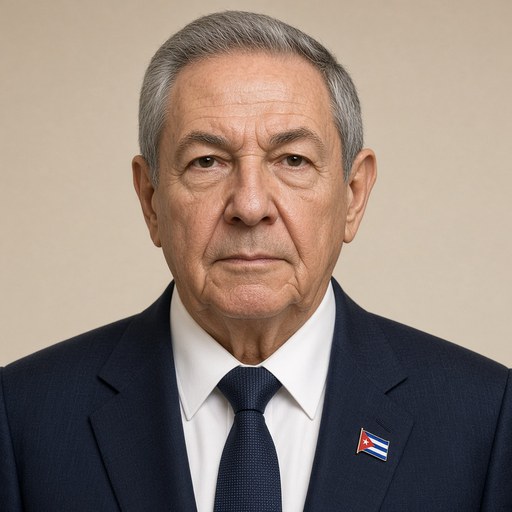
Speech at the extraordinary session of the National Assembly of Angola, in honor of the visit of the
 Raúl Castro · President of Cuba
- Context
- Raúl Castro addressed an extraordinary session of Angola's National Assembly in February 2009, honoring Cuba-Angola historical solidarity and pledging continued cooperation.
- Main themes
- Cuba-Angola solidarity, internationalist military cooperation, shared history of independence struggle, Cuban sacrifice in Angola, African heritage of Cuban people, national reconstruction of Angola, bilateral relations, peace and stability, Operation Carlota, anti-colonialism
- Duration
- ~8 min
- Words
- 918
- Sentences
- 30
- Readability
- 34
- Grade
- 16.1
- Syntax
- 3.47
- Vocabulary
- 2.36
Translated from Spanish
The broad sphere of national life a sentence belongs to. Every sentence has an Arena, so it is the denominator the other indices are read against.
Other30 sentences in 18 paragraphs
Dear Fernando da Piedade dos Santos, better known to us as "Nando", President of the National Assembly of the Republic of Angola;
Distinguished Deputies, Deputies, and guests:
It is a great honor and a privilege to convey the greetings and fraternal embrace of the Cuban people and the Leader of the Revolution, comrade Fidel Castro Ruz. It is moving to step once again on the homeland of a noble and supportive people, of men and women, children and the elderly, who have offered the best of themselves, their very existence, in the pursuit of justice, well-being, and national unity.
For these ideals, Angolans and Cubans fought together for many years, to preserve the independence, sovereignty, and territorial integrity of Angola.
From the beginning of the independence struggle, on February 4, 1961, Cubans expressed our solidarity with such a just cause. I remember the first exchanges of several comrades with comrade Neto, including Che Guevara and the current Brigadier General Moracén, known in Cuba and also in Angola by the fitting title of "Quita fusil." And when independence was proclaimed on November 11, 1975, we felt the victory as our own, and for 15 years we contributed our modest efforts to preserve it.
In a solemn ceremony, at the same time across the country, on December 7, 1989, with the presence in Cuba of President José Eduardo dos Santos, we laid to rest the 2,077 compatriots who gave their lives in such a noble endeavor and who rested for many years in sister Angolan soil, until at the end of the conflict, and as we had promised their families: they came together and returned together to the sacred soil of the Homeland. Of the 169 municipalities in our country, except for two, in the rest, 167, the remains of the heroic Cuban fighters who fell in this land are preserved. More than 350,000 internationalist fighters from the Revolutionary Armed Forces of Cuba and nearly 50,000 Cuban civilian collaborators came to this land absolutely voluntarily, from the most modest soldier to the highest-ranking general, convinced that they were simply paying a historical debt to Africa.
The blood of the children of this continent runs through the veins of the Cuban people. In our minds are the ideals of freedom and resistance bequeathed by our ancestors, many of whom were slaves from black Africa, especially from the western part of the continent, and their descendants, who joined en masse in the struggle to achieve Cuba's independence.
When this operation was planned, we decided to name it Carlota, which was simply the name of a slave, apparently of Angolan origin, who led a slave uprising in the province of Matanzas, east of the Cuban capital, in the 19th century. Like all those continuous uprisings, they failed, but each one was in turn a triumph over the most shameful sin in the history of humanity.
On that occasion, Carlota was able to escape and later, returning from the forest, which we call "mata" here, organized another uprising of the slave crew of another small sugar factory; this time it also failed, and she was captured. The immediate punishment from the European colonialists was swift; in front of the survivors and other neighboring crews, her members were tied to four horses and brutally dismembered.
As we knew that this was what the colonialists and other non-colonialists from other lands intended to do with Angola, I believe it was just to give this glorious name to a daughter of this country.
In September 2007, President Dos Santos, during a historic visit to Cuba, expressed to us the desire to begin a higher stage in the development of relations between the two countries.
I know that I express the feelings of our people when I reaffirm before you, deputies elected by the people, the commitment we made with the dear comrade President Agostinho Neto: to be alongside our Angolan brothers in good times and bad, supporting each other.
As always, Cuban cooperation will be at the service of the noble aspirations for peace and prosperity of the children of this land.
Today Angola enjoys stability and peace and is an example for many other countries of how they wisely resolved their great differences. It is a deserved right conquered by its people. Today the great challenge is national reconstruction, development, and the elevation of the well-being of citizens. In this gigantic task, which involves rebuilding thousands of kilometers of roads, numerous bridges, housing, and industries, the nation concentrates all efforts amid the international economic crisis and the uncertainty it generates.
This extraordinary endeavor is guided by the responsibility and dedication with which you, ladies and gentlemen Deputies, fulfill the mandate received. We know of your special performance in support of the State's effort to fulfill its high commitment to the people.
In the new and momentous battle for development, peace, and well-being, Cubans will once again be alongside our Angolan brothers.
I especially remember now President Agostinho Neto, when he proclaimed the right of Angola, from Cabinda to Cunene, with its almost one million and a quarter square kilometers, to be one people and one nation and with the sacrifice of all of you, of all Angolans, that great amount of blood shed, among which with honor and pride is a little of our blood, we enjoy today as we contemplate the representatives of this noble people gathered in their Parliament and working for the future and for the well-being of all.
Thank you very much.
The original Spanish. The tags above are read on the English translation's sentences.
Estimado Fernando da Piedade dos Santos, más conocido por nosotros por Nando (APLAUSOS), Presidente de la Asamblea Nacional de la República de Angola;
Distinguidas Diputadas, Diputados e invitados:
Constituye un alto honor y un privilegio trasmitirles el saludo y el abrazo de hermandad del pueblo cubano y del Jefe de la Revolución , compañero Fidel Castro Ruz. Emociona pisar otra vez la patria de un pueblo noble y solidario, de hombres y mujeres, niños y ancianos, que ha ofrendado lo mejor de sí, su propia existencia, en aras de la justicia, el bienestar y la unidad nacional.
Por esos ideales lucharon unidos angolanos y cubanos durante largos años, por preservar la independencia, la soberanía y la integridad territorial de Angola.
Desde el comienzo de la lucha independentista, el 4 de febrero de 1961, los cubanos expresamos nuestra solidaridad con tan justa causa. Recuerdo los primeros intercambios de varios compañeros con el camarada Neto, entre ellos el Che Guevara y el hoy general de brigada Moracén, conocido en Cuba y también en Angola con el justo calificativo de Quita fusil. Y cuando el 11 de noviembre de 1975 se proclamó la independencia, sentimos como propia la victoria y durante 15 años aportamos nuestro modesto esfuerzo para preservarla.
En una solemne ceremonia, a la misma hora en todo el país, el 7 de diciembre de 1989, con la presencia en Cuba del Presidente José Eduardo dos Santos, dimos sepultura a los 2 077 compatriotas que dieron su vida en tan noble empeño y que durante largos años reposaron en la hermana tierra angolana, hasta que al final de la contienda, y así se lo habíamos ofrecido a sus familiares: juntos vinieron y juntos regresaron al sagrado suelo de la Patria. De los 169 municipios que tiene nuestro país, menos en dos, en el resto, 167, se guardan los restos de los heroicos combatientes cubanos caídos en esta tierra. Más de 350 mil combatientes internacionalistas de las Fuerzas Armadas Revolucionarias de Cuba y cerca de 50 mil colaboradores civiles cubanos llegaron a esta tierra de forma absolutamente voluntaria, desde el más modesto soldado hasta el general de mayor graduación, convencidos de que simplemente pagaban una deuda histórica con África.
Por las venas del pueblo cubano corre sangre de los hijos de este continente. En nuestras mentes están los ideales de libertad y resistencia legados por nuestros antepasados, buena parte de ellos esclavos procedentes del África negra, sobre todo la parte occidental del continente, y sus descendientes, que se sumaron masivamente a la lucha por alcanzar la independencia de Cuba.
Cuando se planificaba esta operación, decidimos ponerle el nombre de Carlota, que no era más que el nombre de una esclava, al parecer de origen angolano, que dirigió una sublevación de esclavos en la provincia de Matanzas, al este de la capital cubana, en el siglo XIX. Como todas esas continuas sublevaciones, fracasaron, pero cada una de ellas era a su vez un triunfo sobre el más bochornoso pecado de la historia de la humanidad.
En esa ocasión Carlota pudo escapar y más adelante, volviendo del bosque, que aquí llamamos mata, organizó otra sublevación de la dotación de esclavos de otra pequeña fábrica de azúcar, en esta ocasión fracasó también y ella fue capturada. La sanción inmediata de los colonialistas europeos no se hizo esperar, delante de los supervivientes y de otras dotaciones vecinas, sus miembros fueron atados a cuatro caballos y ferozmente descuartizada.
Como sabíamos que esto era lo que pretendían los colonialistas y otros no colonialistas de otras tierras, era lo que pretendían hacer con Angola. Creo que fue justo ponerle este glorioso nombre de una hija de este país. (APLAUSOS).
En septiembre del 2007, el Presidente Dos Santos, en una histórica visita a Cuba, nos expresó el deseo de comenzar una etapa superior en el desarrollo de las relaciones entre los dos países.
Sé que expreso el sentir de nuestro pueblo, al ratificar ante ustedes, diputados elegidos por el pueblo, el compromiso que asumimos con el entrañable camarada Presidente Agostinho Neto: estar junto a nuestros hermanos angolanos en los tiempos malos y buenos, apoyándonos mutuamente (APLAUSOS).
Como siempre, la cooperación cubana estará al servicio de los nobles anhelos de paz y prosperidad de los hijos de esta tierra.
Hoy Angola disfruta de estabilidad y paz y es un ejemplo para otros muchos países, de cómo supieron resolver sabiamente sus grandes diferencias (APLAUSOS). Es un merecido derecho conquistado por su pueblo. Hoy el gran desafío es la reconstrucción nacional, el desarrollo y la elevación del bienestar de los ciudadanos. En esta gigantesca tarea, que implica reconstruir miles de kilómetros de carreteras, numerosos puentes, viviendas e industrias, concentra la nación todos los esfuerzos en medio de la crisis económica internacional y de la incertidumbre que esta genera.
Ese extraordinario empeño es guiado por la responsabilidad y la entrega con que ustedes, señoras y señores Diputados, cumplen el mandato recibido. Conocemos de su especial desempeño en respaldo al esfuerzo del Estado para dar cumplimiento a su elevado compromiso con el pueblo.
En la nueva y trascendental batalla por el desarrollo, la paz y el bienestar, los cubanos estaremos una vez más junto a nuestros hermanos angolanos.
Recuerdo especialmente ahora al Presidente Agostinho Neto, cuando proclamaba el derecho de Angola, de Cabinda a Cunene, con sus casi millón y cuarto de kilómetros cuadrados, que sea un solo pueblo y una sola nación (APLAUSOS) y con el sacrificio de todos ustedes, de todos los angolanos, esa gran cantidad de sangre derramada, entre la que con honor y con honra se encuentra un poquito de nuestra sangre, disfrutamos hoy al contemplar a los representantes de este noble pueblo reunidos en su Parlamento y trabajando para el futuro y para el bienestar de todos.
Muchas gracias (OVACIÓN).