




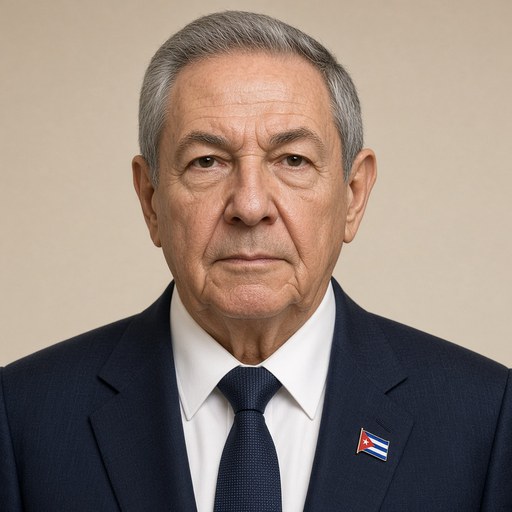
Speech delivered at the event for the 50th anniversary of the triumph of the Revolution, held in Sa
 Raúl Castro · President of Cuba
- Context
- Raúl Castro addressed the Cuban people in Santiago de Cuba on January 1, 2009, marking the 50th anniversary of the triumph of the Revolution.
- Main themes
- 50th anniversary of the Cuban Revolution, revolutionary history and struggle, Fidel Castro's legacy, imperialism and US intervention, mambí independence tradition, sacrifice and heroism, social transformation, Cuban sovereignty, armed struggle, revolutionary armed forces, Latin American emancipation, Cuban identity and resilience
- Duration
- ~22 min
- Words
- 2,608
- Sentences
- 102
- Readability
- 39
- Grade
- 14.2
- Syntax
- 3.13
- Vocabulary
- 2.41
Translated from Spanish
The broad sphere of national life a sentence belongs to. Every sentence has an Arena, so it is the denominator the other indices are read against.
Other102 sentences in 63 paragraphs
Santiagueras and santiagueros;
Orientals;
Combatants of the Rebel Army, the clandestine struggle, and every battle in defense of the Revolution over these 50 years;
Compatriots:
The first thought, on a day like today, is for those who fell in this long struggle. They are a paradigm and symbol of the effort and sacrifice of millions of Cubans. In close union, wielding the powerful weapons that have represented the guidance, teachings, and example of Fidel, we learned in the rigor of the struggle to transform dreams into realities; to not lose our calm and confidence in the face of dangers and threats; to lift our spirits after great setbacks; to turn every challenge into victory and to overcome adversities, no matter how insurmountable they may seem.
Those of us who have had the privilege of living this stage of our history with full intensity know well how true the warning was that he gave us on January 8, 1959, in his first speech upon entering the capital:
"The tyranny has been overthrown. The joy is immense. And yet, there is still much to be done. Let us not deceive ourselves into believing that from now on everything will be easy; perhaps from now on everything will be more difficult," he concluded.
For the first time, the Cuban people achieved political power. On this occasion, alongside Fidel, the mambises did enter Santiago de Cuba. Behind them lay exactly 60 years of absolute domination by the nascent North American imperialism, which would soon reveal its true intentions by preventing the entry of the Liberating Army into this city.
Also left behind were the great confusion and, above all, the enormous frustration generated by the North American intervention. However, the will to fight of the Mambí Army and the thought that guided the weapons of Céspedes, Agramonte, Gómez, Maceo, and so many other heroes and fighters for independence remained in suspense, beyond its formal dissolution.
We lived through just over five decades of corrupt governments, of new North American interventions; the Machado tyranny and the frustrated revolution that overthrew it. Later, in 1952, the coup d'état, with the support of the North American government, reestablished the dictatorship, a formula applied in those years to ensure its dominance in Latin America.
For us, it became clear that armed struggle was the only way. The revolutionaries were once again faced, as Martí had been before, with the dilemma of the necessary war for independence that was truncated in 1898.
The Rebel Army took up the mambí arms again and, after the triumph, transformed forever into the invincible Revolutionary Armed Forces.
The Generation of the Centenary, which in 1953 stormed the Moncada and Carlos Manuel de Céspedes barracks, had the important legacy of Martí, with his global humanistic vision that goes beyond the achievement of national liberation.
In historical terms, the time between the frustration of the mambí dream and the triumph in the Liberation War was brief. At the beginning of this period, Mella, one of the founders of our first communist party and creator of the University Student Federation (FEU), became the legitimate heir and bridge that united Martí's thought and the most advanced ideas.
These were years of maturation of the consciousness and action of workers and peasants, and of the formation of a genuine, brave, and patriotic intellectuality that has accompanied them to the present.
The Cuban teaching profession, faithful custodian of the fighting traditions of its predecessors, sowed them in the best of the new generations.
From the very moment of triumph, it became evident to every humble man and woman that the Revolution was a just social cataclysm that knocked on all doors, from the mansions on Fifth Avenue in the capital to the most miserable and remote hut in our fields and mountains.
The revolutionary laws not only fulfilled the Moncada program, they surpassed it by far in the logical evolution of the process. They also set a precedent for the peoples of our America who began the emancipatory movement against colonialism 200 years ago.
In Cuba, American history took different paths. Nothing morally valuable has been foreign to the whirlwind that, even before January 1, 1959, began to sweep away opprobrium and inequities, while paving the way for the gigantic effort of an entire people, determined to give themselves what they deserve and have managed to build with their blood and sweat.
Millions of Cuban women and men have been workers, students, soldiers, or simultaneously all three, whenever circumstances have demanded it.
The masterful synthesis of Nicolás Guillén summarized the meaning for the people of the triumph of January 1959: "I have what I had to have," says one of his verses, referring not to material wealth, but to being masters of our destiny.
It is a doubly meritorious victory, because it has been achieved despite the sick and vengeful hatred of the powerful neighbor.
The fostering and support of sabotage and banditry; the invasion of Playa Girón; the blockade and other economic, political, and diplomatic aggressions; the permanent campaign of lies aimed at denigrating the Revolution and its leaders; the October Crisis, the kidnappings and attacks on civilian boats and aircraft; state terrorism, with its terrible toll of 3,478 dead and 2,099 incapacitated; the plans to assassinate Fidel and other leaders; the murders of workers, peasants, fishermen, students, diplomats, and Cuban fighters. These and many other crimes bear witness to the stubborn effort to extinguish at any cost the light of justice and dignity that the dawn of January 1 represented.
One after another, all North American administrations have not ceased to attempt to force a regime change in Cuba, using one method or another, with greater or lesser aggressiveness.
To resist has been the order of the day and the key to each of our victories during this half-century of uninterrupted struggle, in which we have invariably risked our own skin, without failing to recognize the broad and decisive solidarity received.
For many years now, Cuban revolutionaries have adhered to Martí's maxim: "Freedom is very expensive, and it is necessary to either resign oneself to living without it or decide to buy it at its price."
In this square, on the 30th anniversary of the triumph, Fidel told us: "Here we are because we have been able to resist." A decade later, in 1999, from this same balcony, he stated that the special period constituted "the most extraordinary page of glory and patriotic and revolutionary firmness, () when we were left absolutely alone in the midst of the West, 90 miles from the United States, and decided to move forward." End of quote. We repeat that today.
It has been a firm resistance, free from fanaticism, based on solid convictions and the decision of an entire people to defend them at whatever cost. A living example of this at this moment is the unwavering firmness of our glorious Five Heroes.
Today we are not alone in the face of the empire on this side of the ocean, as happened in the 1960s, when the United States imposed the absurdity of expelling Cuba from the OAS in January 1962, the country that had recently been the victim of an invasion organized by the North American government and escorted to our shores by its warships. Precisely, as has been demonstrated, that expulsion was the prelude to a direct military intervention, prevented only by the deployment of Soviet nuclear missiles that led to the October Crisis, known worldwide as the missile crisis.
Today the Revolution is stronger than ever and has never ceded an inch of its principles, not even in the most difficult moments. That truth does not change in the slightest, even if a few tire and even renounce their history, forgetting that life is an eternal struggle.
Does this mean that the dangers have diminished? No, let us not delude ourselves. When we commemorate this half-century of victories, reflection on the future, on the next fifty years, which will also be of permanent struggle, is imperative.
Observing the current turbulence of the contemporary world, we cannot think that they will be easier; I say this not to scare anyone, it is the pure reality.
We must also keep very much in mind what Fidel told us all, but especially the youth, at the University of Havana on November 17, 2005: "This country can self-destruct; this Revolution can be destroyed; those who cannot destroy it today are them; we can destroy it, and it would be our fault," he stated.
In the face of this possibility, I ask: what is the guarantee that something so terrible does not happen to our people?
How can we avoid such a devastating blow that we would need a long time to recover and achieve victory again?
I speak on behalf of all those who have fought, from the first shots at the walls of Moncada, 55 years ago, to those who have fulfilled heroic internationalist missions.
I speak, of course, also on behalf of those who fell in the wars of independence and more recently in the Liberation War. In representation of all of them, I speak on behalf of Abel and José Antonio, of Camilo and Che, when I affirm, first of all, that this demands of the leaders of tomorrow that they never forget that this is the Revolution of the humble, by the humble, and for the humble; that they do not soften with the siren songs of the enemy and are aware that, by its essence, it will never cease to be aggressive, dominant, and treacherous; that they never stray from our workers, peasants, and the rest of the people; that militancy prevents them from destroying the Party. Let us learn from history.
If they act this way, they will always have the support of the people, even when they make mistakes on issues that do not violate essential principles. But if their actions are not in line with that conduct, they will not even have the necessary strength or opportunity to rectify, for they will lack the moral authority that only the masses grant to those who do not yield in the struggle. They could end up being powerless in the face of external and internal dangers, and unable to preserve the work born of the blood and sacrifice of many generations of Cubans.
If that were to happen, let no one doubt it, our people will know how to fight back, and at the forefront will be today's mambises, who will not disarm ideologically nor let the sword fall.
It is the historical leadership of the Revolution's responsibility to prepare the new generations to assume the enormous responsibility of continuing forward with the revolutionary process.
This heroic city of Santiago, and all of Cuba, witnessed the sacrifice of thousands of compatriots; the accumulated anger at so many lives cut short by crime; the infinite pain of our mothers and the sublime courage of their daughters and sons.
Here was born a young revolutionary, only 22 years old when he was assassinated, who symbolizes that willingness to sacrifice, purity, bravery, serenity, and love for the homeland of our people: Frank País García.
In this eastern land, the Revolution was born. Here was the clarion call of La Demajagua and July 26; here we disembarked on the Granma and began the fight in mountains and plains, which then spread throughout the island. As Fidel said in La Historia me Absolverá, here "every day seems like it will be again the day of Yara or the day of Baire."
Never again will misery, ignominy, abuse, and injustice return to our land!
Never again will pain return to the hearts of mothers nor shame to the souls of every honest Cuban!
It is the firm decision of a nation in a state of struggle, aware of its duty and proud of its history.
Our people know every imperfection of the work that they themselves have built with their arms and defended at the risk of their lives. We revolutionaries are our own harshest critics. We have not hesitated to publicly clarify deficiencies and errors. There are plenty of past and recent examples.
Since October 10, 1868, disunity has been a fundamental cause of our defeats. From January 1, 1959, unity, forged by Fidel, has been the guarantee of our victories. Our people have managed to maintain it in the face of all adversities and divisive attempts and have known how to place common aspirations above differences, defeating pettiness through collectivism and generosity.
Revolutions only advance and endure when they are carried out by the people. Understanding that truth and acting consistently in accordance with it has been a decisive factor in the victory of the Cuban Revolution in the face of enemies, difficulties, and seemingly invincible challenges.
As we reach the first half-century of a triumphant Revolution, let the main tribute go to our wonderful people; to their exemplary decision, courage, fidelity, solidarity and internationalist vocation; to their extraordinary demonstration of will, spirit of sacrifice, and confidence in victory, in the Party, in its maximum leader, and above all in themselves.
I know that I express the feelings of my compatriots and many revolutionaries around the world, as I pay tribute at this hour to the Commander in Chief of the Cuban Revolution, Fidel Castro Ruz.
An individual does not make history, we know that, but there are indispensable men capable of decisively influencing its course. Fidel is one of them, no one doubts it, not even his fiercest enemies.
From a very young age, he embraced a Martian thought: "All the glory of the world fits in a grain of corn." He turned it into a shield against the superficial and the fleeting, into his main weapon to transform flattery and honors, however deserved they may be, into greater modesty, honesty, a willingness to fight, and love for the truth, which he has invariably placed above all else.
He referred to these ideas, in this very square, 50 years ago. His words from that night remain absolutely relevant.
In this special moment that makes us reflect on the path traveled and, above all, on the even longer one that lies ahead, when we reaffirm our commitment to the people and our martyrs, allow me to conclude by repeating the prophetic warning and the call to combat that the Commander in Chief made to us in this historic place, on January 1, 1959, when he stated:
"We do not believe that all problems will be easily resolved, we know that the path is strewn with obstacles, but we are men of faith, who always face great difficulties. The people can be sure of one thing, which is that we can make mistakes once and many times, the only thing they will never be able to say about us is that we stole, that we betrayed."
And he added:
"We will never allow ourselves to be carried away by vanity or ambition, there is no greater satisfaction or reward than fulfilling our duty," he concluded.
On a date of such meaning and symbolism, let us reflect on these ideas that serve as a guide for the true revolutionary. Let us do so with the satisfaction of having fulfilled our duty up to the present; with the endorsement of having lived with dignity the most intense and fruitful half-century of our national history and with the firm commitment that in this land we will always be able to exclaim with pride:
Glory to our heroes and martyrs!
Long live Fidel!
Long live the Revolution!
Long live a free Cuba!
The original Spanish. The tags above are read on the English translation's sentences.
Santiagueras y santiagueros;
Orientales;
Combatientes del Ejército Rebelde, la lucha clandestina y de cada combate en defensa de la Revolución durante estos 50 años;
Compatriotas:
El primer pensamiento, un día como hoy, para los caídos en esta larga lucha. Ellos son paradigma y símbolo del esfuerzo y el sacrificio de millones de cubanos. En estrecha unión, empuñando las poderosas armas que han significado la dirección, las enseñanzas y el ejemplo de Fidel, aprendimos en el rigor de la lucha a transformar sueños en realidades; a no perder la calma y la confianza frente a peligros y amenazas; a levantar el ánimo tras los grandes reveses; a convertir en victoria cada reto y a superar las adversidades, por insuperables que pudieran parecer.
Los que hemos tenido el privilegio de vivir con toda intensidad esta etapa de nuestra historia, sabemos bien cuán cierta ha resultado la alerta que nos hizo aquel 8 de enero de 1959, en su primer discurso al entrar a la capital:
La tiranía ha sido derrocada. La alegría es inmensa. Y sin embargo, queda mucho por hacer todavía. No nos engañamos creyendo que en lo adelante todo será fácil; quizás en lo adelante todo sea más difícil, concluyó.
Por primera vez el pueblo cubano alcanzaba el poder político. En esta ocasión, junto a Fidel, los mambises sí entraron a Santiago de Cuba. Atrás quedaban 60 años exactos de dominación absoluta del naciente imperialismo norteamericano, que no tardaría en mostrar sus verdaderos propósitos, al impedir la entrada a esta ciudad del Ejército Libertador.
Atrás quedaron también la gran confusión y sobre todo la frustración enorme que generó la intervención norteamericana. Sin embargo se mantuvo en vilo, más allá de su disolución formal, la voluntad de lucha del Ejército Mambí y el pensamiento que guió las armas de Céspedes, Agramonte, Gómez, Maceo y tantos otros próceres y combatientes por la independencia.
Vivimos algo más de cinco décadas de gobiernos corruptos, de nuevas intervenciones norteamericanas; la tiranía machadista y la revolución frustrada que la derrocó. Más tarde, en 1952, el golpe de Estado, con el apoyo del gobierno norteamericano, instauró nuevamente la dictadura, fórmula aplicada en esos años para asegurar su dominio en América Latina.
Para nosotros quedó claro que la lucha armada era la única vía. A los revolucionarios se nos planteaba nuevamente, como a Martí antes, el dilema de la guerra necesaria por la independencia que quedó trunca en 1898.
El Ejército Rebelde retomó las armas mambisas y después del triunfo se transformó para siempre en las invictas Fuerzas Armadas Revolucionarias.
La Generación del Centenario, que en 1953 asaltó los cuarteles Moncada y Carlos Manuel de Céspedes, contó con el importante legado de Martí, con su visión global humanística que va más allá de la consecución de la liberación nacional.
En términos históricos, fue breve el tiempo que medió entre la frustración del sueño mambí y el triunfo en la Guerra de Liberación. A comienzos de este período, Mella, uno de los fundadores de nuestro primer partido comunista y creador de la Federación Estudiantil Universitaria (FEU), se convierte en heredero legítimo y puente que une el pensamiento martiano y las ideas más avanzadas.
Fueron años de maduración de la conciencia y la acción de obreros y campesinos, y de formación de una intelectualidad genuina, valiente y patriota que los ha acompañado hasta el presente.
El magisterio cubano, fiel depositario de las tradiciones de lucha de sus predecesores, las sembró en lo mejor de las nuevas generaciones.
Desde el mismo momento del triunfo, se hizo evidente para cada hombre y mujer humilde que la Revolución era un justiciero cataclismo social que tocó todas las puertas, desde los palacetes de la Quinta Avenida en la capital, hasta el más misérrimo y apartado bohío de nuestros campos y montañas.
Las leyes revolucionarias no sólo dieron cumplimiento al programa del Moncada, lo superaron con creces en la lógica evolución del proceso. Además sentaron un precedente para los pueblos de nuestra América que hace 200 años iniciaron el movimiento emancipador del colonialismo.
En Cuba, la historia americana tomó rumbos diferentes. Nada moralmente valioso ha sido ajeno al torbellino que aun antes del primero de enero de 1959, comenzó a barrer oprobios e inequidades, a la vez que abrió paso al gigantesco esfuerzo de todo un pueblo, decidido a darse a sí mismo cuanto merece y ha logrado levantar con su sangre y su sudor.
Millones de cubanas y cubanos han sido trabajadores, estudiantes, soldados, o simultáneamente las tres cosas, cuantas veces las circunstancias lo han exigido.
La síntesis magistral de Nicolás Guillén resumió el significado para el pueblo del triunfo de enero de 1959: Tengo lo que tenía que tener, dice uno de sus versos, refiriéndose no a riquezas materiales, sino a ser dueños de nuestro destino.
Es una victoria doblemente meritoria, porque ha sido alcanzada a pesar del odio enfermizo y vengativo del poderoso vecino.
El fomento y apoyo al sabotaje y el bandidismo; la invasión de Playa Girón; el bloqueo y demás agresiones económicas, políticas y diplomáticas; la permanente campaña de mentiras dirigida a denigrar a la Revolución y sus líderes; la Crisis de Octubre, los secuestros y ataques a embarcaciones y aeronaves civiles; el terrorismo de Estado, con su terrible saldo de 3 478 muertos y 2 099 incapacitados; los planes de atentados a Fidel y otros dirigentes; los asesinatos de obreros, campesinos, pescadores, estudiantes, diplomáticos y combatientes cubanos. Esos y otros muchos crímenes dan fe del tozudo empeño de apagar a cualquier precio la luz de justicia y decoro que significó la alborada del Primero de Enero.
Una tras otra, todas las administraciones norteamericanas no han cesado de intentar forzar un cambio de régimen en Cuba, empleando una u otra vía, con mayor o menor agresividad.
Resistir ha sido la palabra de orden y la clave de cada una de nuestras victorias, durante este medio siglo de ininterrumpido batallar, en que hemos partido invariablemente de jugarnos nuestra propia piel, sin dejar de reconocer la amplia y decisiva solidaridad recibida.
Desde hace muchos años, los revolucionarios cubanos nos atenemos a la máxima martiana: La libertad cuesta muy cara, y es necesario o resignarse a vivir sin ella, o decidirse a comprarla por su precio.
En esta plaza, en el 30 aniversario del triunfo, Fidel nos dijo: Aquí estamos porque hemos podido resistir. Una década después, en 1999, desde este mismo balcón, afirmó que el período especial constituía la más extraordinaria página de gloria y firmeza patriótica y revolucionaria, ( ) cuando nos quedamos absolutamente solos en medio de Occidente a 90 millas de Estados Unidos y decidimos seguir adelante. Fin de la cita. Así lo repetimos hoy.
Ha sido una resistencia firme, ajena a fanatismos, basada en sólidas convicciones y en la decisión de todo un pueblo de defenderlas al precio que sea necesario. Ejemplo vivo de ello en estos momentos es la inconmovible firmeza de nuestros gloriosos Cinco Héroes (Aplausos y exclamaciones de: ¡Viva!) .
Hoy no estamos solos frente al imperio en este lado del océano, como ocurrió en los años sesenta, cuando los Estados Unidos impusieron el absurdo de expulsar de la OEA , en enero de 1962, a Cuba, el país que poco antes había sido víctima de una invasión organizada por el gobierno norteamericano y escoltada hasta nuestras costas por sus buques de guerra. Precisamente, como se ha demostrado, esa expulsión era el preludio de una intervención militar directa, impedida sólo por el despliegue de los cohetes nucleares soviéticos que desembocó en la Crisis de Octubre, conocida mundialmente como la crisis de los mísiles.
Hoy la Revolución es más fuerte que nunca y jamás ha cedido un milímetro en sus principios, ni en los momentos más difíciles. No cambia en lo más mínimo esa verdad que algunos pocos se cansen y hasta renieguen de su historia, olvidándose de que la vida es un eterno batallar.
¿Significa que han disminuido los peligros? No, no nos hagamos ilusiones. Cuando conmemoramos este medio siglo de victorias, se impone la reflexión sobre el futuro, sobre los próximos cincuenta años que serán también de permanente lucha.
Observando las actuales turbulencias del mundo contemporáneo, no podemos pensar que serán más fáciles, lo digo no para asustar a nadie, es la pura realidad.
También debemos tener muy presente lo que Fidel nos dijo a todos, pero especialmente a los jóvenes, en la Universidad de La Habana , el 17 de noviembre del 2005: Este país puede autodestruirse por sí mismo; esta Revolución puede destruirse, los que no pueden destruirla hoy son ellos; nosotros sí, nosotros podemos destruirla, y sería culpa nuestra, sentenció.
Ante esta posibilidad, me pregunto: ¿cuál es la garantía de que no ocurra algo tan terrible para nuestro pueblo?
¿Cómo evitar un golpe tan anonadante que necesitaríamos mucho tiempo para recuperarnos y alcanzar de nuevo la victoria?
Hablo en nombre de todos los que hemos luchado, desde los primeros disparos en los muros del Moncada, hace 55 años, hasta los que cumplieron heroicas misiones internacionalistas.
Hablo, por supuesto, también en nombre de los que cayeron en las guerras de independencia y más recientemente en la Guerra de Liberación. En representación de todos ellos, hablo en nombre de Abel y José Antonio, de Camilo y Che, cuando afirmo, en primer lugar, que ello exige de los dirigentes del mañana que no olviden nunca que esta es la Revolución de los humildes, por los humildes y para los humildes (Aplausos); que no se reblandezcan con los cantos de sirena del enemigo y tengan conciencia de que por su esencia, nunca dejará de ser agresivo, dominante y traicionero; que no se aparten jamás de nuestros obreros, campesinos y el resto del pueblo; que la militancia impida que destruyan al Partido. Aprendamos de la historia.
Si actúan así, contarán siempre con el apoyo del pueblo, incluso cuando se equivoquen en cuestiones que no violen principios esenciales. Pero si sus actos no estuvieran en consonancia con esa conducta, no contarán siquiera con la fuerza necesaria ni la oportunidad para rectificar, pues les faltará la autoridad moral que sólo otorgan las masas a quienes no ceden en la lucha. Pudieran terminar siendo impotentes ante los peligros externos e internos, e incapaces de preservar la obra fruto de la sangre y el sacrificio de muchas generaciones de cubanos.
Si ello llegara a suceder, nadie lo dude, nuestro pueblo sabrá dar la pelea, y en la primera línea estarán los mambises de hoy, que no se desarmarán ideológicamente ni dejarán caer la espada (Aplausos y exclamaciones).
Corresponde a la dirección histórica de la Revolución preparar a las nuevas generaciones para asumir la enorme responsabilidad de continuar adelante con el proceso revolucionario.
Esta heroica ciudad de Santiago, y Cuba entera, fue testigo del sacrificio de miles de compatriotas; de la ira acumulada ante tanta vida tronchada por el crimen; del dolor infinito de nuestras madres y del valor sublime de sus hijas e hijos.
Aquí nació un joven revolucionario, de sólo 22 años al caer asesinado, que simboliza esa disposición al sacrificio, pureza, valentía, serenidad y amor a la patria de nuestro pueblo: Frank País García.
En esta tierra oriental nació la Revolución. Aquí fue la clarinada de La Demajagua y el 26 de Julio; aquí desembarcamos en el Granma e iniciamos el combate en montañas y llanos, que luego se extendió a toda la isla. Como dijo Fidel en La Historia me Absolverá, aquí cada día parece que va a ser otra vez el de Yara o el de Baire.
¡Nunca más volverán la miseria, la ignominia, el abuso y la injusticia a nuestra tierra!
¡Jamás regresará el dolor al corazón de las madres ni la vergüenza al alma de cada cubano honesto!
Es la firme decisión de una nación en pie de lucha, consciente de su deber y orgullosa de su historia (Aplausos).
Nuestro pueblo conoce cada imperfección de la obra que él mismo ha levantado con sus brazos y defendido a riesgo de su vida. Los revolucionarios somos nuestros principales críticos. No hemos dudado en dilucidar deficiencias y errores públicamente. Sobran los ejemplos pasados y recientes.
Desde el 10 de octubre de 1868, la desunión fue causa fundamental de nuestras derrotas. A partir del primero de enero de 1959, la unidad, forjada por Fidel, ha sido garantía de nuestras victorias. Nuestro pueblo logró mantenerla frente a todos los avatares e intentos divisionistas y ha sabido situar los anhelos comunes por encima de las diferencias, derrotar mezquindades a fuerza de colectivismo y generosidad.
Las revoluciones sólo avanzan y perduran cuando las lleva adelante el pueblo. Haber comprendido esa verdad y actuado invariablemente en consecuencia con ella, ha sido factor decisivo de la victoria de la Revolución cubana frente a enemigos, dificultades y retos en apariencia invencibles.
Al arribar al primer medio siglo de Revolución triunfante, llegue el principal tributo a nuestro maravilloso pueblo; a su ejemplar decisión, valor, fidelidad, vocación solidaria e internacionalista; a su extraordinaria demostración de voluntad, espíritu de sacrificio y confianza en la victoria, en el Partido, en su máximo líder y sobre todo en sí mismo (Aplausos).
Sé que expreso el sentir de mis compatriotas y de muchos revolucionarios en el mundo, al rendir homenaje en esta hora al Comandante en Jefe de la Revolución Cubana , Fidel Castro Ruz (Aplausos y exclamaciones).
Un individuo no hace la historia, lo sabemos, pero hay hombres imprescindibles capaces de influir en su curso de manera decisiva. Fidel es uno de ellos, nadie lo duda, ni aun sus enemigos más acérrimos.
Desde muy joven hizo suyo un pensamiento martiano: Toda la gloria del mundo cabe en un grano de maíz. Lo convirtió en escudo contra lo fatuo y lo pasajero, en su principal arma para transformar halagos y honores, por merecidos que fueran, en mayor modestia, honradez, voluntad de lucha y amor por la verdad, que invariablemente ha situado por encima de todo.
A estas ideas se refirió, en esta misma plaza, hace 50 años. Sus palabras de aquella noche mantienen absoluta vigencia.
En este especial momento que nos hace meditar en el camino recorrido y sobre todo en el aún más largo que está por delante, cuando ratificamos nuevamente el compromiso con el pueblo y nuestros mártires, permítanme concluir repitiendo la alerta premonitoria y el llamado al combate que nos hiciera el Comandante en Jefe en este histórico lugar, el primero de enero de 1959, cuando señaló:
N o creemos que todos los problemas se vayan a resolver fácilmente, sabemos que el camino está trillado de obstáculos, pero nosotros somos hombres de fe, que nos enfrentamos siempre a las grandes dificultades. Podrá estar seguro el pueblo de una cosa, que es que podemos equivocarnos una y muchas veces, lo único que no podrá decir jamás de nosotros es que robamos, que traicionamos.
Y agregó:
Nunca nos dejaremos arrastrar por la vanidad ni por la ambición, ( ) no hay satisfacción ni premio más grande que cumplir con el deber, concluyó.
En una fecha de tanto significado y simbolismo, reflexionemos sobre estas ideas que constituyen guía para el revolucionario verdadero. Hagámoslo con la satisfacción de haber cumplido el deber hasta el presente; con el aval de haber vivido con dignidad el más intenso y fecundo medio siglo de historia patria y con el firme compromiso de que en esta tierra siempre podremos exclamar con orgullo:
¡Gloria a nuestros héroes y mártires! (Exclamaciones de: ¡Gloria!)
¡Viva Fidel! (Exclamaciones de: ¡Viva!)
¡Viva la Revolución ! (Exclamaciones de: ¡Viva!)
¡Viva Cuba libre! (Exclamaciones de: ¡Viva!)
(Ovación).