




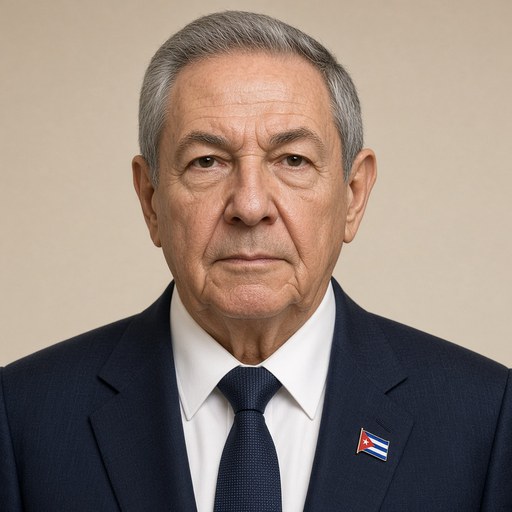
Speech delivered at the Ministerial Meeting of the Coordination Bureau of the Non-Aligned Movement, Havana, 29.
 Raúl Castro · President of Cuba
- Context
- Castro addressed the Ministerial Meeting of the Non-Aligned Movement's Coordination Bureau in Havana in April 2009, urging concerted action amid the global economic crisis.
- Main themes
- Non-Aligned Movement unity, global economic crisis, neoliberalism's failure, New International Economic Order, military spending vs. development, poverty and hunger, environmental sustainability, UN reform and multilateralism, debt of developing countries, hegemony and unilateralism, IMF criticism, equitable international relations
- Duration
- ~12 min
- Words
- 1,394
- Sentences
- 57
- Readability
- 30
- Grade
- 14.8
- Syntax
- 3.12
- Vocabulary
- 2.29
Translated from Spanish
The broad sphere of national life a sentence belongs to. Every sentence has an Arena, so it is the denominator the other indices are read against.
Other57 sentences in 31 paragraphs
Distinguished attendees of this ministerial meeting:
It is an honor for our people and government to host once again a high-level meeting of the Non-Aligned Movement. Two years and seven months have passed since the XIV Summit Conference of Heads of State or Government was held in this very room in September 2006.
At that time, I expressed:
"On the solid foundation of our historic victories in the struggle for decolonization and the eradication of apartheid; with the rich experience of our efforts in favor of a New International Economic Order and for peace, disarmament, and the true exercise of the right to development, the Non-Aligned Movement will now have heroic battles to fight against unilateralism, double standards, and the impunity of the powerful; for a more just and equitable international order against neoliberalism, exploitation, and dispossession; for the survival of the human species against the irrational consumption of rich countries." - End of quote -
The challenges identified at that time not only persist, they have become more dangerous and urgent. Therefore, the need for the Movement to act in a concerted manner is today more vital and pressing.
We are affected by a profound economic, social, food, energy, and environmental crisis that has taken on a global character. International debates are multiplying, but not with the participation of all countries. There is a growing awareness that it is necessary to find short-term responses; however, just and lasting solutions are yet to be achieved.
If we do not act with the firmness and urgency required, it will once again be our peoples who will suffer, for a longer time, the worst consequences of this crisis.
It is impossible to maintain the unjust and irrational consumption patterns that served as the foundation for the current international order, imposed by a few and which we have been forced to respect. It is neither legitimate nor ethically acceptable to have a global order inspired by hegemonic pretensions and the selfishness of privileged minorities. A system that destroys the environment and exacerbates unequal access to wealth is not sustainable. Underdevelopment is an inevitable consequence of the current world order.
Neoliberalism, as an economic policy, has failed. The myth of the benefits of the market and its deregulation, the supposed advantages of privatizations and the reduction of the economic and redistributive capacity of states, the credibility of financial institutions, are today deeply questioned in any objective analysis.
When Cuba first assumed the Presidency of the Non-Aligned Movement in 1979, 30 years ago, the leader of the Cuban Revolution, Comrade Fidel Castro, warned about the negative consequences of spending more than 300 billion dollars on weapons and the existence of an external debt of underdeveloped countries of a similar amount.
On that occasion, Comrade Fidel calculated that with that amount, it could have been possible, and I quote: "to build in one year 600,000 schools with a capacity for 400 million children; or 60 million comfortable homes with a capacity for 300 million people; or 30,000 hospitals with 18 million beds; or 20,000 factories capable of generating employment for more than 20 million workers; or to enable 150 million hectares of land for irrigation, which with adequate technical levels could feed one billion people," he concluded.
Of course, nothing was done and the situation has dramatically worsened. It is enough to point out that annual military spending currently exceeds 1 trillion dollars; the number of unemployed people in the world could increase to 230 million during 2009; and in just one year, in 2008, the number of hungry people in the world grew from 854 million to 963 million.
The UN estimates that 80 billion dollars annually for a decade would be enough to end poverty, hunger, and the lack of health, education, and housing services worldwide. That amount is three times less than what Southern countries pay each year in external debt.
A fundamental change in the system of international economic relations is essential. This was demanded nearly 35 years ago by the member countries of our Movement when they conceived the Declaration and the Program of Action for the Establishment of a New International Economic Order, approved at the Sixth Special Session of the United Nations General Assembly in May 1974.
Overcoming the global economic crisis requires concerted action, with universal, democratic, and equitable participation from all countries. The response cannot be a negotiated solution behind the backs of the United Nations by the leaders of the most powerful countries.
The G-20 solution, to strengthen the role and functions of the International Monetary Fund, whose disastrous policies decisively contributed to the genesis and exacerbated the magnitude of the current crisis, does not resolve the inequality, injustices, and unsustainability of the current system either.
The United Nations High-Level Conference on the Economic and Financial Crisis and its impact on development, scheduled for June 1-3, 2009, constitutes the essential framework for discussing and seeking consensus solutions to this serious situation. The Non-Aligned Movement must support its celebration.
This Movement has demonstrated since its founding the will to work for peace, the security of the community of nations, and the defense of International Law. The elimination of weapons of mass extermination, primarily the achievement of nuclear disarmament, remains a priority task.
The exercise of multilateralism requires strict respect for the sovereignty of states, their territorial integrity, and the self-determination of peoples. It also requires the renunciation of the threat and use of force in international relations, of hegemonic aspirations, and of imperial behaviors. It demands an end to foreign occupation and the denial of any impunity for criminal aggressions such as those carried out by Israel against the Palestinian people.
The Movement must engage in all important debates on the international agenda, in the various multilateral venues and forums, with the broadest participation of its member countries. Never to compete with other formats of representation of Southern countries, but to strengthen and complement them.
We need to continue to permanently refine the working methods of the Movement. The fulfillment of the Action Plan we have set for ourselves is an indispensable tool in determining our priorities and the tasks to be accomplished.
We must all work from now on to ensure a successful XV Summit Conference of Heads of State or Government in Egypt in the coming month of July. Critically evaluate what has been done to date and set objectives and goals that respond to current and future problems and challenges.
Finally, I wish to express, on behalf of Cuba, the gratitude of our government and all our people for the firm and unwavering solidarity of the Non-Aligned Movement with the Cuban Revolution, particularly for its constant demand for an end to the unjust economic, commercial, and financial blockade by the United States.
The measures recently announced by President Obama, while positive, are minimal in scope. The blockade remains intact. There is no political or moral excuse that justifies the continuation of that policy.
Cuba has not imposed any sanctions against the United States or its citizens. It is not Cuba that prevents entrepreneurs from that country from doing business with ours. It is not Cuba that pursues financial transactions carried out by American banks. It is not Cuba that has a military base on U.S. territory against the will of its people, etc., etc., etc., to avoid making the list endless, and therefore, it is not Cuba that has to make gestures.
We have reiterated that we are willing to talk about everything with the government of the United States, on equal terms, but not to negotiate our sovereignty or our political and social system, the right to self-determination, or our internal affairs.
And if they want to discuss all of that, and for the same reason, we expressed this recently in Venezuela, at a Summit of ALBA: to discuss everything, everything, everything, ours, but also theirs on equal terms.
The great strength of our Movement lies in its unity within the diversity that characterizes us. That has been the fundamental premise of the exercise of the Cuban presidency during these nearly three years of mandate.
I have no doubt that the Non-Aligned Movement will continue to be a fundamental and constructive actor in international debates. Cuba will maintain its commitment to contribute to that objective.
I wish you success in this Ministerial Meeting.
Thank you very much.
The original Spanish. The tags above are read on the English translation's sentences.
Distinguidos asistentes a esta reunión ministerial:
Es un honor para nuestro pueblo y Gobierno acoger nuevamente una reunión de alto nivel del Movimiento de Países No Alineados. Han transcurrido dos años y siete meses desde la celebración en esta misma sala de la XIV Conferencia Cumbre de Jefes de Estado o de Gobierno, en septiembre de 2006.
Entonces expresé:
Sobre el sólido cimiento de nuestras históricas victorias en la lucha por la descolonización y por la desaparición del apartheid; con la rica experiencia de nuestros esfuerzos en pro de un Nuevo Orden Económico Internacional y a favor de la paz, el desarme y el verdadero ejercicio del derecho al desarrollo, el Movimiento de Países No Alineados tendrá ahora heroicas batallas que librar frente al unilateralismo , el doble rasero y la impunidad de los poderosos; por un orden internacional más justo y equitativo frente al neoliberalismo, la expoliación y el despojo; por la sobrevivencia de la especie humana frente al consumo irracional de los países ricos. -Fin de la cita-
Los desafíos identificados en aquella ocasión no sólo se mantienen, se han hecho más peligrosos y urgentes. Por ello, la necesidad de que el Movimiento actúe de manera concertada es hoy más vital y perentoria.
Nos afecta una profunda crisis económica, social, alimentaria , energética y ambiental, que ha adquirido carácter global. Los debates internacionales se multiplican, pero no con la participación de todos los países. Hay una conciencia creciente de que es preciso encontrar respuestas a corto plazo, sin embargo las justas y duraderas están por alcanzarse.
Si no actuamos con la firmeza y urgencia requerida, serán nuevamente nuestros pueblos los que sufrirán, por más tiempo, las peores consecuencias de esta crisis.
Es imposible mantener los injustos e irracionales patrones de consumo que sirvieron de fundamento al ordenamiento internacional vigente, impuesto por unos pocos y que hemos sido forzados a respetar. No es legítimo ni éticamente aceptable un ordenamiento global inspirado en pretensiones hegemónicas y en el egoísmo de minorías privilegiadas. No es perdurable un sistema que destruye al medio ambiente y que potencia el desigual acceso a la riqueza. El subdesarrollo es una consecuencia inevitable del actual orden mundial.
El neoliberalismo, como política económica, ha fracasado. E l mito de las bondades del mercado y de su desregulación, los supuestos beneficios de las privatizaciones y de la reducción de la capacidad económica y redistributiva de los Estados, la credibilidad de las instituciones financieras, son hoy profundamente cuestionados en cualquier análisis objetivo.
Cuando Cuba asumió por primera vez la Presidencia del Movimiento de Países No Alineados, en 1979, hace 30 años, el líder de la Revolución Cubana, compañero Fidel Castro, alertó sobre las negativas consecuencias del gasto de más de 300 mil millones de dólares en armas y la existencia de una deuda externa de los países subdesarrollados por un monto similar.
En esa ocasión, el compañero Fidel calculó que con esa cifra, entonces se habría podido y cito: construir en un año 600 mil escuelas con capacidad para 400 millones de niños; ó 60 millones de viviendas confortables con capacidad para 300 millones de personas; ó 30 mil hospitales con 18 millones de camas; ó 20 mil fábricas capaces de generar empleo a más de 20 millones de trabajadores; o habilitar para el regadío 150 millones de hectáreas de tierra, que con un nivel técnico adecuado podrían alimentar a mil millones de personas, concluyó.
Por supuesto, nada se hizo y la situación se ha agravado dramáticamente. Baste señalar, que los gastos militares anuales rebasan, en la actualidad, la cifra de 1 millón de millones de dólares; el número de desempleados en el mundo podría incrementarse a 230 millones en el transcurso del 2009; y en apenas un año, en el 2008, el número de hambrientos en el mundo creció de 854 millones a 963 millones.
La ONU estima que bastarían 80 mil millones de dólares anuales durante una década para acabar con la pobreza, el hambre y la carencia de servicios de salud, educación y de viviendas en todo el planeta. Esa suma es tres veces menor de lo que los países del Sur desembolsan cada año por concepto de la deuda externa.
Es imprescindible un cambio fundamental en el sistema de relaciones económicas internacionales. Así lo exigieron hace casi 35 años los países miembros de nuestro Movimiento al concebir la Declaración y el Programa de Acción para el Establecimiento de un Nuevo Orden Económico Internacional, aprobados en el Sexto período extraordinario de sesiones de la Asamblea General de las Naciones Unidas, en mayo de 1974.
La superación de la crisis económica global demanda una acción concertada, con la participación universal, democrática y equitativa de todos los países. La respuesta no puede ser una solución negociada a espaldas de Naciones Unidas por los mandatarios de los países más poderosos.
La solución del G-20, de fortalecer el papel y las funciones del Fondo Monetario Internacional, cuyas políticas funestas contribuyeron decisivamente a la génesis y agravaron la magnitud de la actual crisis, no resuelve tampoco la desigualdad, las injusticias y la insostenibilidad del actual sistema.
La Conferencia de Alto Nivel de las Naciones Unidas sobre la Crisis Económica y Financiera y su impacto en el desarrollo, prevista del 1ro al 3 de junio de 2009, constituye el marco imprescindible para debatir y buscar soluciones de consenso a esta grave situación. El Movimiento de Países No Alineados debe apoyar su celebración.
Este Movimiento ha demostrado desde su fundación la voluntad de trabajar por la paz, la seguridad de la comunidad de naciones y la defensa del Derecho Internacional. La eliminación de las armas de exterminio en masa, en primer lugar el logro del desarme nuclear, continúa siendo una tarea prioritaria.
El ejercicio del multilateralismo requiere un estricto respeto a la soberanía de los Estados, a su integridad territorial, y a la autodeterminación de los pueblos. Requiere también prescindir de la amenaza y uso de la fuerza en las relaciones internacionales, de las aspiraciones hegemónicas y de las conductas imperiales. Exige que se ponga fin a la ocupación extranjera y se niegue toda impunidad a agresiones criminales como las llevadas a cabo por Israel contra el pueblo palestino.
El Movimiento debe involucrarse en todos los debates importantes de la agenda internacional, en las diferentes sedes y foros multilaterales, con la más amplia participación de sus países miembros. Nunca para competir con otros formatos de representación de los países del Sur, sino para fortalecerlos y complementarlos.
Necesitamos seguir perfeccionando de modo permanente los métodos de trabajo del Movimiento. El cumplimiento del Plan de Acción que nos hemos trazado, constituye una herramienta indispensable en la determinación de nuestras prioridades y las tareas a cumplir.
Debemos todos trabajar desde ahora para asegurar una exitosa XV Conferencia Cumbre de Jefes de Estado o de Gobierno en Egipto, en el venidero mes de julio. Evaluar de modo crítico lo realizado hasta hoy y trazarnos objetivos y metas que respondan a los problemas y desafíos actuales y del futuro.
Finalmente deseo expresar, a nombre de Cuba, el agradecimiento de nuestro Gobierno y de todo nuestro pueblo a la firme e invariable solidaridad del Movimiento de Países No Alineados con la Revolución cubana, en particular por su permanente reclamo de que se ponga fin al injusto bloqueo económico, comercial y financiero de los Estados Unidos.
Las medidas que recientemente anunció el Presidente Obama , si bien son positivas, su alcance es mínimo. El bloqueo quedó intacto. No hay pretexto político ni moral que justifique la continuidad de esa política.
Cuba no ha impuesto sanción alguna contra los Estados Unidos ni contra sus ciudadanos. No es Cuba la que impide a los empresarios de ese país hacer negocios con el nuestro. No es Cuba la que persigue las transacciones financieras realizadas por los bancos norteamericanos. No es Cuba la que tiene una base militar en territorio de los Estados Unidos contra la voluntad de su pueblo, etcétera, etcétera, etcétera, para no hacer interminable la lista y por lo tanto, no es Cuba la que tiene que hacer gestos.
Hemos reiterado que estamos dispuestos a hablar de todo con el gobierno de Estados Unidos, en igualdad de condiciones, pero no a negociar nuestra soberanía ni nuestro sistema político y social, el derecho a la autodeterminación, ni nuestros asuntos internos.
Y si quieren discutir de todo eso y por lo mismo así lo expresamos recientemente en Venezuela, en una Cumbre del ALBA: discutirlo todo, todo, todo, lo nuestro, pero también lo de ellos en igualdad de condiciones.
La fuerza mayor de nuestro Movimiento radica en su unidad dentro de la diversidad que nos caracteriza. Esa ha sido la premisa fundamental del ejercicio de la presidencia cubana durante estos casi tres años de mandato.
No albergo la menor duda de que el Movimiento de Países No Alineados seguirá siendo un actor fundamental y constructivo en los debates internacionales. Cuba mantendrá su empeño en contribuir con ese objetivo.
Les deseo éxitos en esta Reunión Ministerial.
Muchas gracias.