




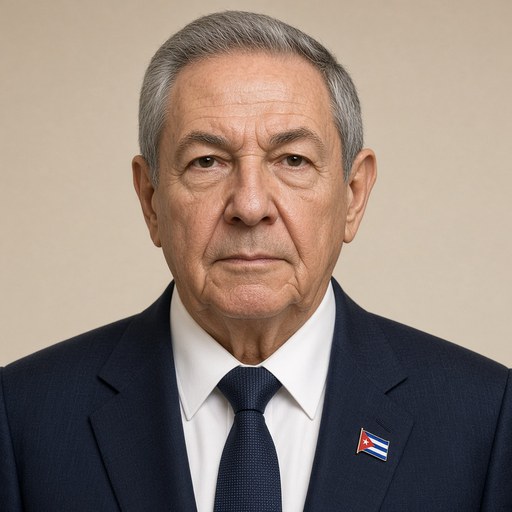
Speech delivered at the central event commemorating the 56th anniversary of the assault on the barracks.
 Raúl Castro · President of Cuba
- Context
- Castro addressed a commemorative rally in Holguín on July 26, 2009, marking the 56th anniversary of the Moncada Barracks assault.
- Main themes
- 56th anniversary of Moncada assault, global economic crisis impact on Cuba, hurricane recovery efforts, upcoming political meetings, provincial recognition and awards, Non-Aligned Movement presidency handover, national budget adjustments, General Comptroller legislation
- Duration
- ~27 min
- Words
- 3,227
- Sentences
- 100
- Readability
- 40
- Grade
- 15.4
- Syntax
- 3.44
- Vocabulary
- 2.26
Translated from Spanish
The broad sphere of national life a sentence belongs to. Every sentence has an Arena, so it is the denominator the other indices are read against.
Other100 sentences in 69 paragraphs
Combatants of July 26, 1953, of the Rebel Army, the clandestine struggle, and the glorious internationalist missions;
Relatives of the fallen;
People of Holguín;
compatriots:
We could start by asking a question out of pure personal curiosity. You know that I am from here, and therefore I have the right to be curious in the sense of knowing, if possible, which fellow provincial thought it would be a good idea to put the sun right behind us, which does not bother me, but I am sure none of you can see me; you will see, at most, a shadow: that is me.
For such reasons, in this commemoration of the 56th anniversary of the assault on the Moncada and Carlos Manuel de Céspedes barracks, my intervention will be very brief, considering the high temperatures that have characterized our summer this year, although we started earlier than usual — at 7:00 a.m. — and knowing that since six in the morning all of you were already here, most of you came on foot from your respective homes, and that last night, as I could briefly see on television, you were just celebrating this anniversary. And, moreover, that sun that no one knows who put in front of you.
For such reasons, I will be brief, I repeat, and in the coming days, very soon, we will have important meetings that will serve as more suitable venues to delve deeply into complex issues.
The first will be the Council of Ministers, the day after tomorrow, dedicated to analyzing the second adjustment of the expenses planned in this year's budget, due to the effects of the global economic crisis on our economy, particularly the significant reduction in revenues from exports and the additional restrictions to access external financing sources.
As you know, for 11 days I was traveling through several friendly African countries and participating, as president, until very recently, of the Non-Aligned Movement and handing over that responsibility to the President of Egypt.
The time I have is very little and tight due to these meetings and important topics that I am informing you about.
The day after that Council of Ministers, on July 29, we will celebrate the seventh Plenary of the Central Committee of the Party, in which, for an entire day, according to the program and agenda to be discussed, we will delve into vital issues related to the national and international situation.
And, finally, on August 1, the ordinary session of the National Assembly of People's Power is convened, on the occasion of which, among other issues, the draft Law of the General Comptroller of the Republic will be submitted for debate, an entity that will contribute to raising the standards in compliance with current legislation and in matters of control by all the leadership structures of the country.
AWARD FOR EFFORT AND WORK DONE
This year, the selection of the venue for the central act for July 26 did not strictly adhere to the established indicators. It would have been illogical to base it solely on the degree of compliance with those indices when, since September, after the devastating passage of the hurricanes, it became evident that in much of the country, it was simply impossible to achieve them.
Do not forget, as we informed in our Parliament at the time, that the damages, without wanting to say that they are all perfectly compatible or accounted for, reached the figure of around 10 billion dollars, equivalent to 20% of the Gross Domestic Product, that is, the value of everything we did in terms of work and production during the past year.
For such reasons, the Political Bureau, in determining that Holguín be the venue and granting the status of outstanding to Villa Clara, Granma, and Havana, weighed what was achieved in the first months of the year, in more or less normal circumstances, and above all the effort of the provinces, first to face the meteorological phenomena with the least loss of human lives and material resources, and particularly in the recovery efforts.
In this, Holguín has been given a great responsibility. It is a large province, with more than a million inhabitants and a significant impact on the national economy due to the nickel industry, the third tourist pole of the country, and other important productions. It is an award for the effort and work done.
Therefore, we congratulate the people of Holguín; to comrade Miguel Díaz-Canel Bermúdez, first secretary of the Party in the province during that difficult time and in the previous years, which were also of intense work. We extend this congratulations to comrade Jorge Cuevas Ramos, from Las Tunas, a province also severely hit by Hurricane Ike and who, since his election at the head of the Party in Holguín, has carried out enthusiastic and active work.
We also congratulate the outstanding provinces, while recognizing the effort made by all, to the compatriots of Pinar del Río and the Isle of Youth, in the west, who faced extremely severe damages, as well as to the people of Camagüey and Las Tunas, particularly to the inhabitants of Santa Cruz del Sur and Guayabal, towns with considerable damage, which in some cases almost caused total destruction.
AN EDUCATED PEOPLE IN GENUINE SOLIDARITY
I have only mentioned some of the places that suffered the greatest destruction. It has truly been difficult months of hard work from one end of the nation to the other. Throughout the country, the capacity for resistance, organization, and solidarity of our people has been evident. The examples of how work should be done in these times are growing.
That was the behavior assumed by the vast majority of compatriots in this province during the passage of Hurricane Ike and in the months that followed. It happened everywhere.
Many comrades have remained mobilized far from their families, even when not a few of them also suffered serious limitations, often sheltered because they had lost their homes totally or partially.
They trusted in the Revolution and fulfilled the assigned task, aware of its importance and confident that their loved ones would not be left helpless.
It also speaks volumes about the human quality of our people, the massive willingness to welcome neighbors whose homes did not offer sufficient safety, an attitude that has become commonplace in the face of various adversities.
In those values, our people are educated, in genuine solidarity, sharing what they have with their brothers, whether they are Cubans or from other lands, not what is left over, for here nothing is left over, generally only problems.
In that same measure, the Cuban people are grateful for the help, the gestures of generosity, and the support received from multiple corners of the planet. I take this opportunity to recognize the noble and dignified work of the interreligious foundation Pastors for Peace, its leader, Reverend Lucius Walker, and the members of the XX Friendship Caravan United States-Cuba, as well as the Venceremos Brigade, which has reached its 40th anniversary, a representation of which is accompanying us in this act.
DAMAGE TO HOUSING IS A VERY SERIOUS ISSUE
Damage to housing is a very serious issue. In this province of Holguín alone, almost 125,000 were affected, of which around half have been recovered.
At the national level, if we add those damaged by these three cyclones, the pending solutions from previous years, especially from the early part of the century due to similar hurricane-related reasons, the total reached over 600,000 by the end of 2008, which is why I alerted at the time that it would take time to radically change that situation.
A truly commendable effort has been made by entities, labor collectives, and the neighbors themselves. It is significant that by July 20, 43% of the damages had been resolved, that is, more than 260,000 homes.
However, there is still a lot of work to be done, and it is also necessary to prevent those enormous figures from accumulating again in the future, considering that as a result of climate change, many scientists predict that hurricanes could be of greater intensity and much more frequent.
BEING IN A POSITION TO PREVENT AND FACE DROUGHT
Efforts are also being made to be in a position to prevent and face the effects of recurring periods of drought, which are becoming increasingly prolonged and intense, through various measures, including the transfer of water, even from one province to another.
Remember the three difficult years of drought from the beginning of the century until 2005, when it was necessary throughout the country to bring water even by rail and in all kinds of vehicles and containers to nearly 3.5 million Cubans.
That is why we are building these strategic water transfers in different places, which will allow us to maneuver with the vital liquid from one province to another.
As is known, this monumental work began here in Holguín, where the paradox exists of bordering the region that receives the most rain on the island — over there at the limits of Baracoa, Guantánamo province — with one of the driest, which just a few years ago put the water supply to this populated city at risk.
In the coming days — we were going to do it today once this act concluded, but for the reasons previously mentioned at the beginning of my words, we will do it during the month of August, later on — we will formally inaugurate the first stage of the East-West transfer, which includes the pipeline from the Nipe dam — over there by the river of the same name, in the municipality of Mayarí — to the Gibara dam — not near the city of Gibara, further north, but one that is here, closer to the city of Holguín, to the east of it.
That is, from Nipe dam to Gibara, from there, downstream, by the river I believe of the same name, to the Colorado reservoir, which is further north, and from this Colorado reservoir it goes back, but from the north, through another pipeline already built, to the El Naranjo dam, with a capacity of about 11 or 12 million cubic meters, which is often dry, and which supplies that area and the tourist pole of Guardalavaca, where during those years of drought it was also necessary to close some hotels.
This costly work — and it is just the beginning — once completed and in use, ensures a stable water supply to the northern region of Holguín, including its capital.
The continuation of the project, which is in an advanced phase, includes the construction of the dam called Melones, which to be more precise, I propose to name Mayarí, after the river that feeds it, whose curtain — unique of its kind built in Cuba with that technology — will be completed in April 2011, although it will begin to store water from next year 2010.
The Nipe dam, with around 130 million cubic meters, had been built for 25 years without being put to use.
On the occasion of the inauguration mentioned, this very month, of the first stage, of which I already spoke, that is, of the East-West transfer, television will broadcast a comprehensive report about this large-scale and highly relevant work, which also explains the entire system of water transfers between provinces currently in execution.
It is a program for the present and especially for the future, when water will become an increasingly scarce resource, especially on a long and narrow island like ours, where the precious liquid is lost in rapid discharges into the sea.
I have only mentioned one stage of this program, which covers a large part of the country, from Sancti Spíritus, in the center of the island, to Guantánamo. In this last province, in the first half of next year, specifically in the fertile valley of Caujerí, water will begin to be received by gravity through tunnels that cross the mountains — in this case built by the armed forces — which represents a considerable saving of fuel, as the costly pumping will be eliminated.
Efforts are also being made to rehabilitate the aqueduct and sewage networks in this province, including those in the municipalities of Cacocum, Urbano Noris, and specific actions in Frank País, Gibara, and Banes. In the city of Holguín, 114 kilometers of networks have been executed, with 21,620 connections to homes, benefiting a population of 86,400 inhabitants.
With the arrival of new equipment in the coming months, the pace of these works in Holguín will increase, where one of the three factories that produces the necessary pipes of different sizes already exists. As is known, a costly investment is also underway that will definitively solve the water supply to the city of Santiago de Cuba, which will conclude in 2010. And in 2011, it is expected to finish the aqueducts of El Cristo and El Cobre in that Santiago municipality, and the Palma Soriano aqueduct is in the process of study.
TURNING TOWARDS THE LAND, MAKING IT PRODUCE MORE
Moving on to another topic, one of the few I plan to address this morning, on July 26, 2007, in Camagüey, I referred to the urgent need to turn towards the land, to make it produce more. At that time, almost half of the cultivable area was idle or poorly exploited. We called at that time to generalize as quickly as possible and without improvisation every experience of outstanding producers from the state and peasant sector, and to stimulate the hard work they do, as well as to definitively solve the harmful unpaid debts by the State in the sector.
The delivery of land in usufruct is progressing satisfactorily, although there are still shortcomings, more in some municipalities than in others. Of the more than 110,000 requests made, nearly 82,000 have been approved so far, covering about 690,000 hectares, or 39 percent of the idle area.
I consider this to be little; it is not a matter of rushing out to distribute without control, but to do it more efficiently, to do it in an organized manner, and it is a task of first strategic priority. One of the speakers who preceded me referred to the fact that it is a matter of national security to produce the products that are grown in this country and that we spend hundreds of millions of dollars—and I do not exaggerate—bringing them from other countries.
The land is there, here are the Cubans; we will see if we work or not, if we produce or not, if we keep our word or not! It is not a matter of shouting "Homeland or Death," down with imperialism; the blockade hits us and the land is there, waiting for our sweat. Despite the increasing heat, we have no choice but to make it productive. I believe we are in agreement.
Flying, especially in a helicopter, across the country, I sometimes order the pilot to deviate and take a turn around any town, city, etc. I can assure you that in most places there is plenty of land, and of good quality, right next to our backyards, that is not being cultivated; and that is where a plan is being made to advance, with intensive crops, providing irrigation wherever there is water and resources to implement it. If one day fuel were to run out in this ever-changing and crazy world, let us have food close by, that we can bring in a cart with horses, with an ox, or pushing it ourselves.
Of the land already delivered, nearly half has been declared free of marabou and other undesirable plants, and almost 225,000 hectares have been planted, that is, one-third.
We cannot feel at ease while there is a single hectare of land without a useful employment and someone willing to make it productive waiting for a response.
Land that is not suitable for producing food should be used to plant trees, which is, moreover, a great wealth. And the one speaking to you has experienced for many years, especially in recent years, planting small forests, and I have had the pleasure and satisfaction of seeing them grow, and depending on the type of tree, sometimes in five years I have formed a small forest with several hundred different types; but every time we talk about the subject, the officials from the Ministry of Agriculture—of the current and all previous Ministers of Agriculture—show up with an endless list of millions of pesos or foreign currency requested for the assigned task, and if a little plastic bag does not appear, it cannot be planted. I do not know what the hell our grandparents used to plant trees, and there they are, and we are eating the mangoes they planted.
We do not educate a child in the love of trees and to plant some—where there is land, of course—during their time in primary, secondary, and pre-university education. Some youth leaders are listening to me here; but planting trees can be done by young people of the third age, like me, meaning it is not just a task for the youth.
The results in the collection of milk are encouraging, which has grown in the last two years by more than 100 million liters annually, from 272 million in 2006 to 403 in 2008, and this year all indications are that the increase will be greater. I spoke about this topic in 2007 in Camagüey, on a day like today.
I have very briefly addressed two aspects of the decisive issue of food production, which is of great importance in the substitution of imports, as I mentioned, and the reduction of foreign currency expenses for the country.
OUR PEOPLE ARE CAPABLE OF OVERCOMING ALL DIFFICULTIES
The progress observed, despite the deficit of material and financial resources, although insufficient, confirms the enormous potential that we still have to exploit in agriculture and in all branches of the economy.
The modest results reaffirm, once again, the optimism and confidence that yes, it can be done! and that our heroic people are capable of overcoming all difficulties, no matter how great they may be.
It is undoubtedly a huge challenge, in the midst of the economic blockade and many other aggressions conceived precisely to prevent the development of the nation.
Our people have never failed to respond to the call of the homeland. They have invariably been present since the times when the mambí troops of Calixto García, the general of the three wars, with the star on his forehead, committed suicide before being captured, the son of the heroic mother, faced many thousands of soldiers with vastly superior weaponry, by far the largest army that the Spanish metropolis sent to America.
And alongside the Liberation Army, the population endured, stoically and without wavering in the struggle, the countless hardships caused by the war and the cruel repression of the colonial authorities. That is our lineage, and we will remain faithful to their legacy.
With the monolithic unity of our people, their most powerful weapon, forged in the crucible of struggle under the leadership of the Chief of the Revolution Fidel Castro Ruz, no matter how great the difficulties and dangers: We will move forward!
Glory to the martyrs of the Homeland!
Long live Fidel!
Long live a free Cuba!
The original Spanish. The tags above are read on the English translation's sentences.
Combatientes del 26 de julio de 1953 (Aplausos), del Ejército Rebelde, la lucha clandestina y las gloriosas misiones internacionalistas (Aplausos);
Familiares de los caídos;
Holguineras y holguineros (Aplausos);
compatriotas:
Pudiéramos empezar haciendo una pregunta por pura curiosidad personal. Ustedes saben que yo soy de aquí (Aplausos y exclamaciones), y por lo tanto tengo el derecho de curiosear en el sentido de saber, si es posible, a qué comprovinciano se le ocurrió ponernos el sol aquí detrás (Risas), que a mí no me molesta, pero estoy seguro de que ninguno de ustedes me puede ver; verán, si acaso, una sombra: ese soy yo (Aplausos).
Por tales motivos, en esta conmemoración del 56 aniversario del asalto a los cuarteles Moncada y Carlos Manuel de Céspedes mi intervención será muy breve, atendiendo a las altas temperaturas que han caracterizado nuestro verano en este año, aunque comenzamos más temprano que lo habitual a las 7:00 horas, y sabiendo que desde las seis de la mañana ya se encontraban aquí todos ustedes, que la mayoría vino a pie desde sus respectivas viviendas (Aplausos), y que anoche, como pude ver brevemente por la televisión, estuvieron justamente celebrando este aniversario. Y, además, el sol ese que no se sabe quién se lo puso frente a ustedes.
Por tales motivos seré breve, repito, y en los próximos días, muy próximos, tendremos importantes reuniones que servirán de escenarios más propicios para extenderse a fondo en cuestiones complejas.
La primera será del Consejo de Ministros, pasado mañana, dedicada a analizar el segundo ajuste de los gastos previstos en el plan de este año, a causa de los efectos de la crisis económica mundial en nuestra economía, en particular la reducción significativa de los ingresos provenientes de las exportaciones y las restricciones adicionales para acceder a fuentes de financiamiento externo.
Como ustedes conocen, durante 11 días estuve recorriendo varios países del África amiga y participar, como presidente, hasta muy recientemente, del Movimiento de Países No Alineados y hacerle entrega de esa responsabilidad al Presidente de Egipto.
El tiempo de que dispongo es muy poco y apretado por estas reuniones e importantes temas que les estoy informando.
Al día siguiente de ese Consejo de Ministros, el 29 de julio, celebraremos el séptimo Pleno del Comité Central del Partido, en el cual, durante un día entero, según el programa y la agenda u orden del día a discutir, profundizaremos en asuntos vitales relacionados con la situación nacional e internacional.
Y, además, por último, el 1º de agosto está convocada la sesión ordinaria de la Asamblea Nacional del Poder Popular, ocasión en la que, entre otras cuestiones, será sometido a debate el proyecto de Ley de la Contraloría General de la República, órgano que contribuirá a elevar la exigencia en el cumplimiento de la legislación vigente y en materia de control por todas las estructuras de dirección del país.
PREMIO AL ESFUERZO Y AL TRABAJO REALIZADO
Este año la selección de la sede del acto central por el 26 de Julio no se ajustó estrictamente a los indicadores establecidos. Hubiera sido ilógico partir solo del grado de cumplimiento de esos índices, cuando desde septiembre, tras el paso devastador de los huracanes, resultó evidente que en gran parte del país, sencillamente era imposible alcanzarlos.
No olviden, como en su oportunidad informamos en nuestro Parlamento, que los destrozos, sin que quiera decir que estén perfectamente todos compatibilizados o contabilizados, alcanzaron la cifra de alrededor de 10 000 millones de dólares, el equivalente al 20% del Producto Interno Bruto, o sea, el valor de todo lo que hicimos en materia de trabajo y producción durante ese año pasado.
Por tales motivos el Buró Político, al determinar que Holguín fuera la sede y otorgar la condición de destacadas a Villa Clara, Granma y Ciudad de La Habana, puso en la balanza lo logrado en los primeros meses del año, en circunstancias más o menos normales, y sobre todo el esfuerzo de las provincias, primero para enfrentar los fenómenos meteorológicos con las menores pérdidas de vidas humanas y recursos materiales, y particularmente en las labores de recuperación.
En ello a Holguín le ha correspondido una gran responsabilidad. Es una provincia extensa, con más de un millón de habitantes y una incidencia apreciable en la economía nacional por la industria del níquel, el tercer polo turístico del país y otras importantes producciones. Es un premio al esfuerzo y al trabajo realizado.
Por tanto, felicitamos a las holguineras y holguineros (Aplausos); al compañero Miguel Díaz- Canel Bermúdez (Aplausos), primer secretario del Partido en la provincia en ese momento difícil y en los años previos, que también fueron de intenso trabajo. Hacemos extensiva esta felicitación al compañero Jorge Cuevas Ramos (Aplausos), procedente de Las Tunas, provincia también golpeada fuertemente por el huracán Ike y que desde su elección al frente del Partido en Holguín ha desplegado una entusiasta y activa labor.
Felicitamos igualmente a las provincias destacadas, sin dejar de reconocer el esfuerzo realizado por todas, a los compatriotas de Pinar del Río y la Isla de la Juventud (Aplausos), en el occidente, que afrontaron daños sumamente severos, así como a camagüeyanos y tuneros, en particular a los habitantes de Santa Cruz del Sur y Guayabal, poblados con afectaciones considerables, que en algunos casos, casi les ocasionaron la destrucción total (Aplausos).
UN PUEBLO EDUCADO EN LA GENUINA SOLIDARIDAD
Solo he mencionado algunos de los lugares que sufrieron los mayores destrozos. Realmente han sido meses difíciles y de arduo trabajo de un extremo a otro de la nación. En todo el país se ha puesto de manifiesto la capacidad de resistencia, organización y solidaridad de nuestro pueblo. Crecen los ejemplos de cómo debe trabajarse en estos tiempos.
Esa fue la conducta asumida por la inmensa mayoría de los compatriotas de esta provincia durante el paso del huracán Ike y en los meses posteriores. Así sucedió en todas partes.
Muchos compañeros han permanecido movilizados lejos de sus familias, incluso cuando no pocas de ellas también sufrían serias limitaciones, con frecuencia albergadas por haber perdido total o parcialmente sus viviendas.
Confiaron en la Revolución y cumplieron la tarea asignada, conscientes de su importancia y seguros de que sus seres queridos no quedarían en el desamparo.
Igualmente dice mucho de la calidad humana de nuestro pueblo, la masiva disposición de acoger en sus hogares a vecinos cuyas casas no ofrecían suficiente seguridad, actitud que se ha hecho cotidiana ante adversidades de diverso tipo.
En esos valores está educado nuestro pueblo, en la genuina solidaridad, comparte lo que tiene con sus hermanos, sean cubanos o de otras tierras, no lo que le sobra, que aquí no sobra nada, generalmente sólo problemas (Aplausos).
En esa misma medida el pueblo cubano agradece la ayuda, los gestos de generosidad y el apoyo recibidos desde múltiples rincones del planeta. Hago propicia la ocasión para reconocer la noble y digna labor de la fundación interreligiosa Pastores por la Paz (Aplausos), a su líder, el Reverendo Lucius Walker (Aplausos) y a los integrantes de la XX Caravana de la Amistad Estados Unidos-Cuba (Aplausos), así como a la Brigada Venceremos que arribó a su 40 aniversario, una representación de las cuales nos acompaña en este acto (Aplausos).
LOS DAÑOS A LAS VIVIENDAS SON UN ASUNTO MUY SERIO
Los daños a las viviendas son un asunto muy serio. Solo en esta provincia de Holguín resultaron afectadas casi 125 mil, de las cuales se han recuperado alrededor de la mitad.
A nivel nacional, si se agrega a las dañadas por estos tres ciclones, las pendientes de solución de años anteriores, sobre todo de principios del siglo por similares motivos de huracanes, sumaban a finales del 2008 más de 600 mil, por eso alerté en su momento que se requeriría tiempo para cambiar radicalmente esa situación.
Se ha hecho en realidad un esfuerzo digno de reconocimiento por entidades, colectivos laborales y los propios vecinos. Es significativo que hasta el 20 de julio estuviera solucionado el 43% de las afectaciones, o sea, más de 260 mil viviendas.
No obstante, resta muchísimo trabajo por hacer y además es necesario evitar que vuelvan a acumularse en el futuro esas enormes cifras, teniendo en cuenta que a consecuencia del cambio climático, se pronostica por muchos científicos que los huracanes podrían ser de mayor intensidad y con mucha más frecuencia.
ESTAR EN CONDICIONES DE PREVENIR Y ENFRENTAR LA SEQUÍA
Igualmente se trabaja para estar en condiciones de prevenir y enfrentar los efectos de los recurrentes períodos de sequía, cada vez más prolongados e intensos, mediante diversas medidas, entre ellas el trasvase de agua, incluso de unas provincias a otras.
Recuerden los tres años difíciles de sequía desde comienzos del siglo hasta el 2005, donde fue necesario en todo el país llevarles el agua hasta en ferrocarriles y en todo tipo de vehículos y vasijas a cerca de 3 millones y medio de cubanos (Aplausos).
Por eso estamos construyendo en diferentes lugares estos trasvases de agua estratégicos, que nos permitirán maniobrar con el líquido vital de unas provincias a otras.
Como se conoce, esta monumental obra comenzó aquí en Holguín, donde se presenta la paradoja de colindar la región en que más llueve en la isla por allá en los límites de Baracoa , provincia de Guantánamo con una de las más secas, lo que hace pocos años puso en peligro el abasto de agua a esta poblada urbe.
En los próximos días lo íbamos a hacer hoy una vez concluido este acto, pero por los motivos anteriormente expuestos, al inicio de mis palabras, lo haremos en el transcurso del mes de agosto, más adelante, dejaremos formalmente inaugurada la primera etapa del trasvase Este-Oeste (Aplausos), que comprende la conductora de la presa Nipe allá por el río del mismo nombre, en el municipio de Mayarí a la presa Gibara no cerca de la ciudad de Gibara , más al norte, sino una que está aquí, más próxima a la ciudad de Holguín, al este de la misma.
O sea, presa Nipe a Gibara , desde allí, aguas abajo, por el río creo que del mismo nombre, al embalse Colorado, que está más al norte, y de este embalse Colorado vuelve para atrás, pero por el norte, mediante otra conductora ya construida, hasta la presa El Naranjo, de unos 11 ó 12 millones de metros cúbicos de capacidad y que muchas veces está seca, y que abastece esa zona y al polo turístico de Guardalavaca , en el cual en aquellos años de sequía fue necesario cerrar también algunos hoteles.
Esta costosa obra y es solo el comienzo, ya concluida y en uso, asegura el suministro estable de agua a la región norte de Holguín, incluida su capital.
La continuación del proyecto, que se encuentra en fase avanzada, incluye la construcción de la presa llamada Melones, que para ser más exacto, propongo denominarla Mayarí , por el río que la alimenta (Aplausos), cuya cortina única en su tipo construida en Cuba con esa tecnología terminará de cerrarse en abril de 2011, aunque comenzará a almacenar agua desde el próximo año 2010.
La presa Nipe , con alrededor de 130 millones de metros cúbicos, llevaba 25 años de construida sin darle valor de uso.
En ocasión de la inauguración mencionada, este propio mes, de la primera etapa, de la que ya les hablé, o sea, del trasvase Este-Oeste, la televisión transmitirá un amplio reportaje acerca de esta obra de gran magnitud y suma relevancia, el que además explica todo el sistema de trasvases de agua entre provincias en ejecución.
Es un programa para el presente y sobre todo para el futuro, cuando el agua será cada vez un recurso más escaso, sobre todo en una isla larga y estrecha como la nuestra, donde el preciado líquido se pierde en rápidos vertimientos al mar.
Solo he mencionado una etapa de este programa, que abarca gran parte del país, desde Sancti Spíritus , en el centro de la isla, hasta Guantánamo. En esta última provincia, en el primer semestre del próximo año, concretamente el fértil valle de Caujerí , comenzará a recibir agua por gravedad a través de túneles que atraviesan las montañas en este caso construidos por las fuerzas armadas, lo que supone un considerable ahorro de combustible, al suprimirse su costoso bombeo.
También se trabaja en la rehabilitación de las redes de acueducto y alcantarillado de esta provincia, entre ellas las de los municipios de Cacocum , Urbano Noris y acciones puntuales en Frank País, Gibara y Banes . En la ciudad de Holguín se han ejecutado 114 kilómetros de redes, con 21 620 acometidas, hacia las casas, y una población beneficiada de 86 400 habitantes.
Con la llegada de nuevos equipos en los próximos meses, se incrementará el ritmo de estas obras en Holguín, donde ya existe una de las tres fábricas que produce las tuberías necesarias de diferentes tamaños. Como se conoce, se encuentra en ejecución además una costosa inversión que solucionará definitivamente el abasto de agua a la ciudad de Santiago de Cuba, la cual concluirá en el 2010. Y en el año 2011 se prevé terminar los acueductos de El Cristo y El Cobre en dicho municipio santiaguero, y se encuentra en proceso de estudio el de Palma Soriano.
VOLVERNOS HACIA LA TIERRA, HACERLA PRODUCIR MÁS
Pasando a otro tema, de los pocos que pienso tocar en la mañana de hoy, el 26 de julio del 2007, en Camagüey, me referí a la imperiosa necesidad de volvernos hacia la tierra, hacerla producir más. Entonces casi la mitad del área cultivable estaba ociosa o deficientemente explotada. Llamamos en ese momento a generalizar con la mayor celeridad posible y sin improvisaciones cada experiencia de los productores destacados del sector estatal y campesino, y estimular la dura labor que realizan, así como solucionar definitivamente los dañinos impagos por el Estado en el sector.
Avanza a ritmo satisfactorio la entrega de tierras en usufructo, aunque persisten insuficiencias, en unos municipios más que en otros. De las más de 110 mil solicitudes realizadas, se han aprobado hasta el momento cerca de 82 mil, que abarcan unas 690 mil hectáreas, o sea, el 39 por ciento del área ociosa.
Considero que es poco, no es cuestión ahora de salir corriendo a repartir sin control, es hacerlo más eficientemente, es hacerlo organizadamente, y que es una tarea de primera prioridad estratégica. Ya uno de los oradores que me antecedió en el uso de la palabra se refería a que es un tema de seguridad nacional producir los productos que se dan en este país y que nos gastamos cientos y miles de millones de dólares y no exagero trayéndolos de otros países.
¡La tierra está ahí, aquí están los cubanos, veremos si trabajamos o no, si producimos o no, si cumplimos nuestra palabra o no! No es cuestión de gritar Patria o Muerte, abajo el imperialismo (Aplausos), el bloqueo nos golpea y la tierra ahí, esperando por nuestro sudor. A pesar de que los calores son cada vez mayores, no queda más remedio que hacerla producir. Creo que estamos de acuerdo (Exclamaciones de: "¡Sí!" y aplausos).
Volando, sobre todo en helicóptero, a lo largo y ancho del país, a veces ordeno al piloto desviarse y darle una vuelta a cualquier poblado, ciudad, etcétera. Puedo asegurarles que en la mayoría de todos sobra tierra y de buena calidad, pegada a nuestros patios, que no se cultiva; y por ahí es por donde se está haciendo un plan para avanzar, con cultivos intensivos, poniéndoles riego donde sea posible que exista agua y que existan los recursos para ponerlo. Si un día faltara el combustible en este mundo tan cambiante y alocado, que la comida la tengamos cerca, que la podamos traer en un carretón con caballos, con un buey o empujándola por nosotros mismos (Aplausos).
De la tierra ya entregada se ha declarado libre de marabú y otras plantas indeseables cerca de la mitad y se han sembrado casi 225 mil hectáreas, es decir, la tercera parte.
No podemos sentirnos tranquilos mientras exista una sola hectárea de tierra sin un empleo útil y alguien dispuesto a hacerla producir esperando por respuesta.
Tierra que no sirva para producir alimentos, debe servir para sembrar árboles que es, además, una gran riqueza. Y quien les habla ha experimentado durante muchos años, y sobre todo en los últimos años, sembrando pequeños bosques, y he tenido el placer y la satisfacción de verlos crecer, y según el tipo de árbol, a veces en cinco años ya he formado un pequeño bosque con varios cientos de diferentes tipos; pero cada vez que hablamos del tema se aparecen los funcionarios del Ministerio de la Agricultura del actual y de todos los demás anteriores ministros de Agricultura con un listado interminable de millones de pesos o divisas solicitados para la tarea que se asigna, y si no aparece una bolsita de nailon no se puede sembrar. Yo no sé con qué diablo nuestros abuelos sembraban árboles (Risas y aplausos), y por ahí están, y estamos nosotros comiéndonos los mangos que sembraron ellos (Aplausos).
No educamos a un niño en el amor a los árboles y que siembren algunos donde haya tierra, por supuesto en el transcurso de su tránsito por la primaria, secundaria, preuniversitario. Me están oyendo aquí algunos dirigentes de la juventud; pero sembrar árboles pueden hacerlo jóvenes de la tercera edad, como yo, es decir que no es solo una tarea de la juventud (Aplausos).
Son estimulantes los resultados en el acopio de leche, que ha crecido en los últimos dos años en más de 100 millones de litros anualmente, pues de 272 millones en el 2006, se alcanzaron 403 en el 2008, y este año todo indica que el incremento será superior. De este tema hablé en el 2007 en Camagüey, un día como hoy.
He abordado muy someramente dos aspectos del decisivo tema de la producción de alimentos, que tiene gran importancia en la sustitución de importaciones, como les decía, y la reducción de los gastos en divisas del país.
NUESTRO PUEBLO ES CAPAZ DE VENCER TODAS LAS DIFICULTADES
El avance constatado, a pesar del déficit de recursos materiales y financieros, aunque insuficientes, confirma las enormes potencialidades que aún nos resta explotar en la agricultura y en todas las ramas de la economía.
Los modestos resultados nos ratifican, una vez más, el optimismo y la confianza en que ¡sí se puede!, y que nuestro pueblo heroico es capaz de vencer todas las dificultades, por grandes que sean (Aplausos).
Es sin duda un enorme reto, en medio del bloqueo económico y de muchas otras agresiones concebidas precisamente para impedir el desarrollo de la nación.
Nuestro pueblo no ha fallado nunca a un llamado de la patria. Invariablemente ha dicho presente desde los tiempos en que la tropa mambisa de Calixto García, el general de las tres guerras, de la estrella en la frente, al suicidarse antes de caer prisionero, el hijo de la madre heroica, enfrentó por estas tierras a muchos miles de soldados con un armamento muy superior, con creces, el mayor ejército que la metrópoli española envió a América.
Y junto al Ejército Libertador la población soportó, estoicamente y sin cejar en la lucha, las incontables penurias provocadas por la guerra y la cruel represión de las autoridades coloniales. Esa es nuestra estirpe y seguiremos siendo fieles a su legado (Aplausos).
Con la unidad monolítica de nuestro pueblo, su más poderosa arma, forjada en el crisol de la lucha bajo la dirección del Jefe de la Revolución Fidel Castro Ruz (Aplausos), por grandes que sean las dificultades y los peligros: ¡Seguiremos adelante! (Aplausos.)
¡Gloria a los mártires de la Patria! (Exclamaciones de: "¡Gloria!")
¡Viva Fidel! (Exclamaciones de: "¡Viva!")
¡Viva Cuba libre! (Exclamaciones de: "¡Viva!")
(Ovación).