




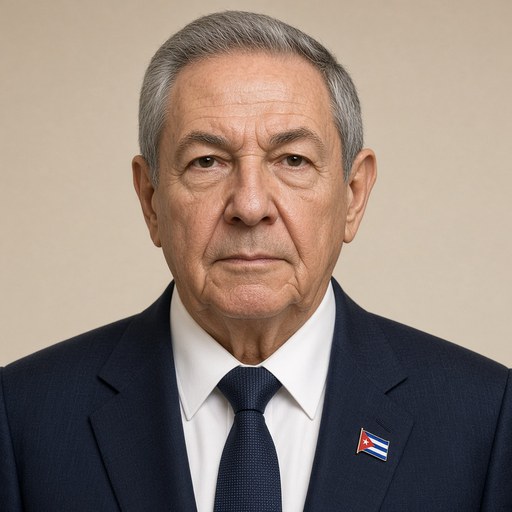
Speech delivered at the conclusions of the XX Congress of the Cuban Workers' Central, 22nd of...
 Raúl Castro · President of Cuba
- Context
- Castro addressed the XX Congress of the Cuban Workers' Central in Havana on February 22, 2014, delivering concluding remarks on labor reform and the economic model update.
- Main themes
- Cuban Workers' Central Congress, labor code reform, wage system reform, socialist distribution principles, trade union history, economic model updating, worker motivation and discipline, retirement pensions, productivity and incentives, CTC anniversary, economic guidelines of the Party
- Duration
- ~21 min
- Words
- 2,483
- Sentences
- 62
- Readability
- 22
- Grade
- 20.2
- Syntax
- 3.67
- Vocabulary
- 2.29
Translated from Spanish
The broad sphere of national life a sentence belongs to. Every sentence has an Arena, so it is the denominator the other indices are read against.
Other62 sentences in 47 paragraphs
Comrades:
I have the responsibility to draw the conclusions of this important Congress of the Central Workers' Union of Cuba, which certainly is not limited to these three days of work by the delegates in the capital, but rather to a process that began more than 15 months ago, with the union debate across the country and included the broad and democratic discussion of the draft Labor Code, approved in the National Assembly last December.
Likewise, the workers' Congress in the labor collectives and in the municipal and provincial instances carried out a deep analysis of the Base Document in almost 66,000 assemblies of affiliates, with the participation of more than 2 million 850,000 workers focused on improving the work of the trade union organizations.
In the framework of the preparatory work for the Congress, we commemorated, on January 28, the 75th anniversary of the founding of the CTC, which was born as the first unitary organization of Cuban workers in the difficult conditions of the bourgeois and neocolonial republic and had to face, for years, the repression and assassination of several of its most revolutionary leaders, the majority of whom were communists, including the fierce sugar workers' leader and communist militant Jesús Menéndez, who, along with the unforgettable Lázaro Peña, founded this organization.
The present and future generations of trade union leaders must draw from the valuable legacy that encompasses the life and work of the Captain of the working class, a well-deserved title that Lázaro Peña earned among Cuban workers, a forger and fervent defender of the unity of revolutionary forces before and after the Revolution, who, embracing Fidel's line as his own, dedicated himself to the organization and brilliant leadership of the historic XIII Congress of the CTC in 1973.
Unlike previous congresses that focused on the analysis and discussion of specific issues and generated proposals for specific modifications to existing labor legislation, this XX Congress had the advantage of having the Guidelines of the Economic and Social Policy of the Party and the Revolution, approved at the Sixth Congress of the Party, as well as the work objectives agreed upon at its First National Conference.
The preparatory stage of the Congress revealed the majority support of the working class for the course set for the updating of our economic model, while clearly expressing dissatisfaction with the slowness with which certain decisions approved by the government are implemented at the grassroots level, sometimes without the appropriate conditions being created and without providing timely arguments and information, nor exercising the necessary control over their implementation.
Despite how sensitive and complex the issue of the current wage system in the state economy is, I cannot refrain from addressing it, even though I have referred to this topic on other occasions.
I fully agree with you that the current wage system does not correspond to the principle of socialist distribution "from each according to their ability, to each according to their work," or in other words, it does not guarantee that the worker receives according to their contribution to society.
It is also true that the salary does not satisfy all the needs of the worker and their family, which generates demotivation and apathy towards work, negatively influences discipline, and encourages the exodus of qualified personnel to better-paid activities regardless of the required professional level. Likewise, it discourages the promotion of the most capable and selfless individuals to higher positions, as a consequence of the harmful phenomenon of the "inverted pyramid," which translates into the fact that, generally, the greater the responsibility, the lower the personal income.
At the same time, we have suffered from a lack of a comprehensive approach in the application of wage and incentive policy, which has led to the sporadic approval over the years of various systems of extra-salary bonuses in sectors and activities, which are not in all cases linked to the results of work and the increase in productivity.
We must not forget about almost 1 million 700,000 citizens who dedicated decades to work and today enjoy the right to their well-deserved retirement, whose pensions are low and insufficient to face the cost of the basket of goods and services.
In recognizing this harsh reality, for which we have been working intensively towards a comprehensive solution, we cannot instill false expectations in our population in the short term. It would be irresponsible and counterproductive to implement a generalized increase in wages in the state sector, as the only thing it would cause is an inflationary spiral in prices, if not properly backed by a sufficient increase in the supply of goods and services.
Doing so may seem easy; it is applied in many places around the world, even in wealthy Europe, in some of its crisis-stricken countries; it is the neoliberal formula that has been applied in various regions of the world to preserve and multiply the wealth of the richest and condemn millions of the planet's inhabitants to marginality.
Although I have expressed it on other occasions, it is not idle, and much less so before the workers' Congress, to reiterate that in revolutionary Cuba, no one will be left unprotected, and there will be no space for so-called shock therapies against the people. None of the changes we will make can ever undermine the social gains that are the fruit of the Revolution.
If the average salary grows faster than the production of goods and services, the effects for the economy and the people would be fatal; it would mean "eating" our future, irrationally increasing external debt, and ultimately engendering instability in Cuban society due to rampant inflation that would destroy the purchasing power of wages and pensions.
Let us keep in mind the essential principle that to distribute wealth, it must first be created, and to do so, we must sustainably raise efficiency and productivity.
In this matter, I set aside medical services, which will indeed see a salary increase soon, as the country's main income at this time is due to the work of thousands of doctors providing services abroad.
As we advance in this purpose, the conditions for better salaries and pensions will gradually take shape.
Precisely towards that end are the decisions already adopted by the government, and many others under study, to gradually eliminate the various obstacles that persist in the management of the business system, about which you received extensive information.
That is also the fundamental objective of the process of eliminating monetary and exchange duality, whose initial stage of preparing conditions is underway, and in which a flexible wage system is expected to be deployed, consistent with the aforementioned principle of distribution in socialism.
In the midst of these circumstances and in compliance with the agreements of the Sixth Congress of the Party, the growth of non-state management forms in our economy has been fostered, whose workers receive significantly higher incomes than those in the state sector, whether budgeted or business. This reality, which surprised no one, cannot lead us to generate stigmas against self-employed and cooperative workers, the majority of whom have joined the trade union movement, adhere to established norms, and fulfill their tax obligations.
However, we do not ignore that this objective factor adds pressure to the aspirations of state workers, contained for years, to see their incomes increased as soon as possible.
We must never forget that the economic system that will prevail in socialist, independent, and sovereign Cuba will continue to be based on the ownership of all the people over the fundamental means of production and that the state enterprise is and will be the main form in the national economy, from whose results the construction of our prosperous and sustainable socialism will depend.
Therefore, the process of updating the economic and social model is aimed at creating the conditions that allow for the sustained and sustainable increase of the income of state workers while preserving the social gains of the Revolution.
In these circumstances, the role of the Cuban trade union movement grows, along with the important missions that correspond to it: on the one hand, to organize, integrate, and mobilize workers in the interest of forming labor, patriotic, and moral values, and on the other, to represent them and defend their rights before the administration in a climate of mutual demand.
To achieve this objective, trade union work must shed formalism and the old mentality that arose over years of paternalism, egalitarianism, excessive gratuities, and undue subsidies. We know that there are magnificent comrades who still feel nostalgia for past times, when in the tough moments at the beginning of the special period we were forced to implement emergency solutions; however, it is necessary to overcome old habits and the psychological barrier associated with them to understand that we will never return to that function of the union as a distributor of various types of incentives.
The CTC and its unions must focus on what is essential, which is to carry out their activity in the interest of the successful implementation of the Guidelines and to develop a differentiated and comprehensive political-ideological work in defense of the unity of Cubans, taking into account that their work becomes more complex in conditions of a growing non-state sector in the economy, where the methods and style traditionally used in the state sector are not applicable, which must also be improved.
In this regard, we must take into account the urgent need to promote and attract foreign investment in the interest of stimulating the economic and social development of the country, a goal in which we are advancing with the creation of the Mariel Special Development Zone and in the drafting of a draft Law on Foreign Investment, which we will submit to the National Assembly next March.
Trade union work in mixed or foreign capital enterprises will logically differ, not in essence, but in the way we have practiced until today, and for this, we must prepare ourselves from now on.
In particular, it is necessary to enhance the permanent link of trade union leaders with the grassroots organizations, their participation in the assemblies of affiliates, and attention to young people who are starting their working life, for which prior preparation and knowledge of the specific situation of each place must be ensured in order to influence the political-ideological and productive work with the workers.
It is also essential to ensure the ongoing training and improvement of trade union leaders regarding the content and scope of the policies and measures being approved within the framework of the implementation process of the Guidelines, mastering the new legislation, so that they have the required information to clarify doubts, supervise compliance, timely alert about any deviation, and engage the labor collectives in their practical realization.
This work direction takes on greater relevance when we observe the high degree of renewal in the leadership of the trade unions at the grassroots level, almost 44%, while 35% of the general secretaries of sections and trade union bureaus have been renewed, and 17% of them are young people under 30 years old.
Likewise, since the previous congress, there has been a significant renewal in the main positions of the CTC and the different unions. Today we are joined by the former Secretary General, comrade Salvador Valdés Mesa, who, due to his relevant work, was promoted to Vice President of the Council of State and, in his capacity as a member of the Political Bureau of the Party, has remained very aware of the development of this event.
I believe it is fair to also recognize the active work carried out in the last eight months, at the head of the Organizing Committee, by comrade Ulises Guilarte de Nacimiento, whom you elected today as the new Secretary General of the CTC.
Before concluding, I must refer to the events taking place in the sister Bolivarian Republic of Venezuela. We have strongly condemned the violent incidents unleashed by fascist groups, which have caused deaths, dozens of injuries, attacks on public institutions, and destruction. We know, from our own experience, who is behind, finances, and supports these brutal actions to overthrow the constitutional Venezuelan government.
These events confirm that wherever there is a government that does not suit the interests of the power circles in the United States and some of its European allies, it becomes a target of subversive campaigns. They now use new, more subtle and masked methods of wear and tear, without renouncing violence, to break the peace and internal order and prevent governments from focusing on the struggle for economic and social development if they do not manage to overthrow them.
Not a few analogies can be found in the manuals of unconventional warfare, applied in various countries of our Latin American and Caribbean region, as is happening today in Venezuela, and with similar nuances evidenced in other continents, previously in Libya and currently in Syria and Ukraine. Anyone who has doubts about this is invited to browse through Training Circular 18-01 of the United States Special Operations Forces, published in November 2010, under the title "Unconventional Warfare."
Right now, alarming events are occurring in Ukraine. The intervention of Western powers must cease, to allow the Ukrainian people to legitimately exercise their right to self-determination. It should not be ignored that these events can have very serious consequences for international peace and security.
We have expressed and I reaffirm here today our full support for the Bolivarian and Chavista Revolution and for our comrade Nicolás Maduro, who has managed this complex crisis with intelligence and firmness.
We hold the conviction that the Venezuelan people will know how to defend their irreversible conquests, the legacy of President Hugo Chávez and the government they freely and sovereignly elected, as expressed in our Declaration of February 12.
Comrades:
I believe we have held a magnificent Workers' Congress, which sets guidelines for the future of the Cuban trade union movement, as the issues discussed closely touch on the role of the CTC and its unions in the ideological, political, and economic process of the Revolution. For this reason, on behalf of the Communist Party and the Revolutionary Government, I congratulate our working class and all those who have participated directly in this XX Congress.
In this sense, I think it is appropriate to recall a fragment of Fidel's speech when he closed the historic XIII Congress a little over 40 years ago, when he expressed, I quote: "A point of view is not imposed, it is discussed with the workers. Measures are not adopted by decree, no matter how just or how correct the fundamental decisions affecting the life of our people may be, they must be discussed with the people and essentially with the workers." End of quote.
Thus, as Fidel taught us, we will continue to do so,
Long live the Cuban working class!
Thank you very much.
The original Spanish. The tags above are read on the English translation's sentences.
Compañeras y compañeros:
Me corresponde hacer las conclusiones de este importante Congreso de la Central de Trabajadores de Cuba, el cual ciertamente no se limita a estos tres días de trabajo de los delegados en la capital, sino a un proceso que se inició, hace más de 15 meses, con el debate sindical a lo largo y ancho del país e incluyó la amplia y democrática discusión del anteproyecto del Código de Trabajo, aprobado en la Asamblea Nacional el pasado mes de diciembre.
Igualmente el Congreso obrero en los colectivos laborales y en las instancias de municipio y provincia llevó a cabo un profundo análisis del Documento Base en casi 66 000 asambleas de afiliados, con una participación de más de 2 millones 850 000 trabajadores enfocados en el perfeccionamiento de la labor de las organizaciones sindicales.
En el marco de los trabajos previos al Congreso conmemoramos, el pasado 28 de enero, el 75 aniversario de la fundación de la CTC, que nació como la primera organización unitaria de los trabajadores cubanos en las difíciles condiciones de la república burguesa y neocolonial y tuvo que enfrentar, durante años, la represión y el asesinato de varios de sus líderes más revolucionarios, la mayoría comunistas, entre ellos el aguerrido dirigente sindical azucarero y militante comunista Jesús Menéndez, fundador junto al inolvidable Lázaro Peña de esta organización.
Las presentes y futuras generaciones de dirigentes sindicales deben nutrirse del valioso legado que encierra la vida y obra del Capitán de la clase obrera, merecido apelativo que Lázaro Peña supo ganarse entre los trabajadores cubanos, forjador y ferviente defensor de la unidad de las fuerzas revolucionarias antes de la Revolución y tras el triunfo, quien acogiendo como propia la línea de Fidel, se consagró en la organización y brillante conducción del histórico XIII Congreso de la CTC, en 1973.
A diferencia de congresos anteriores que se concentraban en el análisis y discusión de temas específicos y generaban propuestas de modificaciones puntuales a la legislación existente en el ámbito laboral, este XX Congreso tuvo la ventaja de contar con los Lineamientos de la Política Económica y Social del Partido y la Revolución, aprobados en el Sexto Congreso del Partido, así como los objetivos de trabajo acordados en su Primera Conferencia Nacional.
La etapa preparatoria del Congreso puso de manifiesto el apoyo mayoritario de la clase obrera al rumbo trazado para la actualización de nuestro modelo económico, al tiempo que se expresaron con claridad las insatisfacciones por la lentitud con que se aplican en la base determinadas decisiones aprobadas por el gobierno, en ocasiones sin haberse creado las condiciones apropiadas y brindado la argumentación e información oportunas, ni ejercido el debido control sobre su implementación.
A pesar de lo sensible y compleja que resulta la cuestión del sistema salarial vigente en la economía estatal, no puedo dejar de abordarla, aunque otras veces me he referido a este tema.
Coincido plenamente con ustedes en que el actual sistema salarial no se corresponde con el principio de distribución socialista de cada cual según su capacidad a cada cual según su trabajo, o lo que es lo mismo, no garantiza que el trabajador reciba según su aporte a la sociedad.
También es cierto que el salario no satisface todas las necesidades del trabajador y su familia, lo que genera desmotivación y apatía hacia el trabajo, influye negativamente en la disciplina e incentiva el éxodo de personal calificado hacia actividades mejor remuneradas con independencia del nivel profesional requerido. Asimismo, desestimula la promoción de los más capaces y abnegados hacia cargos superiores, a consecuencia del dañino fenómeno de la pirámide invertida, que se traduce en que, generalmente, a mayor responsabilidad menor ingreso personal.
Al propio tiempo, hemos adolecido de un enfoque integral en la aplicación de la política salarial y de estimulación, lo que condujo a la aprobación puntual a lo largo de los años de disímiles sistemas de bonificación extrasalarial en sectores y actividades, que no en todos los casos están vinculados con el resultado del trabajo y al incremento de su productividad.
Tampoco podemos olvidarnos de casi un millón 700 000 ciudadanos que dedicaron decenas de años al trabajo y hoy disfrutan del derecho a su merecida jubilación, cuyas pensiones son reducidas e insuficientes para enfrentar el costo de la canasta de bienes y servicios.
Al constatar esta cruda realidad, en cuya solución integral no hemos dejado de trabajar intensamente, no podemos sembrar en nuestra población falsas expectativas a corto plazo. Sería irresponsable y con efectos contraproducentes disponer un aumento generalizado de los salarios en el sector estatal, ya que lo único que causaría es una espiral inflacionaria en los precios, de no estar debidamente respaldado por un incremento suficiente de la oferta de bienes y servicios.
Hacer eso parecería fácil, se aplica en muchos lugares del mundo, incluso en la rica Europa, en algunos de sus países en crisis, es la fórmula neoliberal que se ha aplicado en varias regiones del mundo para preservar y multiplicar la fortuna de los más ricos y condenar a la marginalidad a millones de habitantes del planeta.
Aunque lo he expresado en otras ocasiones no es ocioso y mucho menos ante el Congreso obrero, reiterar que en la Cuba revolucionaria nadie quedará desamparado y no habrá espacio para las denominadas terapias de choque contra el pueblo. Ninguno de los cambios que realizaremos podrá jamás atentar contra las conquistas sociales fruto de la Revolución.
Si el salario medio crece más rápido que la producción de bienes y servicios, los efectos para la economía y el pueblo serían fatales, ello equivaldría a comernos el futuro, aumentar irracionalmente la deuda externa y, en definitiva, engendrar inestabilidad en la sociedad cubana a causa de una inflación galopante que destruiría la capacidad adquisitiva del salario y las pensiones.
Tengamos presente el principio esencial de que para distribuir riqueza, primero hay que crearla y para hacerlo tenemos que elevar sostenidamente la eficiencia y la productividad.
En este tema dejo aparte los servicios médicos, que sí se les aumentará el salario próximamente, por cuanto el ingreso fundamental del país en estos momentos obedece al trabajo de miles de médicos prestando servicios en el exterior.
En la misma medida en que avancemos en este propósito, se irán conformando las condiciones para mejores salarios y pensiones.
Precisamente a ese fin van encaminadas las decisiones ya adoptadas por el gobierno, y otras muchas en estudio, para suprimir gradualmente las diversas trabas que subsisten en la gestión del sistema empresarial, sobre las cuales ustedes recibieron una amplia información.
Ese es también el objetivo fundamental del proceso de eliminación de la dualidad monetaria y cambiaria cuya etapa inicial de preparación de condiciones se encuentra en marcha y en la cual se prevé desplegar un sistema salarial flexible y consecuente con el ya mencionado principio de distribución en el socialismo.
En medio de estas circunstancias y en cumplimiento de los acuerdos del Sexto Congreso del Partido, se ha propiciado el crecimiento de formas de gestión no estatal en nuestra economía, cuyos trabajadores reciben ingresos significativamente superiores a los del sector estatal, ya sea presupuestado o empresarial. Esta realidad, que a nadie sorprendió, no puede conducirnos a generar estigmas contra los trabajadores por cuenta propia y cooperativistas, quienes en su mayoría se han afiliado al movimiento sindical, se atienen a lo establecido y cumplen con sus obligaciones tributarias.
Ahora bien, no ignoramos que este factor objetivo añade presión a las aspiraciones de los trabajadores estatales, contenidas durante años, de ver incrementados sus ingresos lo antes posible.
Nunca debemos olvidar que el sistema económico que prevalecerá en la Cuba socialista, independiente y soberana, continuará basándose en la propiedad de todo el pueblo sobre los medios fundamentales de producción y que la empresa estatal es y será la forma principal en la economía nacional, de cuyos resultados dependerá la construcción de nuestro socialismo próspero y sostenible.
Por tanto, el proceso de actualización del modelo económico y social va dirigido a crear las condiciones que permitan el incremento sostenido y sustentable del ingreso de los trabajadores estatales y a la vez preservar las conquistas sociales de la Revolución.
En estas circunstancias crece el papel del movimiento sindical cubano y las importantes misiones que le corresponden: por una parte, organizar, integrar y movilizar a los trabajadores en interés de la formación de valores laborales, patrióticos y morales, y por la otra, representarlos y defender sus derechos ante la administración en un clima de exigencia mutua.
Para alcanzar este objetivo la labor sindical debe despojarse de formalismos y de la vieja mentalidad, surgida a lo largo de años de paternalismo, igualitarismo, gratuidades excesivas y subsidios indebidos. Sabemos que hay magníficos compañeros que todavía sienten nostalgia por tiempos pasados, cuando en los duros momentos del inicio del período especial nos vimos obligados a implementar soluciones emergentes; no obstante, es preciso superar viejos hábitos y la barrera psicológica asociada a ellos para comprender que jamás retrocederemos a aquella función del sindicato como distribuidor de estímulos de diversos tipos.
La CTC y sus sindicatos deben concentrarse en lo esencial, que es ejercer su actividad en interés de la implementación exitosa de los Lineamientos y desarrollar un trabajo político-ideológico diferenciado y abarcador en defensa de la Unidad de los cubanos, teniendo en cuenta que su labor se complejiza en condiciones de un creciente sector no estatal en la economía, donde no son aplicables los métodos y el estilo tradicionalmente utilizados en el sector estatal, los que por demás, también deberán perfeccionarse.
En este sentido debemos tener en cuenta la imperiosa necesidad de fomentar y atraer la inversión extranjera en interés de dinamizar el desarrollo económico y social del país, propósito en el que avanzamos con la creación de la Zona Especial de Desarrollo de Mariel y en la elaboración de un proyecto de Ley sobre la Inversión Extranjera, que someteremos a la Asamblea Nacional el próximo mes de marzo.
La labor sindical en las empresas mixtas o de capital extranjero lógicamente se diferenciará, no en su esencia, pero sí en la forma de la que hemos practicado hasta hoy y para ello hay que prepararse desde ahora.
En particular se hace necesario potenciar el vínculo permanente de los cuadros sindicales con las organizaciones de base, su participación en las asambleas de afiliados y la atención a los jóvenes que se inician en la vida laboral, para lo cual deberá asegurarse la preparación previa y el conocimiento de la situación concreta de cada lugar en interés de influir en la labor político-ideológica y productiva con los trabajadores.
También es imprescindible asegurar la permanente capacitación y superación de los cuadros sindicales en cuanto al contenido y alcance de las políticas y medidas que se van aprobando en el marco del proceso de implementación de los Lineamientos, dominar la nueva legislación, de modo que cuenten con la información requerida para esclarecer dudas, supervisar su cumplimiento, alertar oportunamente sobre cualquier desviación y sumar a los colectivos laborales a su materialización práctica.
Esta dirección de trabajo cobra mayor relevancia cuando observamos el alto grado de renovación en la dirección de los ejecutivos sindicales en la base, casi el 44%, mientras que se renovó el 35% de los secretarios generales de secciones y burós sindicales y el 17% de ellos son jóvenes menores de 30 años.
Igualmente, desde el anterior congreso se ha producido una significativa renovación en los cargos principales de la CTC y los diferentes sindicatos. Hoy nos acompaña el anterior Secretario General, compañero Salvador Valdés Mesa (Aplausos), quien en virtud de su relevante labor fue promovido a Vicepresidente del Consejo de Estado y en su condición de miembro del Buró Político del Partido se ha mantenido muy al tanto del desarrollo de este evento.
Creo justo reconocer, asimismo, la activa labor desplegada en los últimos ocho meses, al frente de la Comisión Organizadora, por el compañero Ulises Guilarte de Nacimiento (Aplausos), a quien ustedes eligieron hoy como nuevo Secretario General de la CTC.
Antes de finalizar debo referirme a los acontecimientos que tienen lugar en la hermana República Bolivariana de Venezuela. Hemos condenado enérgicamente los incidentes violentos desatados por grupos fascistas, que han ocasionado muertes, decenas de heridos, ataques a instituciones públicas y destrucción. Sabemos, por experiencia propia, quiénes están detrás, financian y apoyan esas brutales acciones para derrocar al gobierno constitucional venezolano.
Estos hechos confirman que dondequiera que haya un gobierno que no convenga a los intereses de los círculos del poder en Estados Unidos y algunos de sus aliados europeos se convierte en blanco de las campañas subversivas. Ahora usan nuevos métodos de desgaste más sutiles y enmascarados, sin renunciar a la violencia, para quebrar la paz y el orden interno e impedir a los gobiernos concentrarse en la lucha por el desarrollo económico y social, si no logran derribarlos.
No pocas analogías pueden encontrarse en los manuales de guerra no convencional, aplicados en varios países de nuestra región latinoamericana y caribeña, como hoy sucede en Venezuela y con matices similares se ha evidenciado en otros continentes, con anterioridad en Libia y actualmente en Siria y Ucrania. Q uien tenga dudas al respecto lo invito a hojear la Circular de entrenamiento 18-01 de las Fuerzas de Operaciones Especiales norteamericanas, publicada en noviembre de 2010, bajo el título La Guerra no Convencional.
Ahora mismo e n Ucrania están ocurriendo acontecimientos alarmantes. La intervención de potencias occidentales debe cesar, para permitir al pueblo ucraniano ejercer de forma legítima su derecho a la autodeterminación. No debe ignorarse que estos hechos pueden tener consecuencias muy graves para la paz y la seguridad internacionales.
Hemos expresado y ratifico hoy aquí, nuestro pleno apoyo a la Revolución Bolivariana y Chavista y al compañero Nicolás Maduro (Aplausos), quien con inteligencia y firmeza ha manejado esta compleja crisis.
Albergamos la convicción de que el pueblo venezolano sabrá defender sus irreversibles conquistas, el legado del Presidente Hugo Chávez y el Gobierno que eligió libre y soberanamente, como expresa nuestra Declaración del pasado día 12 de febrero.
Compañeras y compañeros:
Considero que hemos efectuado un magnífico Congreso obrero, que sienta pautas para el futuro del movimiento sindical cubano, ya que las cuestiones analizadas tocan muy de cerca el papel de la CTC y sus sindicatos en el proceso ideológico, político y económico de la Revolución. Por tal motivo, en nombre del Partido Comunista y del Gobierno Revolucionario felicito a nuestra clase obrera y a todas y todos los que han participado directamente en este XX Congreso (Aplausos).
En este sentido, creo apropiado recordar un fragmento del discurso de Fidel al clausurar el histórico XIII Congreso hace algo más de 40 años, cuando expresó, cito : No se impone un punto de vista, se discute con los trabajadores. No se adoptan medidas por decreto, no importa cuan justas o cuan acertadas puedan ser las decisiones fundamentales que afectan a la vida de nuestro pueblo, tienen que ser discutidas con el pueblo y esencialmente con los trabajadores. Fin de la cita .
Así, como nos enseñó Fidel, lo continuaremos haciendo,
¡Viva la clase obrera cubana! (Exclamaciones de: ¡Viva!)
Muchas gracias (Aplausos).