




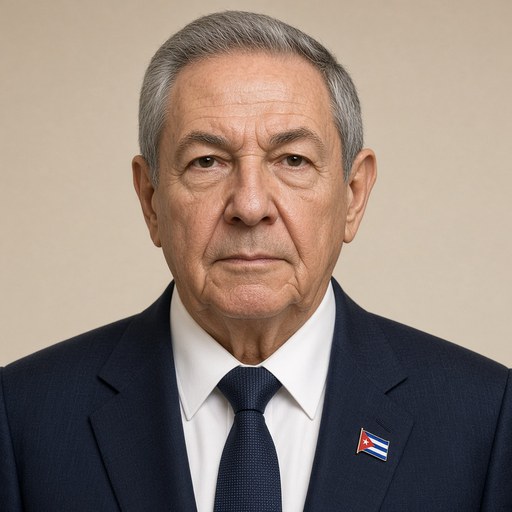
Speech delivered at the event for the "Day of the Victims of State Terrorism" held
 Raúl Castro · President of Cuba
- Context
- Castro addressed Latin American and Caribbean leaders at a regional summit in Mexico on February 23, 2010, advocating for a new unified regional organization and solidarity with Haiti.
- Main themes
- Community of Latin American and Caribbean States, regional integration and unity, Haiti earthquake relief and reconstruction, Cuban solidarity and humanitarian aid, US blockade of Cuba, sovereignty and political diversity, ALBA cooperation, poverty and colonialism in Haiti, Latin American independence
- Duration
- ~11 min
- Words
- 1,302
- Sentences
- 54
- Readability
- 33
- Grade
- 14.7
- Syntax
- 3.14
- Vocabulary
- 2.32
Translated from Spanish
The broad sphere of national life a sentence belongs to. Every sentence has an Arena, so it is the denominator the other indices are read against.
Other54 sentences in 33 paragraphs
Dear Mr. Felipe Calderón, President of Mexico:
Dear Presidents, Prime Ministers, and Heads of Delegations:
I wish to begin with a fraternal message to the brotherly Mexican people, whose land has sheltered many fighters from Latin America, including the initiators of the Cuban Revolution, and with whom we share deep bonds of friendship.
I thank you for the warm hospitality with which we have been received.
Dear colleagues:
The decision we have just made to create the Community of Latin American and Caribbean States is of historical significance.
Cuba believes that the conditions are in place to move quickly towards the establishment of a purely Latin American and Caribbean regional organization that integrates and represents the 33 independent nations of Latin America and the Caribbean.
Most regions of the world have their own organization, regardless of whether some of their members belong to other subregional groups or to bodies that encompass more than one geographical area. There is no reason why Latin America and the Caribbean should not have their own entity for political coordination, economic coordination, and cooperation and integration.
It would make no sense to delay that process. Let us be consistent with the will expressed at the Summit in Salvador de Bahia.
The celebration in Caracas of the next Summit in 2011 would be the opportune moment to conclude the preparatory work for the new organization and to set it in motion. In that sense, we consider it advisable to make efforts to promptly define its statutes and modes of operation, so that they reflect the collective interests towards greater integration and unity of our region. It will be Venezuela's responsibility to preside over the preparatory work, including the drafting of the documents.
Being an independent nation of Latin America and the Caribbean is an essential condition for being part of the new organization, which must be characterized by respect for cultural diversity, for the different geographical and economic dimensions, for the political system that each country adopts, for the disparity in natural wealth, and for the different social development.
Cuba believes that the Declaration proposed to us on this issue is positive. It contains the necessary elements to open a period of work and preparation. Our aspiration is that the founding document of the new organization is drafted efficiently and swiftly so that it can be approved at the next Summit.
Cuba will work diligently in that endeavor.
I deeply appreciate the adoption of a special statement calling for an end to the unjust economic, commercial, and financial blockade of the United States against my country, as well as the expressions of solidarity expressed here by some of the speakers who preceded me.
Poverty in Haiti is a product of colonialism and subsequent neocolonial domination. In that suffering nation, the first social revolution took place, which made it, at that time, the only independent territory in Latin America and the Caribbean. It was, moreover, as we all know, the only social revolution led by slaves that was victorious in the history of humanity.
The response of the international community to the earthquake, and in particular that of Latin American and Caribbean countries, has been commendable. But the great challenge begins now, when the headlines leave Haiti, the moment of emergency has passed, and the supposed "threat" of a migratory wave fades. The solidarity aid in the face of disaster must not go down in history as a fleeting and sudden gesture of generous "charity."
That brotherly country requires and deserves a significant international effort for its reconstruction, disinterest, and full respect for the sovereignty of Haiti and its Government, and an urgent and long-term will, under the authority of the United Nations, with the sole presence of MINUSTAH.
The solidarity of the Cuban people did not arrive in Haiti with the earthquake. It has been present for more than a decade.
During that time, Cuban doctors had conducted 14 million consultations, 200,000 surgeries, 100,000 births, and 45,000 ophthalmological operations.
165,000 Haitians were literate, 917 young people graduated from higher education, and 660 Haitian scholarship students were studying in Cuba.
At the time of the disaster, more than 400 Cuban collaborators were working there. Our doctors began providing their services from the very first moment.
Now, 1,429 health collaborators are providing medical assistance on the ground, including 406 resident doctors, interns, and fifth-year Haitian medical students from Cuba, as well as 224 doctors from 22 Latin American and Caribbean nations and 7 doctors from the United States, graduates of the Latin American School of Medicine in Cuba, who make up a large international contingent.
Venezuela, President Hugo Chávez, with his special sensitivity and generosity, Cuba, and the other ALBA countries aim to maintain and increase that effort and are willing to cooperate with all nations, without exception, to help the Haitian people and government, as we have the human resources, experience, and appropriate initial infrastructure on the ground.
I wish to share with you a Chinese proverb engraved in La Capilla del Hombre, by the great Ecuadorian painter Oswaldo Guayasamín, which impacted me when I visited it last August at the inauguration of our friend Rafael Correa. I quote: "I cried because I had no shoes, until I saw a child who had no feet."
This profound reflection made me think with pride of our people, of Martí who taught us that Homeland is Humanity. I also think of the Cuban Revolution, in these 50 years of struggle, and of Fidel, who with his teaching has educated us in the generosity and strength of solidarity.
I assure you that Cuban collaboration and its modest effort will remain in Haiti for as long as necessary, if the Government of that nation so decides. Our country, firmly blockaded, does not have any resources to spare; rather, it lacks everything, but it is willing to share its poverty with those who have less, first and foremost with those who today need it most on the continent.
Dear Presidents and Prime Ministers:
Cuba, along with the rest of Latin America and the Caribbean, has always upheld the just claim of the Republic of Argentina regarding the Malvinas Islands and other surrounding territories. Today we firmly support that sister nation's legitimate right to the natural resources of its continental shelf and to demand that foreign activities of exploration and exploitation of hydrocarbons cease. These actions, which have the authorization of the British government, entail a serious violation of international law. The Argentine people will not lack our support in this noble struggle.
Cuba also supports the Ecuadorian government in its just demand against the decision of the International Financial Assets Group, and the pretension to claim the authority to qualify or disqualify sovereign governments without any basis. It reminds us of the spurious lists of the United States Department of State regarding countries that supposedly sponsor terrorism.
Another issue under our attention is climate change, which constitutes the main threat facing humanity. What happened in Copenhagen was undemocratic, lacked transparency, and was imposed through an exclusive negotiation format that ignored the majority of the Parties to the Convention.
Our country aims to work with dedication and a constructive spirit in the preparation process for the 16th Conference of the Parties, to defend that this be a transparent and inclusive negotiation process, leading to a broad and legally binding agreement.
Cuba maintains that it is necessary to safeguard the Framework Convention on Climate Change and its Kyoto Protocol; that the principle of common but differentiated responsibilities must be defended, and that the negotiation mechanism stipulated in the Bali Roadmap must be respected. We believe that Latin American and Caribbean countries, despite our diverse characteristics, are committed to these principles and have the strength to defend them.
Thank you very much, Mr. President and fellow colleagues.
The original Spanish. The tags above are read on the English translation's sentences.
Estimado Señor Felipe Calderón, Presidente de México:
Estimados Presidentes, Primeros Ministros y Jefes de Delegaciones:
Deseo comenzar con un mensaje fraterno al hermano pueblo mexicano, cuya tierra dio abrigo a muchos luchadores de Latinoamérica, entre ellos a los iniciadores de la Revolución Cubana y al que nos unen entrañables lazos de amistad.
Agradezco la cálida hospitalidad con que se nos ha recibido.
Estimados colegas:
La decisión que acabamos de adoptar de crear la Comunidad de Estados Latinoamericanos y Caribeños es de trascendencia histórica.
Cuba considera que están dadas las condiciones para avanzar con rapidez hacia la constitución de una organización regional puramente latinoamericana y caribeña, que integre y represente a las 33 naciones independientes de la América Latina y el Caribe.
La mayoría de las regiones del mundo tienen su propia organización, con independencia de que algunos de sus miembros pertenezcan a otras agrupaciones subregionales o a organismos que abarcan a más de un área geográfica. No hay razón para que América Latina y el Caribe no cuenten con su propia entidad de concertación política, de coordinación económica y de cooperación e integración.
No tendría sentido dilatar ese proceso. Seamos consecuentes con la voluntad expresada en la Cumbre de Salvador de Bahía.
La celebración en Caracas de la próxima Cumbre en el año 2011, sería el momento propicio para concluir los trabajos preparatorios de la nueva organización y ponerla en marcha. En ese sentido, consideramos conveniente realizar esfuerzos para definir con prontitud sus estatutos y formas de operación, de manera tal que en ellos se recojan los intereses colectivos hacia una mayor integración y unidad de nuestra región. Corresponderá a Venezuela presidir los trabajos preparatorios, incluida la elaboración de los documentos.
Ser una nación independiente de América Latina y el Caribe es condición imprescindible para formar parte del nuevo organismo, que deberá caracterizarse por el respeto a la diversidad cultural, a las distintas dimensiones geográficas y económicas, al sistema político que cada país adopte, a la disparidad en riquezas naturales y al diferente desarrollo social.
Cuba considera que la Declaración que se nos propone sobre este tema es positiva. Contiene los elementos necesarios para abrir un período de trabajo y preparación. Nuestra aspiración es que el documento constitutivo del nuevo organismo se elabore con eficiencia y agilidad para poder aprobarlo en la próxima Cumbre.
Cuba trabajará con dedicación en ese empeño.
Agradezco profundamente la adopción de un comunicado especial que reclama poner fin al injusto bloqueo económico, comercial y financiero de los Estados Unidos contra mi país, así como las expresiones de solidaridad manifestadas aquí por algunos de los oradores que me han precedido.
La pobreza en Haití es un producto del colonialismo y la posterior dominación neocolonial . En esa sufrida nación se produjo la primera revolución social que la convirtió, en esa época, en el único territorio independiente de Latinoamérica y el Caribe. Fue, además, como todos conocemos, la única revolución social, dirigida por esclavos, victoriosa en la historia de la humanidad.
La respuesta de la comunidad internacional ante el terremoto y, en particular, de los países latinoamericanos y caribeños, ha sido encomiable. Pero, el gran desafío empieza ahora, cuando los titulares de prensa abandonen Haití, el momento de emergencia haya pasado y se diluya la supuesta "amenaza" de una oleada migratoria. La solidaria ayuda frente al desastre no debe pasar a la historia como un gesto fugaz y repentino de generosa "caridad".
Ese país hermano requiere y merece un esfuerzo internacional de envergadura para su reconstrucción, desinterés y pleno respeto a la soberanía de Haití y su Gobierno y una voluntad urgente y de largo plazo, bajo la autoridad de Naciones Unidas, con la única presencia de la MINUSTAH.
La solidaridad del pueblo cubano no llegó a Haití con el terremoto. Ha estado presente desde hace más de una década.
En ese tiempo los médicos cubanos habían realizado 14 millones de consultas, 200 mil cirugías, 100 mil partos y 45 mil operaciones oftalmológicas.
Se alfabetizaron 165 mil haitianos, se graduaron de nivel superior 917 jóvenes y cursaban estudios en Cuba 660 becarios haitianos.
En el momento del desastre, se encontraban trabajando allí más de 400 colaboradores cubanos. Nuestros médicos comenzaron a brindar sus servicios desde el primer instante.
Ahora están prestando asistencia médica en el terreno 1 429 colaboradores de la salud, que incluyen 406 médicos residentes, internos y estudiantes haitianos de 5to. año de medicina procedentes de Cuba, además de 224 médicos de 22 naciones de América Latina y el Caribe y 7 médicos de los Estados Unidos, graduados en la Escuela Latinoamericana de Medicina en Cuba, que conforman un gran contingente internacional.
Venezuela, el Presidente Hugo Chávez, con su especial sensibilidad y generosidad, Cuba y los demás países del ALBA se proponen mantener e incrementar ese esfuerzo y están dispuestos a cooperar con todas las naciones, sin excepción alguna, para ayudar al pueblo y al gobierno haitianos, a partir de que contamos con los recursos humanos, la experiencia y la infraestructura inicial apropiada en el terreno.
Deseo compartir con ustedes, un proverbio chino grabado en La Capilla del Hombre, del gran pintor ecuatoriano Oswaldo Guayasamín, que me impactó cuando la visité en agosto pasado a la toma de posesión de nuestro amigo Rafael Correa. Cito: "Yo lloré porque no tenía zapatos, hasta que vi un niño que no tenía pies".
Esta profunda reflexión me hizo pensar con orgullo en nuestro pueblo, en Martí que nos enseñó que Patria es Humanidad. Pienso también, en la Revolución Cubana, en estos 50 años de lucha, y en Fidel, que con su magisterio, nos ha educado en la generosidad y la fuerza de la solidaridad.
Les aseguro que la colaboración cubana y su modesto esfuerzo, permanecerán en Haití los años que sean necesarios, si el Gobierno de esa nación así lo dispone. A nuestro país, férreamente bloqueado, no le sobra ningún recurso, más bien le falta de todo, pero está dispuesto a compartir su pobreza con los que tienen menos, en primer lugar con quien hoy más lo necesita en el continente.
Estimados Presidentes y Primeros Ministros:
Cuba, junto al resto de América Latina y el Caribe, ha reivindicado siempre el justo reclamo de la República de Argentina en torno a las Islas Malvinas y otros territorios circundantes. Hoy respaldamos firmemente el derecho legítimo de esa hermana nación a los recursos naturales de su plataforma continental, y a demandar que cesen las actividades foráneas de exploración y explotación de hidrocarburos. Estas acciones, que cuentan con la autorización del gobierno británico, entrañan una grave violación del derecho internacional. No le faltará al pueblo argentino nuestro apoyo en esta noble lucha.
Cuba apoya también al gobierno ecuatoriano en su justa demanda contra la decisión del Grupo de Activos Financieros Internacionales, y la pretensión de adjudicarse la autoridad de calificar o descalificar a gobiernos soberanos sin fundamento alguno. Nos recuerda las listas espurias del Departamento de Estado de los Estados Unidos, con respecto a países que supuestamente patrocinan el terrorismo.
Otro tema bajo nuestra atención es el cambio climático que constituye la principal amenaza que enfrenta la humanidad. Lo que sucedió en Copenhague fue antidemocrático, careció de transparencia y se impuso mediante un formato de negociaciones excluyentes que ignoró a la mayoría de los Estados Partes en la Convención.
Nuestro país se propone trabajar con dedicación y espíritu constructivo en el proceso de preparación de la 16 Conferencia de las Partes, defender que este sea un proceso de negociación transparente e incluyente, que dé lugar a un acuerdo amplio y jurídicamente vinculante.
Cuba sostiene que es preciso salvaguardar el Convenio Marco sobre el Cambio Climático y su Protocolo de Kyoto; que hay que defender el principio de las responsabilidades comunes pero diferenciadas, y respetar el mecanismo de negociación estipulado en la Ruta de Bali . Creemos que los países latinoamericanos y caribeños, a pesar de nuestras características diversas, estamos comprometidos con estos principios y tenemos la fuerza para defenderlos.
Muchas gracias, Señor Presidente y demás colegas (Aplausos).