




Our People Will Know How to Defend Themselves to Consolidate Their Revolution. Speech by Thomas Sankara, 10 September 1985
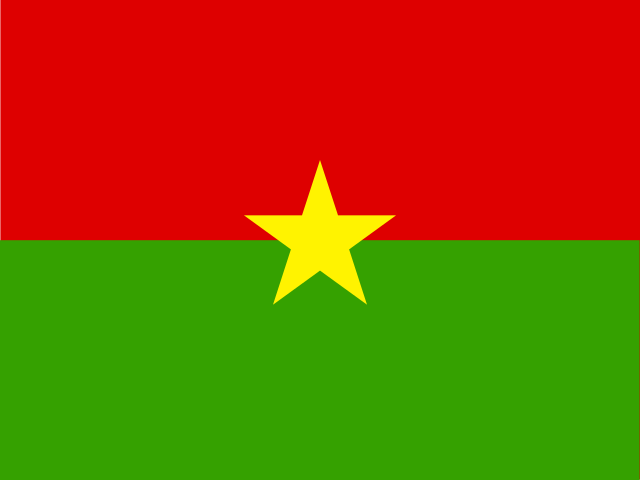 Thomas Sankara · President of Burkina Faso
- Context
- Sankara addressed a crowd of supporters at an airport in Burkina Faso on his return from the Conseil de l'Entente summit in Yamoussoukro, around September 10, 1985, explaining why he refused to sign its security communiqué.
- Main themes
- Security of the Burkinabè revolution, Conseil de l'Entente summit in Yamoussoukro, explosions in Lomé, refusal to be listed among victims in the communiqué, accusations against Côte d'Ivoire for harbouring opponents, destabilisation plots and mercenaries, solidarity with Togo and Ghana, vigilance and popular mobilisation, role of the CDRs and security services, imperialism and aggression in Benin, Grenada, Nicaragua and South Africa, Homeland or death
- Duration
- ~16 min
- Words
- 1,928
- Sentences
- 78
- Readability
- 55
- Grade
- 11.7
- Syntax
- 3.13
- Vocabulary
- 2.29
Translated from French Source: thomassankara.net ↗
The broad sphere of national life a sentence belongs to. Every sentence has an Arena, so it is the denominator the other indices are read against.
Other78 sentences in 29 paragraphs
Comrade militants, men and women,
I rejoice to see that our people know how to stand up,
I rejoice to know that our people remain mobilised,
I rejoice to know that our people remain one of those who know how to make imperialism and its local lackeys tremble,
Indeed, I could have hidden behind the so-called secrecy of deliberations to avoid having to give you certain information this evening, but the demands of the people, their mobilisation, their determination do not permit such behaviour.
And so I feel obliged to answer you, thereby fulfilling a militant duty, a revolutionary duty.
We are returning from Yamoussoukro, where I led the Burkinabè delegation to a summit of the Conseil de l'Entente. At this summit the question of security was discussed. We went there simply because we believe that, as a member of the Conseil de l'Entente, as part of the sub-region, we could not shy away from a question touching on security, for Burkina Faso, first and foremost, knows what security is and comes running and applauds when solutions are to be sought so that everyone can live in peace, so that the peoples around us and we ourselves can live in peace. We have been attacked, we have been assaulted, we have been threatened, we have been denigrated, and all of this touches on our security, all of this touches on the security of the revolution in Burkina Faso.
We therefore had something to say, and what one has to say, one must have the courage to say loud and clear.
The question of security arose following the recent events in Togo, in Lomé to be precise. The radio broadcasts tell us that in the Togolese capital successive explosions have disturbed the tranquillity of the valiant Togolese people. These explosions, we know neither their origin nor their perpetrators. Explanations have been given to us, descriptions have been made. The Burkinabè people stand in solidarity with the Togolese people, in solidarity with the Togolese people in happiness but above all in misfortune, and so we brought a testimony to the President of the Togolese Republic so that he might pass that testimony on to the Togolese people. At the same time we brought a testimony to the other peoples of the Conseil de l'Entente so that today and tomorrow these peoples may know that they can count at all times, at all times and in all places, on the people of Burkina Faso.
But you will understand that this support we give to the Togolese people does not allow us, does not authorise us to interfere in the internal affairs of Togo. And so we took the view that if these explosions were the work of Togolese opponents against the Togolese regime, that could only be the business of the Togolese alone. If, on the other hand, these explosions involved a third party, another State, another people, well then let the name of that people, the name of that country be stated clearly so that we Burkinabè may also take a clear position. We have been threatened several times, there have been explosions, some of our comrades have fallen. Never has a tear been shed to mourn our dead, never has anyone shown indignation at these numerous, multifaceted acts of aggression directed against our people. Never has the Conseil de l'Entente seen fit to convene a summit to support us, even if only morally, and that too we made a point of saying.
That is why, when, after the criticism we had voiced, there was talk of including Burkina Faso in the communiqué, we said no. We did not come in large numbers to Yamoussoukro to ask that people weep belatedly.
We believe that our people will know how to defend themselves because they have always known how to defend themselves and because, to consolidate their revolution, they must defend themselves. We therefore refused, purely and simply, to have Burkina Faso included in the list of those who have suffered. We believe that the Conseil de l'Entente, the summit of the Conseil de l'Entente, cannot be a notices column of our joys and sorrows in which one goes over again, in which one goes over all the misfortunes that have occurred here and there. Besides, if that had to be done, the Conseil de l'Entente would have had to meet every week on the case of Burkina Faso. We did not want that, and so there was no mention of Burkina Faso in that list.
Well, when heads of State meet, when we are called upon to take decisions, to give our position on projects such as this agreement as it appears in the final communiqué, well, we believe that one must think twice before taking a position. We have opponents; there are opponents because there are men, regimes, powers to feed them, to fatten them up. And what would be the use of signing documents, papers, if the will to put an end to the harmful activity of those opponents is not a sincere will? What would be the use for the Burkinabè of proclaiming loud and clear that we take a position, in agreement with the other States, against destabilisation, when we know that at any moment destabilisation hangs over our heads?
Burkinabè are victims of abuses, they are humiliated, they are scorned. Our regime is insulted. Every day, too, plots are hatched and attempts are made to infiltrate into our country some mercenaries, some stateless people, in order to link up, to make a pact with the local reactionaries, the counter-revolutionaries whom we have not yet finished unmasking. All this in order to bring desolation, by fire and by blood, to a country that has chosen to live free.
We could not subscribe to such commitments. The day sincere agreements are signed, Burkina Faso will be there. But as long as it is a matter of hollow words, as long as it is a matter of talking, of writing, while continuing to feed in the backyard those hyenas that are going to be unleashed against us, well, we say no.
We were given information about the Ghanaians, who the press said were victims of ill-treatment in Côte d'Ivoire, mainly in Abidjan. It seems, according to the information from the Ivorian president, that there is nothing to it. In any case, we affirm that the security of Ghana is the security of Burkina. In any case, we affirm that whatever touches the Ghanaians touches the Burkinabè. And we will await the decision and the appropriate response of the Ghanaian authorities; that response will simply set the tone, and the Burkinabè people will be faithful, will be faithful to their commitments. We will keep our word.
Can we now believe ourselves safe after such a meeting?
Well then, vigilance must be the rule. We must redouble our vigilance. Summits will never be enough to create security as long as we harbour opponents; they are over there in Côte d'Ivoire, many of them, very many. We do not need an agreement for them to be extradited from Côte d'Ivoire. We do not need to wait for an agreement or a summit, if the will is there to put an end to insecurity, for our opponents to be condemned where they are. Someone had to take them in.
And so we issue this warning to those who feed opponents against us, to those who arm counter-revolutionaries against us. Not only are they wasting their time, which is only the least of it, but also, but also and above all they are taking a very grave risk, because as long as one is not sure of being sufficiently armed, of being sufficiently protected, one must not disturb the beehive.
I said that we are living through a particularly difficult situation as far as we are concerned; that is why we agree with everyone when it is a matter of security, when it is a matter of peace. We too are aware that these elements are fundamental, essential elements for any development. And this is the moment to congratulate our services, which every day, in silence, help to foil plots, sometimes coming from very far away, against Burkina Faso. Whether it be the services of the high command, whether it be the gendarmerie, the directorate-general of national security, whether it be the CDRs spread throughout the territory and even beyond its borders. They have all contributed in one way or another to protecting us, to keeping us safe. We have not yet said our last word on these plots, which we will speak about one day, about their authors, and above all about those who feed them, about those who sustain them. We will put on display the equipment we have seized, we will display, we will make the men we have arrested speak, on that day. The whole world will know, on that day, the whole world will know that Burkina Faso has truly been threatened and that it continues to be threatened.
On that day the whole world will know that when there was a landing in Benin in 1977, it was in no way a matter of chance. When the island of Grenada was ravaged, it was in no way a matter of chance. When in Nicaragua they are threatened every day, it is in no way a matter of chance. Nor is it a matter of chance that in South Africa other men are trampled in their dignity; it is because they want to live free.
And that is why, by deduction, we also know that even if someone tries to land at this very airport where we stand, they will then find Burkinabè standing up against them, revolutionaries, men of dignity. I would also like to thank all those who, without being Burkinabè by birth, are Burkinabè at heart because they have chosen our cause, because throughout the world they give us the benefit of their support, they give us the benefit of facilities, of the valuable information they manage to obtain. Many love Burkina because they too hope that this wind of justice, of independence and of dignity blowing over our country may one day blow over all countries and for the benefit of all peoples.
And it is because we love all peoples, it is because we love our people, it is because we love the peoples of Côte d'Ivoire, of Ghana, of Togo, of Benin, of Niger, of Mali, these peoples who surround us first and foremost, it is because we love them that we say yes to security; it is because we love them that we resolve to fight all those who seek to oppose these peoples. But let no one ever confuse the people with something else.
I thank you for coming to welcome us,
I thank you for coming to express the voice of the Burkinabè people,
I thank you for having shown that when we speak, we do not speak in our own personal name but in the name of a people who know what they want and who have decided no longer to submit, a people who have decided to be informed of everything and to take on popular power, a people who want us, wherever we speak, to set out their objectives, their combat, their daily struggle,
I thank you for having given this fine lesson to those who can only speak within the secrecy of their own walls,
Homeland or death, we shall overcome!!
I thank you, comrades!!
The original French. The tags above are read on the English translation's sentences.
Camarades militantes et militants,
Je me réjouis de voir que notre peuple sait se mettre debout,
Je me réjouis de savoir que notre peuple reste mobilisé,
Je me réjouis de savoir que notre peuple reste un de ceux-là qui savent faire trembler l’impérialisme ses valets locaux,
En effet j’aurais pu me dérober derrière les prétendus secrets de délibérations pour éviter d’avoir à vous livrer certaines informations ce soir, mais l’exigence du peuple, sa mobilisation, sa détermination n’autorisent pas de tels comportements.
[Applaudissements]
Aussi je me sens dans l’obligation de vous répondre accomplissant ainsi un devoir militant, un devoir révolutionnaire.
Nous revenons de Yamoussoukro où j’ai conduit la délégation burkinabè à un sommet du conseil de l’entente, à ce sommet il a été question de sécurité. Nous nous y sommes rendus simplement parce que nous estimons que membre du Conseil de l’entente, élément de la sous-région nous ne pouvions nous soustraire à la question touchant la sécurité car le Burkina Faso en tout premier lieu sait ce que c’est que la sécurité et accourt et applaudi lorsque des solutions sont à rechercher pour que chacun puisse vivre en paix pour que les peuples qui nous entourent et nous-mêmes puissions vivre en paix. Nous avons été attaqués, nous avons été agressés, nous avons été menacés nous avons été dénigrés et tout cela touche à notre sécurité tout cela touche à la sécurité de la révolution au Burkina Faso.
Nous avions donc un mot à dire et ce que l’on a dire, on doit avoir le courage de le dire haut et fort.
Il a été question de la sécurité suite aux derniers événements survenus au Togo à Lomé précisément. Les radiodiffusions nous apprennent que dans la capitale togolaise des explosions successives ont troublé la quiétude du vaillant peuple togolais. Ces explosions, nous n’en connaissons ni l’origine ni les auteurs. Des explications nous ont été données, des descriptions ont été faites. Le peuple burkinabè est solidaire du peuple togolais, solidaire du peuple togolais dans le bonheur mais surtout dans le malheur et nous apportions donc un témoignage au président la république togolaise afin qu’il puisse transmettre ce témoignage là au peuple togolais, en même temps nous apportions un témoignage aux autres peuples du Conseil de l’entente pour que aujourd’hui et demain ces peuples sachent qu’ils peuvent compter tout temps en tout temps et en tout lieu sur le peuple du Burkina Faso.
[Applaudissements]
Mais vous comprendrez que ce soutien que nous apportons au peuple togolais ne nous permet pas, nous autorise pas à nous immiscer dans les affaires intérieures du Togo. Aussi avons-nous estimé que si ces explosions étaient le fait d’opposants togolais contre le régime togolais cela ne pouvait qu’être l’affaire des seuls togolais. Par contre si ces explosions impliquaient une tierce partie, un autre État un autre peuple et bien que l’on dise clairement le nom de ce peuple, le nom de ce pays afin que nous Burkinabè nous puissions également nous prononcer clairement. Nous avons été plusieurs fois menacés, il y a eu des explosions, certains de nos camarades sont tombés. Jamais une larme n’a été écrasée pour pleurer nos morts jamais l’on ne s’est indigné contre ces agressions nombreuses multiformes dirigées contre notre peuple. Jamais le Conseil de l’entente n’a cru devoir convoquer un sommet pour nous soutenir ne serait-ce que moralement et cela aussi nous avons tenu à le dire.
C’est pourquoi lorsque dans le communiqué après la critique que nous avons formulé il a été question de faire figurer le Burkina Faso nous avons dit non. Nous ne sommes pas venus nombreux à Yamoussoukro pour demander que l’on pleure à retardement.
[Applaudissements]
Nous estimons que notre peuple saura se défendre parce qu’il a toujours su se défendre et parce que, pour consolider sa révolution, il doit se défendre. Nous avons donc refusé purement et simplement que l’on fasse figurer le Burkina Faso dans la liste de ceux qui ont été éprouvés. Nous estimons que le Conseil de l’entente, le sommet du Conseil de l’entente ne saurait être un avis et communiqué de nos joies et nos peines où l’on reprend [Applaudissements], où l’on le prend donc tous les malheurs survenus çà et là. Du reste s’il fallait le faire ce serait chaque semaine que le Conseil de l’entente aurait dû se réunir sur le cas du Burkina Faso, nous n’en voulions pas et il n’a donc pas été question du Burkina Faso dans cette liste.
Et bien lorsque les chefs d’État se réunissent, lorsque nous sommes appelés à prendre des décisions à nous prononcer sur des projets comme cet accord tel qu’il figure dans le communiqué final et bien nous estimons que, il y à réfléchir à deux fois avant de se prononcer. Nous avons des opposants, il existe des opposants parce qu’il existe des hommes, des régimes des pouvoirs pour les nourrir pour les engraisser et à quoi servirait de signer des documents des papiers si la volonté de mettre fin à l’activité nocive de ses opposants là n’est pas une volonté sincère, à quoi servirait pour le Burkinabè de clamer haut et fort que nous nous prononçons en accord avec les autres États contre la déstabilisation lorsque nous savons qu’à tout moment la déstabilisation pèse sur nos têtes.
Des Burkinabè sont victimes d’exactions ils sont humiliés ils sont bafoués. Notre régime est insulté. Chaque jour aussi des complots se trament et l’on essaie d’infiltrer dans notre pays, qui des mercenaires, qui des apatrides pour retrouver, pour nouer un pacte avec la réaction locale les contre-révolutionnaires que nous n’avons pas fini de démasquer. Tout cela afin de provoquer par le feux et par le sang la désolation dans un pays qui a choisi de vivre libre.
Nous ne pouvions pas souscrire à de tels engagements. Le jour où des accords sincères seront signés, le Burkina Faso sera au rendez-vous. Mais tant qu’il s’agira de paroles creuses tant qu’il s’agira de parler, d’écrire tout en continuant de nourrir dans l’arrière-cour ces hyènes qui vont être largués contre nous et bien nous disons non. [Applaudissements]
L’on nous a donné des informations sur les Ghanéens donc la presse disait qu’ils étaient victimes de sévices en Côte d’Ivoire à Abidjan principalement. Il semble selon les informations du président ivoirien qu’il n’en est rien. Dans tous les cas nous affirmons que la sécurité du Ghana est la sécurité du Burkina. Dans tous les cas nous affirmons que ce qui touche aux Ghanéens touche aux Burkinabè. Et nous attendrons la décision et la réaction appropriée des autorités ghanéennes, cette réaction donnera simplement le ton et le peuple burkinabè sera fidèle, sera fidèle à ses engagements, nous respecterons notre parole.
[Applaudissements]
Peut-on se croire maintenant en sécurité après une telle réunion?
Alors la vigilance doit être de rigueur. Nous devons redoubler de vigilance, les sommets ne suffiront jamais à créer la sécurité tant que nous entretiendrons des opposants, ils sont là-bas en Côte d’Ivoire, nombreux, très nombreux. Nous n’avons pas besoin d’un accord pour qu’ils soient extradés de Côte d’Ivoire, nous n’avons pas besoin d’attendre un accord ou un sommet pour que, si la volonté est de mettre fin à l’insécurité, pour que nos opposants soient condamnés là où ils sont. Il a bien fallu quelqu’un pour les accueillir.
Aussi nous lançons cet avertissement ceux qui nourrissent contre nous des opposants, ceux qui arment contre nous des contre-révolutionnaires. Non seulement ils perdent leur temps ce qui n’est qu’un minimum, mais aussi, mais aussi et surtout ils prennent un risque très grave, parce que tant que l’on est pas sûr s’être suffisamment armé, de s’être suffisamment paré il ne faut point déranger la ruche.
J’ai dit que nous vivons une situation particulièrement difficile pour ce qui nous concerne c’est pourquoi nous sommes d’accord avec tout le monde lorsqu’il s’agit de sécurité lorsqu’il s’agit de paix. Nous sommes conscients nous aussi que ces éléments-là sont des éléments fondamentaux essentiels pour tout développement. Et c’est le lieu de féliciter nos services qui, chaque jour dans le silence contribuent à déjouer des complots venus de très loin parfois contre le Burkina Faso. Qu’il s’agisse des services du haut commandement, qu’il s’agisse de la gendarmerie, de la direction générale de la sureté, qu’il s’agisse des CDR partout disséminés à travers le territoire et même hors des territoires. Ils ont tous contribué d’une façon ou d’une autre à nous protéger à nous mettre à l’abri. Nous n’avons pas encore dit notre dernier mot sur ces complots dont nous parlerons un jour sur leurs auteurs, surtout sur ceux qui les nourrissent sur ce qui les entretiennent. Nous exposerons le matériel que nous avons saisi, nous exposerons, nous ferons parler les hommes que nous avons arrêtés ce jour-là. Le monde entier saura, ce jour-là, le monde entier saura que le Burkina Faso a réellement été menacé qu’il continue d’être menacé.
[Applaudissements].
Ce jour-là le monde entier saura que lorsqu’il y a eu un débarquement au Bénin en 1977 ce n’était point le fait d’un hasard. Lorsque l’île de Grenade a été saccagé, ce n’était point le fait d’un hasard. Lorsqu’au Nicaragua ils sont menacé chaque jour, ce n’est point le fait d’un hasard. Ce n’est point le fait aussi d’un hasard si en Afrique du sud d’autres hommes sont bafoués dans leur dignité c’est parce qu’ils veulent vivre libres.
[Applaudissements]
Et c’est pourquoi, par déduction, nous savons aussi que même, si cet aéroport où nous sommes, l’on pourra tenter de débarquer, mais alors l’on trouvera dressés des Burkinabè, des révolutionnaires, des hommes dignes. Je voudrais aussi remercier tous ceux qui sans être burkinabè de naissance le sont dans le cœur parce qu’ils ont choisi notre cause, parce que à travers le monde, ils nous font profiter de leur soutien, ils nous font profiter des facilités des informations précieuses qu’ils arrivent à détenir. Ils sont nombreux à aimer le Burkina parce qu’ils souhaitent aussi que ce vent de justice, d’indépendance et de dignité qui souffle sur notre pays puisse un jour souffler sur tous les pays et au profit de tous les peuples.
Et c’est parce que nous aimons tous les peuples, c’est parce que nous aimons notre peuple, c’est parce que nous aimons les peuples de Côte d’Ivoire, du Ghana, du Togo, du Bénin du Niger du Mali ces peuples qui nous entourent en tout premier lieu c’est parce que nous les aimons que nous disons oui pour la sécurité, c’est parce que nous les aimons que nous prenons la résolution de combattre tous ceux qui veulent s’opposer à ces peuples là, mais que l’on ne confonde jamais le peuple et autre chose. [Applaudissements]
Je remercie d’être venus nous accueillir,
Je vous remercie d’être venu exprimer la voix du peuple burkinabè,
Je vous remercie d’avoir démontré que lorsque nous parlons nous ne parlons pas à notre nom personnel mais au nom d’un peuple qui sait ce qu’il veut et qui a décidé de ne plus subir, un peuple qui a décidé d’être au courant de tout et d’assumer le pouvoir populaire, un peuple qui veut que partout où nous parlons, nous fassions état de ses objectifs, de son combat, de sa lutte quotidienne,
Je vous remercie d’avoir donné cette belle leçon à ceux qui ne peuvent parler que dans le secret de leurs murs,
La patrie ou la mort, nous vaincrons !!
Je vous remercie camarades !!
[Applaudissements]