




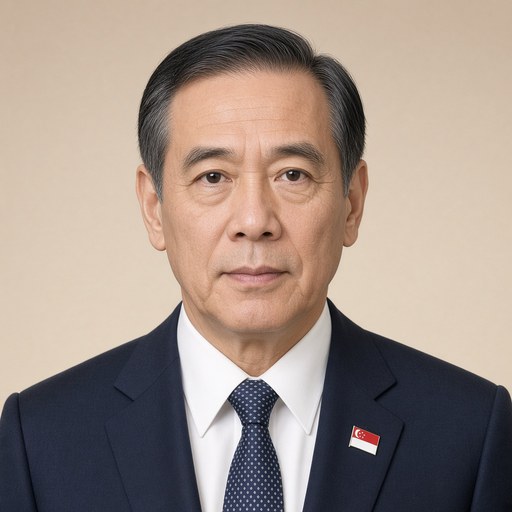
Intervention by PM Lee Hsien Loong on "Digital Transformation" at the G20 Bali Summit
 Lee Hsien Loong · Prime Minister of Singapore
- Context
- Lee addressed G20 leaders at the Bali Summit on 16 November 2022, intervening on digital transformation to propose international cooperation priorities.
- Main themes
- Digital transformation, cross-border interoperability, digital economy agreements, real-time payment systems, financial inclusion, digital assets regulation, sustainable development goals, ASEAN digital integration, foundational digital infrastructure, financial stability risks, international cooperation
- Duration
- ~3 min
- Words
- 342
- Sentences
- 20
- Readability
- 17
- Grade
- 15.2
- Syntax
- 2.84
- Vocabulary
- 2.27
The broad sphere of national life a sentence belongs to. Every sentence has an Arena, so it is the denominator the other indices are read against.
Other20 sentences in 7 paragraphs
The pandemic has accelerated digitalisation in many of our countries. It is a driver for future growth and for the achievement of our Sustainable Development Goals.
There are many opportunities for win-win international cooperation in this field.
May I make three suggestions: First, to improve interoperability of cross-border rules, standards, data frameworks and policies to facilitate the ease of doing business. Singapore has entered into new Digital Economy Agreements with Australia, the ROK and the United Kingdom. We hope to expand this network over time. We are also working with Indonesia, as the next ASEAN Chair, to advance the ASEAN Digital Economy Framework Agreement to deepen digital integration and connectivity in Southeast Asia.
Second, to use digital innovations to boost trade, enhance financial inclusion and improve service delivery. With Bank Indonesia’s leadership and partnership of the BIS (Bank for International Settlements) Innovation Hub, the ASEAN-5 will press ahead to link our real-time payment systems to boost cross-border payments and trade. Such multilateral payments connectivity can be scaled up later to other jurisdictions or regions. We look forward to learning from others who have also promoted the development of foundational digital infrastructure globally (such as the India Stack) to improve public service delivery to those who are most in need. Domestically, Singapore will start a trial using a purpose-bound digital Singapore dollar that can, inter alia, help the government disburse and track the utilisation of fiscal transfers.
Thirdly, we should develop consistent international regulation for digital assets. Digital assets have significant economic potential. They improve efficiency and liquidity by enabling high value assets to be traded, cleared and settled instantaneously among participants, directly. Such technologies can transform cross-border trade and settlement as well as capital market activities. However, as digital innovations proliferate and become more interconnected with financial markets, they can potentially create risks to financial stability. Therefore the G20 should work with relevant standard-setting bodies to develop international regulations to address these risks, in line with the principle of “same activity, same risk, same regulation”.
Thank you Mr Chairman.
Explore related topics