




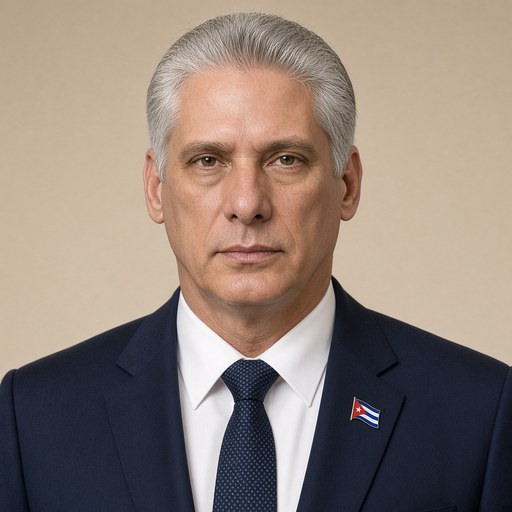
Speech delivered at the high-level event on the Global Balance of the implementation of the Paris Agreement.
 Miguel Díaz-Canel · President of Cuba
- Context
- Díaz-Canel addressed the COP28 high-level Global Stocktake event in Dubai on December 2, 2023, assessing Paris Agreement implementation progress.
- Main themes
- Paris Agreement global stocktake, climate finance obligations, developed vs. developing country responsibilities, mitigation and adaptation, means of implementation, loss and damage, technology transfer, capacity building, equity and common but differentiated responsibilities, COP28 outcomes, Global South needs
- Duration
- ~3 min
- Words
- 401
- Sentences
- 16
- Readability
- 10
- Grade
- 18.0
- Syntax
- 2.77
- Vocabulary
- 2.71
COP Opening Addresses Translated from Spanish
The broad sphere of national life a sentence belongs to. Every sentence has an Arena, so it is the denominator the other indices are read against.
Other16 sentences in 14 paragraphs
Dear Sultan Al-Jaber, President of COP28;
Mr. Moderator;
Excellencies:
The Global Stocktake of the implementation of the Paris Agreement is a process of cardinal importance, the outcome of which must lead to the strengthening of climate action and international cooperation.
This COP28 is taking place in a context of multidimensional crisis, in which the expectations created by the adoption of this historic Agreement in 2015 have not been fulfilled.
The main reason lies in the attitude of developed countries, which seek to shift the burden of their non-compliance onto developing countries and erase their historical responsibilities in the deterioration of the environment. At the same time, they resist committing to providing the means of implementation necessary to support climate actions in the Global South.
To cite just one example, developed countries have been unable to meet the meager commitment of providing 100 billion dollars annually to support adaptation and mitigation in developing countries, whose needs have been increasing and are now estimated to be in the order of trillions annually.
This first Global Stocktake offers an opportunity to reflect on progress and failures, and to identify opportunities, challenges, and solutions to drive advances in all thematic areas: mitigation, adaptation, means of implementation and support, and loss and damage.
The outcome of this Assessment must be balanced, realistic, and applicable, objectively pointing to the future we want to achieve, but at the same time it must critically assess how we have arrived at the situation we find ourselves in today.
The approach to the issue of means of implementation must be particularly forceful, with results that recognize the failures of responsibilities of developed countries, as well as ensure ambitious commitments in terms of finance, technology transfer, and capacity building for developing countries, including the willingness to work constructively towards achieving a new financial target to be adopted at COP29, which truly responds to the needs of the Global South.
Excellencies:
The objectives we set with this exercise must take into account the different national circumstances, the needs for development, and the economic and social priorities of developing countries. It is essential that the entire Assessment is grounded in the principles of the Convention and its Paris Agreement, particularly in equity and common but differentiated responsibilities.
Let us use this space to acknowledge the missteps, rectify them, and align our commitments with the urgency of the current climate situation.
Thank you very much.
The original Spanish. The tags above are read on the English translation's sentences.
Estimado Sultán Al-Yaber, presidente de la COP28;
Señor Moderador;
Excelencias:
El Balance Global de la implementación del Acuerdo de París es un proceso de cardinal importancia, cuyo resultado debe conducir al fortalecimiento de la acción climática y de la cooperación internacional.
Esta COP28 se desarrolla en un contexto de crisis multidimensional, en el que las expectativas creadas con la adopción en 2015 de este histórico Acuerdo no han sido cumplidas.
La razón principal radica en la actitud de los países desarrollados, que pretenden trasladar la carga de sus incumplimientos a los países en desarrollo y borrar sus responsabilidades históricas en el deterioro del medio ambiente. Paralelamente, se resisten a comprometerse con la provisión de los medios de implementación necesarios para apoyar las acciones climáticas en las naciones del Sur.
Por solo citar un ejemplo, los países desarrollados han sido incapaces de cumplir con el magro compromiso de abonar los 100 000 millones de dólares anuales para apoyar la adaptación y la mitigación en los países en desarrollo, cuyas necesidades han ido en aumento y hoy se estiman en el orden de los millones de millones anuales.
Este primer Balance Global ofrece una oportunidad para reflexionar sobre los progresos y las fallas, e identificar oportunidades, desafíos y soluciones para impulsar avances en todas las áreas temáticas: mitigación, adaptación, medios de implementación y apoyo, y pérdidas y daños.
El resultado de esta Evaluación debe ser balanceado, realista y aplicable, apuntar objetivamente al futuro que queremos alcanzar, pero al propio tiempo ha de hacer un balance crítico acerca de cómo hemos llegado a la situación en que nos encontramos hoy.
Especialmente contundente deberá ser el abordaje de la cuestión de los medios de implementación, cuyos resultados deben reconocer los incumplimientos de las responsabilidades de los países desarrollados, así como asegurar compromisos ambiciosos en materia de finanzas, transferencia de tecnologías y desarrollo de capacidades para los países en desarrollo, incluyendo la voluntad de trabajar constructivamente por el logro de una nueva meta financiera a adoptarse en la COP29, que responda verdaderamente a las necesidades de las naciones del Sur.
Excelencias:
Los objetivos que nos tracemos con este ejercicio tienen que tomar en cuenta las diferentes circunstancias nacionales, las necesidades del desarrollo y las prioridades económicas y sociales de los países en desarrollo. Es indispensable que toda la Evaluación se sustente en los principios de la Convención y su Acuerdo de París, en particular en la equidad y las responsabilidades comunes pero diferenciadas.
Aprovechemos este espacio para reconocer los desaciertos, rectificarlos, y alinear nuestros compromisos con la urgencia de la situación climática actual.
Muchas gracias (Aplausos).