



Defence
6 Dec 1951 · 2,399 words · House of Commons debate on defence
Geopolitical 61%53%


The Global Institute for National Capability (GINC) is an independent research and data laboratory that studies the foundation of long-term power, prosperity and resilience.
 TrendsThe global trends shaping national power, prosperity and resilience.
 DevelopmentsMajor milestones in national capability as they happen.
 InfrastructureNational infrastructure data, from power and transport to digital networks.
 GovernmentThe Public Administration Index: how well states govern and deliver.
 TradeGlobal trade flows, with indices of each nation's trade.
 Bilateral RatingsRatings of the relationships between pairs of nations.
 ResearchBibliometrics: research output and influence by nation and field.
 PatentsGlobal patent activity shaping national capability.
 Sovereign SpeechYou are hereA dataset of what governments and their leaders say.

Prime Minister of the United Kingdom
United KingdomThreats and rivals abroad, met with order and cool argument.
From 491 tagged speeches, each read against comparable speeches: 50% is a typical speech of its kind. How it is measured
The average of Winston Churchill’s 491 tagged speeches: the share of sentences carrying each option, each speech counting equally, leaving out the sentences that carry none of them (turn on Other to see them). Beneath it, the same for the other leaders of United Kingdom (domestic peers, 85 speeches) and for the leaders of every other nation (global peers, 51,756 speeches).
What the speaker talks about: the sphere of national life, the lever of national power, and how far the speech reaches in space and time.
Who is in the story and how they are cast: whose actions a sentence is about, the part they play, where the speaker stands, and the people against the elite.
How it is said: the act a sentence performs, how sure it sounds, the feeling it appeals to and the moral value it rests on.
Speeches, sentences and words in the corpus by year.
The broad sphere of national life a sentence belongs to. Every sentence has an Arena, so it is the denominator the other indices are read against.
OtherMost recent first. The bar beside each speech is its sentences on the chosen index.
Across the 491 speeches with a score, weighted by their length; beside each, the same for every speech in the corpus.
All speeches 43.9 · +11.0
Flesch Reading Ease, 0 to 100; higher is easier.
All speeches 13.1 · −1.2
Flesch–Kincaid grade: years of schooling needed; lower is simpler.
All speeches 3.06 · +0.10
Mean dependency distance in words; higher is more intricate.
All speeches 2.20 · −0.08
Lexical rarity (7 − Zipf frequency of content words); higher is rarer.
Each index over the years for Winston Churchill: on the left, every option's share of the sentences, as a five-year average; on the right, the same split to 100 per cent.
OtherWhat the speaker talks about: the sphere of national life, the lever of national power, and how far the speech reaches in space and time.
The broad sphere of national life a sentence belongs to.
The lever of national power a sentence discusses, in the nine domains of the GINC National Capability Framework, grouped as hard, soft and economic power.
How far a sentence reaches beyond the speaker's borders.
Where in time a sentence points, on one ordered seven-step scale with the present at zero.
Who is in the story and how they are cast: whose actions a sentence is about, the part they play, where the speaker stands, and the people against the elite.
Whose actions a sentence is about.
The part a sentence gives its main character, as if the speech were a story.
Where the speaker stands towards the audience.
Whether a sentence pits a virtuous people against a corrupt elite, as the ideational school defines populism.
How it is said: the act a sentence performs, how sure it sounds, the feeling it appeals to and the moral value it rests on.
The speech act a sentence performs, after Searle's taxonomy.
How sure the speaker sounds: the force of the claim, not its content or truth.
The feeling a sentence appeals to in the listener, not the speaker's own state.
The moral value a sentence invokes to claim right or wrong, after Moral Foundations Theory.
The other leaders of United Kingdom who spoke in the same years (1920–1951, give or take five): those with a portrait first, the best-known first.
Leaders of the other nations of Europe in the same years, the best-known first.
Leaders elsewhere in the world in the same years, the best-known first.
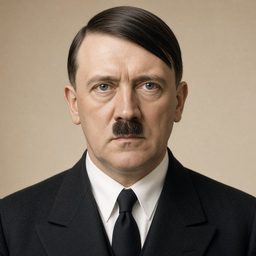
 Germany
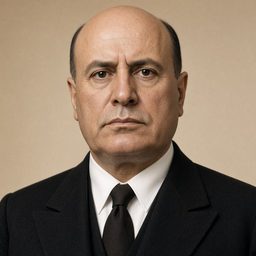
 Italy
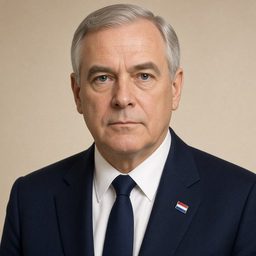
 Netherlands
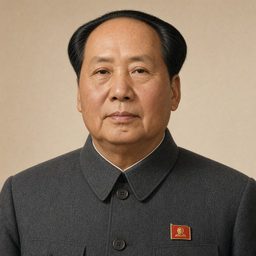
 China
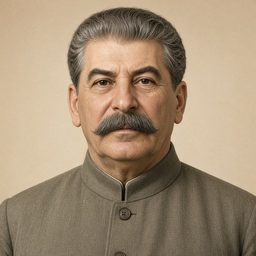
 Russia
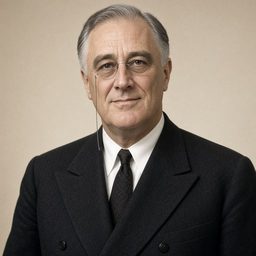
 United States

 Israel
 Singapore
 Saudi Arabia

 India
 Philippines
 Belarus